Emerging Iran deal faces strong criticism in Israel, despite PM Netanyahu’s assurances
In addition to the nuclear issue, Lebanese front is major concern for Israel





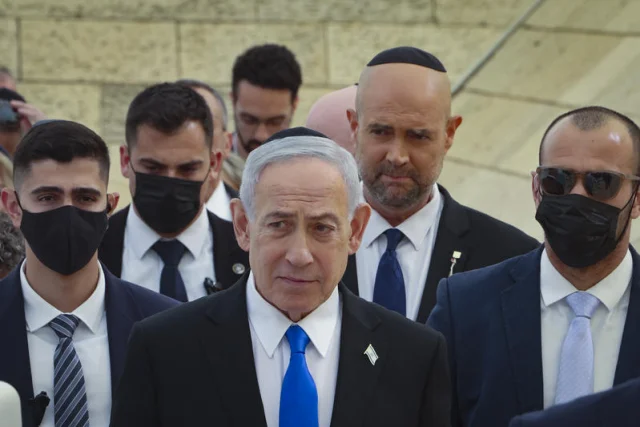
The emerging deal between Washington and Tehran to end the war has encountered strong criticism from voices in the Israeli military and senior politicians, despite Prime Minister Benjamin Netanyahu’s assertions that the deal would decisively end the regime’s nuclear program.
After U.S. President Donald Trump implied that a deal with Iran was imminent on Saturday, Netanyahu stated after a call with Trump that they “agreed that any final agreement with Iran must eliminate the nuclear threat. This means dismantling Iran’s nuclear enrichment facilities and removing the enriched nuclear material from its territory.”
In addition, a “political source,” widely believed to be the prime minister or someone close to him, briefed media outlets that Israel is being updated about the talks with Iran, reiterating that Netanyahu emphasized the importance of ensuring Israel’s freedom of action, particularly in Lebanon.
However, Channel 13 News reported on Sunday that, in closed talks, Netanyahu has admitted the limitations of Jerusalem’s influence on Trump’s decisions. According to the report, Israeli efforts are focused on the prospective deal's contents rather than on preventing an agreement.
🇮🇱🇺🇸 pic.twitter.com/FQcgGjmaHE
— Benjamin Netanyahu - בנימין נתניהו (@netanyahu) May 24, 2026
The emerging deal that would leave the regime in power – and possibly with its nuclear program intact, while limiting Israel’s ability to strike Hezbollah in Lebanon – provoked strong criticism from various sources in Israel.
Ynet News cited a senior defense official who warned that the deal could be “a disaster for Israel.”
“The Iranian public and regime are under severe distress in a way that threatens the regime’s survival,” the official said. “With the agreement as it is being presented, they (the regime) get a way out, with the Strait of Hormuz opened and the blockade on it removed. When the U.S. gives up on continuing the war, it loses the last significant leverage it has over Iran for future negotiations.”
Avigdor Liberman, leader of the hawkish opposition party Yisrael Beitenu, said any deal with the regime would be a “catastrophe,” accusing Netanyahu of turning Israel into a “banana republic” governed from Washington.
JUST NOW: President Trump posts a picture of a bomb under a fighter jet with the words, "THANK YOU FOR YOUR ATTENTION TO THIS MATTER!" 👀
— Donald J Trump Posts TruthSocial (@TruthTrumpPost) May 24, 2026
While Iranian President Masoud Pezeshkian responded on state television by pleading that his country is "not seeking nuclear weapons," the… pic.twitter.com/CXcdVBM63u
“Trump is putting the entire State of Israel through a campaign of humiliation with Netanyahu’s blessing,” Liberman said, emphasizing that Israel was hesitant to strike in Lebanon because “the U.S. forbade it.”
While the Iranian nuclear and ballistic missile programs have been Israel’s most important concern during the war, most of the criticism of the emerging deal has focused on the Lebanese front, where Hezbollah has used FPV drones, as well as rockets and mortars, to harass Israeli troops, killing 11 since the ceasefire started.
“It is absolutely forbidden under any circumstances to accept the ceasefire in Lebanon as part of a deal with Iran,” warned Benny Gantz, chairman of the Blue and White Party, and former IDF chief and defense minister.
“Acquiescing to the ceasefire in Lebanon as part of a deal with Iran would be a strategic mistake that we will pay for for years to come. This is exactly the case where Israel needs to say to the U.S. – no.”
Army officials told Ynet that the IDF is already reorganizing troops in southern Lebanon to prepare for a potential deal, fearing a return to the days of the security zone in the 80s and 90s, when Israeli soldiers became static and exposed to Hezbollah attacks that killed hundreds.
They also noted that the return of the evacuated Lebanese residents to villages in the area, in particular, would harm the security of northern Israeli residents and troops in the field.
A senior military official said the current situation is “definitely hard for us, but it is even harder for Hezbollah.”
“The negotiations are proceeding in an orderly and constructive manner, and I have informed my representatives not to rush into a deal in that time is on our side… Both sides must take their time and get it right. There can be no mistakes!” - President Donald J. Trump 🇺🇸 pic.twitter.com/GfylPZdqBf
— The White House (@WhiteHouse) May 24, 2026
“They are losing people every day. They have no motivation to come down to the border, and their infrastructure is shattered,” he added.
David Bitan, an influential lawmaker from Netanyahu’s Likud party, told Radio 103FM on Monday that the war's outcome “does not depend only on us. We cannot deal with Iran alone, especially not with the nuclear issue, so we are dependent on the United States. That is a fact; it cannot be changed.”
“Netanyahu succeeded in recruiting the United States on this matter. On the nuclear issue, he pushed it back many years,” he noted. “No matter what is in the agreement, I do not believe there will be an agreement that ties Israel’s hands and feet so that it cannot deal with these matters.”
However, he also acknowledged that the “total victory” promised by Netanyahu “will just take longer than we thought.”
“It depends on how you define total victory. The level of expectations was problematic in this matter. What’s the problem in Israel? People are never satisfied with anything. You see that tremendous efforts are being made in order to achieve total victory, but nothing is appreciated; people always approach it from the political side,” he said.
You might also like to read this: