Is Israel behind on fiber-optic drone threat? Analyst says it will 'crack the code pretty quickly'
Security analyst Seth Frantzman talks drone warfare with ALL ISRAEL NEWS



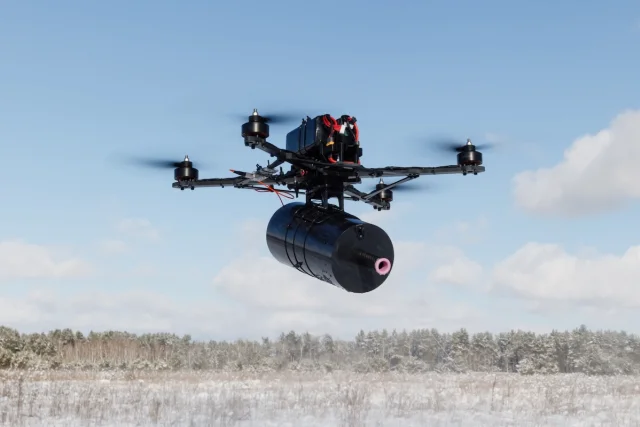
The Israeli military, a pioneer in the field of drone warfare, has found itself facing one of the threats it helped develop: so-called suicide drones.
Over the past several years, Iranian terror proxies Hamas and Hezbollah began turning to small, commercially available drones as a means of attacking IDF soldiers operating within Gaza and along the Lebanon border.
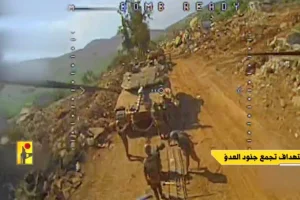
From the opening attacks of Hamas on Oct. 7, 2023, which involved small drones dropping grenades on observation cameras along the security fence, to the recent explosive drone attacks on troops in southern Lebanon, the drone threat appears to be increasing.
While initial attacks by Hezbollah used larger military drones, such as the Iranian Mohajer-6 or Shahed, the use of modified consumer drones increased following the entry of Israeli troops into southern Lebanon.
Learning from Ukraine’s experience with drones against Russian armored units, Hezbollah recently began using the same first-person-view (FPV) fiber optic drones used in that conflict.
These drones, controlled via a fiber-optic cable trailing behind the drone, resist electronic jamming, allowing the drone operator to attack targets that individual combatants would find difficult to reach.
The primary limitation of these FPV fiber-optic drones is the length of the cable itself. While many of these drones carry large spools of fiber-optic cable capable of reaching between 20 and 40 kilometers (approximately 12.5 and 25 miles), the more rugged terrain of southern Lebanon somewhat limits that range.
The senior IDF officials have said that without strikes on Hezbollah facilities north of the Litani, where the drones are most likely assembled, preventing the attacks will be difficult. However, Israel is under U.S. pressure to respond “surgically” to Hezbollah attacks, and only south of the Litani.
In the meantime, the IDF is using several techniques to minimize risk to armored vehicles and soldiers, including special metal netting, called “cope cages,” which can prevent the drones from impacting the vehicles directly, as well as fragmentation rounds, which split upon leaving the barrel of the soldier’s rifle, making the chance of shooting down an approaching drone easier.
רחפן נפץ נעצר ברגע האחרון ברשת הגנה בגבול לבנון ולא התפוצץ. pic.twitter.com/WMaXzgfzj6
— אמברגו (@embargo1news) May 10, 2026
Senior IDF officials are also pushing for permission to strike Hezbollah infrastructure north of the Litani, particularly the infrastructure involved in the manufacture of the drones.
Seth Frantzman, a Senior Middle East Analyst for The Jerusalem Post, and an adjunct fellow at The Foundation for Defense of Democracies, wrote a book on drone warfare following his exposure to the phenomenon during his time covering the war against ISIS in Iraq.
That book, “The Drone Wars: Pioneers, Killing Machines, Artificial Intelligence, and the Battle for the Future” established Frantzman as a knowledgeable analyst in the area of drone warfare, an area he has repeatedly covered since the book’s publication.
He said that part of the IDF’s apparent failure in dealing with the FPV drone threat is due to the institutional nature of national militaries.
“Militaries in general are big, fat institutions. They can't move that quickly,” Frantzman said in an interview with ALL ISRAEL NEWS. “Israel is one of the countries in the world where the military actually moves probably the most quick in terms of adapting new technology, probably with the exception of the Ukrainians.”
Frantzman said he believes the IDF will find a solution to reduce the number of successful attacks in the near future.
“Israel is learning the hard way. And I think as you see now, Israel's investing everything it can in this,” Frantzman shared. “I think Israel will crack the code pretty quickly and figure out a way to deal with it.”
He noted that, as with other air defense solutions, there is no hermetic solution, but believes Israel will likely achieve a success rate similar to other systems, like the Iron Dome, which has around a 92% interception rate.
“Look, it's war. You're never going to stop every single threat,” he stated. “What Israel wants to get is like 90%, 95%.”
“Air defenses like Iron Dome are around 95% or something,” he remarked.
Noting that Israel faces “a multiplicity of threats,” Frantzman continued, “I do think, like everything else, you'll find that Israel will then pioneer some sort of solution to it and then the threat will also change.”
A recent report from the Jerusalem Center for Security and Foreign Affairs noted that during the ceasefire period between November 2024 and March 2026, Hezbollah invested substantial resources in procuring, producing, and assembling explosive drones while simultaneously training specialized operators.
Asked about an attempt to place restrictions on importing parts used for the construction of drones, Frantzman indicated that it is unlikely to be successful.
“I think the idea of restricting things coming into Lebanon - I think it would be complicated,” he responded, noting that Hezbollah is reported to have operatives working in the water and airports, who could likely ensure that such contraband entered the country.
Instead, Frantzman believes that Israel will probably need to rely on one of its greatest strengths, its intelligence systems.
“I think at the end of the day, what it means is you need very good intelligence,” he explained. “So if you can find the guy who's in Europe, who's buying the stuff and you track that person, then you foil the plot through intelligence, as opposed to try(ing) to foil it on the big picture of airstrikes and all sorts of stuff.”
Frantzman referred to Israel’s successful, years-long operation to plant booby-trapped pagers into the hands of Hezbollah operatives as the kind of intelligence work likely to help thwart part of the drone threat.
“Look, Israel has shown in the past it's quite good at doing intelligence work,” he noted. “They did get the pagers into the hands of these people. If you can get pagers into the hands of them, I would think you can foil the drone tech. So again, it just takes time.”
Regarding the IDF’s own drone warfare technologies, Frantzman noted that bringing such technology into the military requires proper training, as well as a clear benefit for the units receiving it.
“I think the problem with those types of vehicles (referring to unmanned ground vehicles) is integrating them within the actual unit,” Frantzman explained.
“It's one thing if you build a bunch of them and you tell the guys, 'okay we have this.' But if you don't train the platoon or the company or the brigade, and you say, okay, we want you to think about using this vehicle as part of your force, like every platoon is going to have one or two UGVs and you as a lieutenant need to get familiarized yourself with it. I think unless it's part of the training program and it's seen as like some sort of weird exotic niche thing, you're not going to see it being used,” he argued.
“A soldier is not going to reach for a tool they don't understand. They're not going to reach for a tool they don't know,” he explained. “So, I think it's a question of integrating it with the forces.”
You might also like to read this: