







Hezbollah drones kill Israeli soldier, wound 17 others as IDF struggles to cope with growing FPV-drone threat
US pushes for direct meeting between Lebanese and Israeli leaders



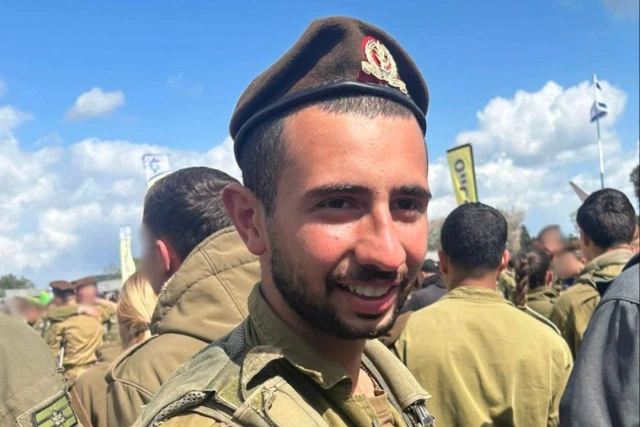
One Israeli soldier was killed and over a dozen were wounded over the past 24 hours, as the Israeli military continues to struggle mightily to defend against the escalating threat from Hezbollah’s drone strike.
The dozens of attacks launched by Hezbollah on Thursday, which also included a rocket attack on a northern Israeli town, caused the IDF to reinstate limitations on the home front on Friday, raising the question of how long the ostensible ceasefire in Lebanon can continue.
Over the past few days, Hezbollah has increasingly used first-person view (FPV) drones that are controlled via fiber-optic cables, to which the IDF has not found an effective solution.
On Thursday morning, 19-year-old Sgt. Liem Ben Hamo was killed and three other soldiers were moderately wounded by a dual drone strike in southern Lebanon. Hours later, a strike on an artillery position on the border hit a military vehicle, wounding twelve other soldiers.
An Israeli soldier was killed and another was moderately wounded in a Hezbollah explosive drone attack in southern Lebanon earlier today, the military announces.
— Emanuel (Mannie) Fabian (@manniefabian) April 30, 2026
The slain soldier is named as Sgt. Liem Ben Hamo, 19, of the Golani Brigade's 13th Battalion, from Herzliya.
During… pic.twitter.com/V4s6g0Glzm
The attacks continued on Friday, with the IDF first stating it had intercepted four out of five drones, one of which had managed to cross the border and triggered alarm sirens in Rosh Hanikra. Shortly after, an interceptor missile was fired toward another suspected Hezbollah drone targeting IDF troops in southern Lebanon.
Finally, two soldiers were lightly wounded in another attack by multiple drones in southern Lebanon on Friday morning.
Under heavy pressure from the U.S. to respond only “surgically,” the IDF has launched several strikes but refrained from hitting targets deeper within Lebanon, particularly those in Hezbollah strongholds in Beirut or the Bekaa Valley, which were targeted in the opening strikes of the current campaign.
IDF Northern Command chief, Maj.-Gen. Rafi Milo touted the military’s successes in responding to Hezbollah’s ceasefire violations, claiming that 90 terrorists had been eliminated over the ceasefire’s duration so far and that the IDF has “full freedom of action” in his sector.
The military says it struck and destroyed over 40 Hezbollah sites in southern Lebanon in the past day.
— Emanuel (Mannie) Fabian (@manniefabian) May 1, 2026
They include command centers where members of the terror group were operating and advancing attacks against troops and Israel, according to the IDF. pic.twitter.com/nF3zBlSTyO
However, the Home Front Command again tightened its guidelines for northern israel on Friday, in an acknowledgement that the situation is bound to continue or could worsen over coming days.
Educational institutions or workplaces will only be allowed to operate inside a building or in an area where an adequate bomb shelter can be reached in time, and gatherings will be restricted to 200 people outdoors and 600 indoors in communities along the border, as well as in Meron, Bar Yohai, Or HaGanuz and Safsufa in the Upper Galilee.
This also impacts the annual Lag B’Omer mass pilgrimage on Mount Meron next week, with crowds being limited to 200 at any given time.
While the threat posed by FPV drones isn’t new, the IDF has not found an adequate response to protect its troops, particularly those operating within Lebanese territory, where they are more exposed to the drones that have limited range.
The IDF says it razed a 140-meter-long Hezbollah tunnel in the Ras al-Bayada headland south of Tyre, in southern Lebanon.
— Emanuel (Mannie) Fabian (@manniefabian) April 30, 2026
Combat engineers of the elite Yahalom unit blew up the tunnel using 24 tons of explosives this morning, the military says.
Inside the tunnel, the IDF says… pic.twitter.com/PbJcJMZNtq
Due to the fiberoptic cable connected to these low-cost drones, there are barely any electronic or radio signals that can be jammed, and the small size of the drones makes their identification difficult.
Given the deteriorating situation on the northern front, Channel 12 News reported that the Israeli government is urging Washington to wrap up the negotiations with Lebanon within two to three weeks and allow it to resume fighting against Hezbollah if the talks fail to achieve significant results.
Meanwhile, the U.S. has intensified efforts to advance the negotiations, with the U.S. embassy in Lebanon pushing for a direct meeting between President Aoun and Prime Minister Netanyahu.
This “give Lebanon the chance to secure concrete guarantees on full sovereignty, territorial integrity, secure borders, humanitarian and reconstruction support, and the complete restoration of Lebanese state authority over every inch of its territory – guaranteed by the United States,” a statement read.
“The extended cessation of hostilities, achieved at the personal request of President Trump, has given Lebanon the space and the opportunity to put all of its legitimate demands on the table with the full attention of the United States government,” it continued.
“This is Lebanon’s moment to decide its own destiny, one which belongs to all its people. The United States is ready to stand with Lebanon as it seizes this opportunity with confidence and wisdom. The time for hesitation is over,” the U.S. embassy added.












