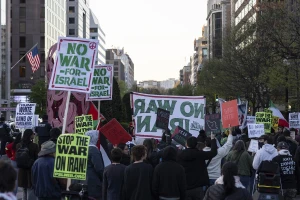
Deadline Friday: President Trump's Iran war heading into a constitutional showdown




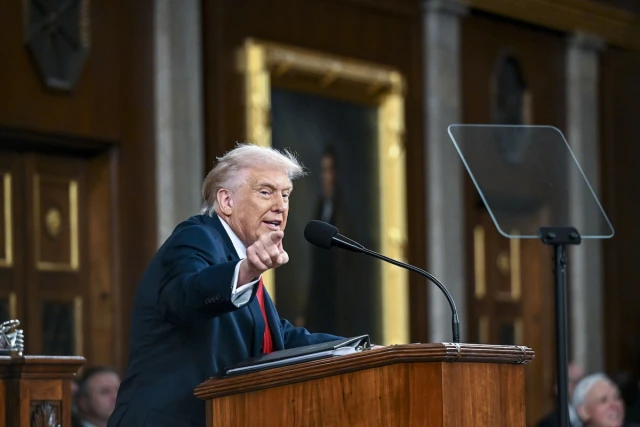
This Friday won’t be just any other Friday. When it comes to the military conflict in Iran, it will take on a much more significant meaning. Liberal legal scholar Erwin Chemerinsky, who is the dean of the law school at the University of California, Berkeley, puts it this way:
“President Trump’s war with Iran is almost certainly illegal: Congress hasn’t declared war or authorized it by statute, and it wasn’t precipitated by an imminent attack or a national emergency. If the war continues through Friday without congressional approval, it will clearly be illegal, having passed the 60-day threshold and the 48-hour notice period that the president is given, under the War Powers Resolution of 1973, to conduct this kind of military operation.”
“Whether you support or oppose this war – or, as Mr. Trump has called it, this 'excursion' – time will be up. And it is the obligation of the federal courts to say so.”
For decades, the question of who decides war in America has always simmered just below the surface. Congress declares war and the president commands it. That balance – carefully written into the Constitution – is now being tested in real time.
President Trump authorized military strikes tied to Iran, saying the moves were necessary to defend both the United States and Israel. The White House insists this is not a new war, but part of an ongoing response to decades of Iranian aggression.
On Capitol Hill, that explanation is definitely up for debate and closer scrutiny. Lawmakers – mostly Democrats – are trying to reassert their authority through the War Powers Resolution. “The president has really boxed us in and put us on the hook for things that we haven’t fully debated as a country,” said Senator Tim Kaine (D-VA). “We are being asked to accept escalation without a clear understanding of the endgame. Congress exists to ask those questions before the bombs fall, not after.
Clearly, Democrats believe the constitutional authority of Congress is slowly slipping away. “This is a war of choice with no clear strategic endpoint,” said Senator Chris Murphy (D-CT). “We’ve heard shifting explanations – from deterrence to broader regional security – but none of it adds up to a coherent plan. When the mission keeps changing, it’s not just confusing – it’s dangerous. That’s how nations drift into conflicts they never fully intended to fight.”
So far, those efforts and subsequent votes by Democrats to allow Congress to authorize war have failed. Republicans have held the line. But with the 60-day threshold now approaching, the political ramifications get more dicey for Trump and the GOP (Republican Party). The USA could very well be headed for a constitutional collision.
Still, not everyone is pushing back, even among Democrats. Senator John Fetterman (D-PA) is siding with the White House – and issuing a warning of his own. “Iran is the real threat here, and too many people in Washington are losing sight of that,” Fetterman said. “This isn’t about politics – it’s about confronting a regime that has spent decades targeting the United States and our allies. If we hesitate now or tie the president’s hands, we risk emboldening Tehran at exactly the wrong moment. That’s a dangerous signal in a region where deterrence still matters.”
The story here, and the politics that may follow, come into sharper focus when you dissect the lifelong DNA of Donald Trump. The potential for a dramatic moment shouldn’t surprise us.
This is a president who has never been shy about testing the limits of executive authority. Whether it’s immigration, regulatory power, or now military action, Trump’s instinct has consistently been the same: act first, fight the legal battles later. And if Congress doesn’t like it? Well… see you in court. That's been his track record and we could be well on the way towards that track again.
Let's remember something important here: even if Congress passes something that restricts the president's ability to go to war with Iran, Trump can veto it. And even if it somehow survives, it likely ends up tied up in the courts for months – if not longer.
Sitting right in the middle of it all is Israel. As we know, the conflict is not happening in a vacuum. It’s tied to Israel’s ongoing struggle against Iranian influence across the region – from Hezbollah in Lebanon and Hamas in Gaza to broader proxy networks in Iraq and Yemen.
That brings us back to the core question: Who gets to decide whether the United States should be involved with Israel in Iran?
Right now, President Trump is calling the shots and ultimately will dare Congress to stop him. If just a handful of Republicans side with Democrats, then it'll be game on and the Trump Administration's new battlefield will be the courtroom.
You might also like to read this: