








commentary The 'resolve gap': Will America leave the fight against Iran too early?
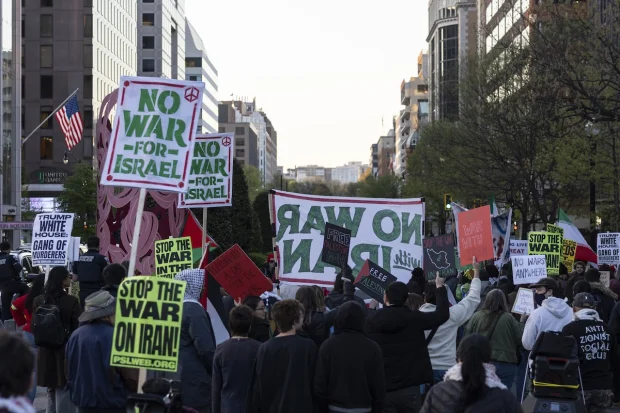
Here's something to chew on: what if America's biggest enemy on the battlefield isn't Iran? What if it actually becomes war-weary Americans? There’s a growing problem in America right now – and it’s not just about Iran, Israel, or the Middle East. It’s something deeper. Call it the “resolve gap.” It’s the widening divide between how Americans view war…and how America’s enemies – and even its allies – actually fight them.
After all, here's the reality: in places like Israel and Iran, war isn’t a short-term inconvenience. It’s a long game. It’s generational. It’s survival. Especially for Israel. Israelis live it every day.
In America? It’s something we want wrapped up by the next election cycle.
The numbers don't lie. A recent CNN poll shows that 66% of Americans now disapprove of U.S. military action in Iran, a 7-point jump in opposition since the conflict began on the last day of February. Support is slipping too – just 34% approve, down from 41% earlier this year.
It gets even worse if you dig deeper. Only 33% of Americans believe there’s a clear plan for handling the situation in Iran, while 67% say there isn’t. So now we have a confidence gap layered on top of a resolve gap. Put it together and you get a combustible mix: declining support and a lack of trust could translate into political pressure to pull back.
According to an analysis by The Heritage Foundation, the United States has historically preferred fast, decisive conflicts with clear objectives and quick exits. Think of World War II’s decisive finish. Americans don’t like long, drawn-out, ambiguous conflicts. What comes to mind quickly? Vietnam. Iraq. Afghanistan. All those wars not only stretched resources – they stretched the patience of Americans. They remember history.
Now compare that to Israel and Iran. For Israel, conflict isn’t optional. It’s existential. The country lives under constant threat, and its military doctrine reflects that reality: stay ready, stay engaged, and if necessary – stay in the fight for as long as it takes.
As for Iran, patience is a strategy. Tehran plays the long game. Years – even decades – are not obstacles. They’re part of the plan. Waiting it out, even while suffering the temporary consequences, isn't necessarily fatal. This is not new for these radical Shia clerics.
So here's what happens: while many Americans are debating whether a war is taking too long and looking to get out quickly, Iran is asking a much different question, and that is, "Are we winning over time?" That’s the resolve gap, folks.
Where does that leave us? Well, it turns out the real risk isn’t Iran; it really may be American public opinion. The cycle then begins: lawmakers begin to get skittish, the liberal media begins to have a field day with, 'let's get out' stories and suddenly, the conversation shifts from “How do we win?” to “How do we get out?” You think that's happening in Iran? That's a rhetorical question.
You don’t have to look far for a recent example. Look at Afghanistan. The United States spent two decades trying to stabilize a region, defeat insurgency, and build a government. But over time, public support eroded. Americans grew tired. Frustrated. Skepticism and withdrawal became a political necessity.
What was the result? A messy, deadly, ugly, rapid exit that left serious questions about whether the original objectives were ever fully achieved. MAGA won't tolerate any of that this time around for sure and quite frankly, neither will a supermajority of Americans.
As for Israel, the American resolve gap poses a major problem. If the United States loses its appetite for a sustained conflict with Iran, Israel doesn’t have that luxury. It can’t just opt out. The stakes are too high.
That raises a critical question: what happens if America steps back before the job is done? We all know the answer. Israel would find itself carrying more of the burden – militarily, strategically, and diplomatically. Israel wouldn't want to do this alone but if they must, they will.
We have a problem in modern American politics. We're just not built for endurance wars. We used to be but not now. Patriotism is waning and it's a problem. Our society today is built for headlines, the next election cycle, poll numbers and approval ratings.
But major conflicts like the one with Iran are messy and just don’t operate on a quick timeline. They operate on a strategic timeline. Even if the fighting stops, the residual aftermath doesn't let up. That requires something Americans are increasingly struggling to maintain: patience.
The “resolve gap” isn’t just a catchy phrase. It’s real and its impact could be felt sooner than we think.
Popular article:

interview Easter message of resurrection hope amid war at Jerusalem's Garden Tomb

biblical commentary Let my people go: a Passover message for today

4 IDF soldiers killed, 2 wounded in fighting in southern Lebanon, as Israel eliminates dozens of Hezbollah terrorists

Receive latest news & updates
A message from All Israel News
Help us educate Christians on a daily basis about what is happening in Israel & the Middle East and why it matters.
For as little as $10, you can support ALL ISRAEL NEWS, a non-profit media organization that is supported by readers like you.
Latest articles:

commentary North American Jewish organizations to recruit 100 professionals to combat antisemitism

commentary ‘No need’ for pre-election Iran strike, IDF chief says as gov’t, opposition trade blame for potential escalation – report
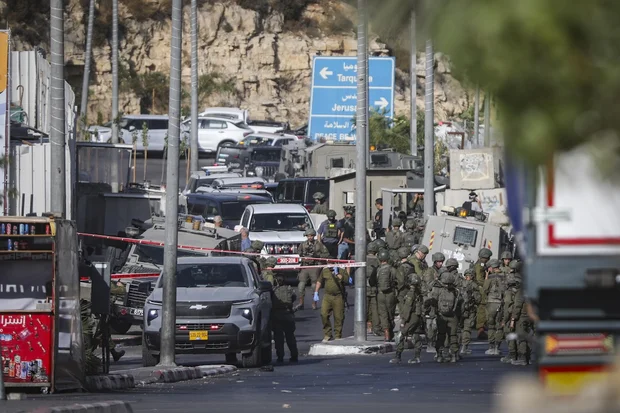
terror attack 2 Israeli soldiers killed, 2 terrorists eliminated in Hebron shooting; IDF says much larger attack was prevented
analysis A people dwelling securely? Israel’s strategic standing, 3 years after Oct 7
commentary Hamas on wheels: What I found in Dearborn reveals a troubling history and a battle over Israel