Iran reportedly uses Pakistani and regional militias to suppress protests



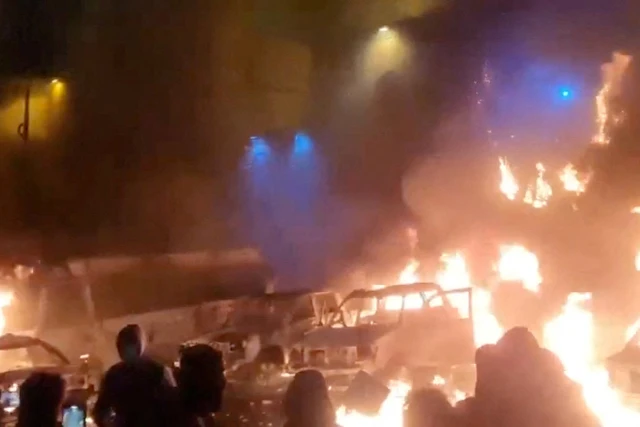
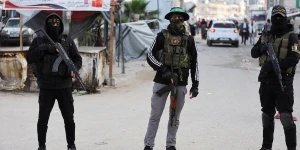
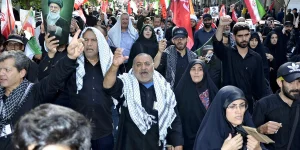
The Iranian regime is reportedly using Middle Eastern, Afghan, and Pakistani militias to suppress new domestic protests, according to the Israeli social networks researcher and lecturer Effi Banai.
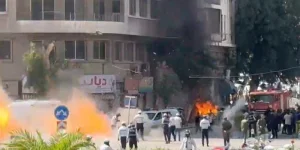
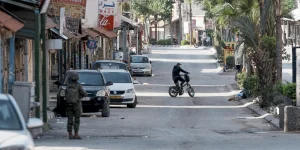
“We see the pressure on the regime on social media. They have brought in militias from abroad, from Pakistan, Iraq, and Afghanistan. They are helping them impose order. They go around in trucks, in civilian clothing, carrying machine guns. The soldiers speak Arabic rather than Persian, [which the locals notice and comment about on social media]. They are imposing terror in the streets so that people won’t go out and protest. The regime knows its people are hungry, desperate, and are afraid they will take to the streets again,” Banai stated on Thursday in an interview with the 103FM news outlet journalist Sivan Cohen.
Banai assessed that the Iranian regime’s use of foreign militias signals weakness and desperation.
“This shows weakness. The regime is under pressure. I don’t think it will take months for people to go out into the streets – it will take less. They went through a month-long war, and that war drained all their reserves,” he assessed.
Banai further noted that divisions within the Iranian regime are fueling the ongoing instability in the Islamic Republic of Iran.
“Mojtaba [Khamenei] has disappeared, the Islamic Revolutionary Guard Corps has taken over the regime, and that’s why we are also hearing two voices. There is a major struggle between the elected government and the IRGC, who are more extreme, but they do not understand the meaning of hungry civilians. In my opinion, they will understand it the hard way,” he explained.
Several recent reports indicate that Major-General Ahmad Vahidi, the hawkish commander of the Revolutionary Guard Corps (IRGC), has seized power in Tehran following the assassination of the “supreme leader” Ali Khamenei at the beginning of Operation Roaring Lion on Feb. 28.
“During these three past days, something weird happened, especially in the space around who is ruling Iran,” assessed Aimen Dean, a former Al Qaeda terrorist who became an intelligence analyst.
Vahidi, who is considered a radical Islamist, is described as “a Khamenei absolutist” who has reportedly served for years as “the key cog in the regime’s chain of command,” whose survival is “essential to its continuity.”
The Institute for the Study of War (ISW) think tank recently assessed that Vahidi and his IRGC circle “have likely secured at least temporary control over not only Iran’s military response in this conflict but also Iran’s negotiating position and approach within the past 48 hours.”
The U.S. has noted growing tensions between the Iranian civilian regime and the more hawkish IRGC military commanders in the ongoing negotiations with Tehran concerning the reopening of the Strait of Hormuz and the disarmament of the Iranian nuclear and missile program.
“We saw that there is an absolute fracture inside Iran between the negotiators and the military – with neither side having access to the supreme leader, who is not responsive,” an unnamed U.S. official told the news outlet Axios.
In 2007, the international law enforcement organization Interpol issued an arrest warrant for Vahidi for his involvement in the 1994 terrorist bombing of the Jewish AMIA center in Buenos Aires, Argentina. The terrorist attack claimed the lives of 86 civilians and injured hundreds of people in what is still the most lethal terrorist attack in Argentina’s history.
You might also like to read this: