









IDF using robotic forces to conduct combat engineering operations against Hezbollah in southern Lebanon
The Israeli military is steadily integrating robotics into its ground operations to reduce risk to soldiers
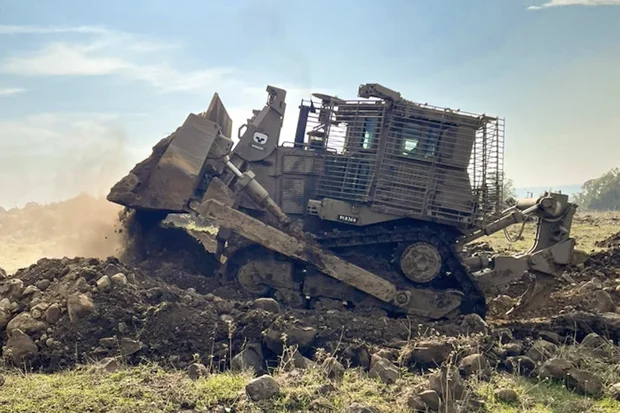
Despite the ceasefire, the IDF is still carrying out demolition operations on Hezbollah infrastructure in southern Lebanon.
Just as the IDF repeated its principle of a Yellow Line, demarcating territory actively held by the Israeli military, in which the civilian population is not yet allowed to return, the IDF is now borrowing another strategy from its experience during the Gaza War, the use of robotic platforms to conduct dismantling operations and reduce the risk to Israeli soldiers.
The use of robotics also allows the IDF to increase the amount of demolition operations against Hezbollah infrastructure, given the uncertainty of the duration of the ceasefire, with Israel conducting negotiations with Lebanon towards a possible permanent solution to the conflict.
The IDF’s Yahalom special operations unit of the Combat Engineering Corps has already begun using robots inside Hezbollah tunnels and other difficult-to-reach areas.
The mountainous terrain and dense vegetation in the area make using heavy engineering equipment more difficult. As a result, the military intends to use robotic explosive devices to target particularly large or difficult-to-reach structures. This will disable a large amount of infrastructure that Hezbollah invested significant resources in over two decades.
The military hopes this will help remove threats from Israel's northern border, alongside the political negotiations aimed at removing a Hezbollah presence in southern Lebanon.
So far, combat engineering teams have uncovered command posts, weapons depots, combat positions, and launch sites above and below ground, including complex logistical tunnel systems carved into hard, rocky hills. Photographs taken by unmanned vehicles of the Yahalom unit, sent into the tunnels, showed infrastructure designed for a prolonged stay by the Radwan Force and other Hezbollah operatives who abandoned their weapons systems and fled during the fighting with Israeli forces.
Col. (ret.) Yaron Sarig, head of the AI and Autonomy Program Executive Office of MAFAT (The Directorate of Defense, Research, & Development) within the Defense Ministry, said the Gaza war was the first robotics war for the IDF.
“This is the first robotics war,” Sarig said in December. “In this conflict, we have mobilized our entire defense ecosystem and deployed tens of thousands of autonomous systems across the battlefield – from drone swarms to agile ground robotics distributed across vast areas.”
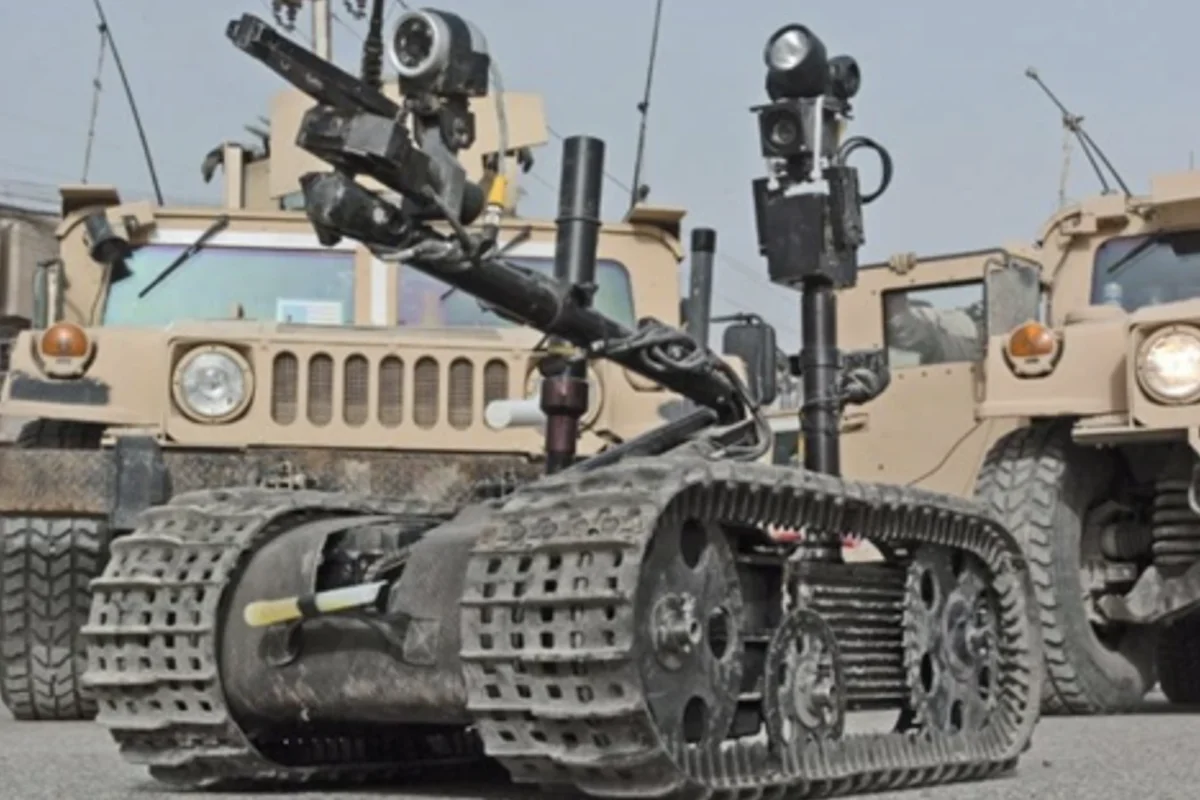
The military also introduced new robotic systems into the conflict shortly before the most recent Lebanon ceasefire.
Just before the start of the ceasefire, the IDF conducted combat operations using the new “Ro’em” howitzer artillery battery by Elbit Systems, which incorporates advanced technology and artificial intelligence to allow faster and more precise operations than its predecessor.
The system, which was designed in coordination with the IDF, was tested against Hezbollah positions in southern Lebanon to gather valuable combat experience. The Ro’em is fully automatic and capable of firing at a rate of 6-8 rounds per minute, with a range of up to 40 kilometers (25 miles).
Along with an automated loading system, the Ro’em also supports the capability to conduct Multiple Rounds Simultaneous Impact (MRSI) firing, in which several shells can be fired at different trajectories but impact the target at the same time.
Chief of Staff Eyal Zamir had already announced the establishment of a robot corps in the IDF in February, incorporating lessons from the Gaza war, in which autonomous systems were widely deployed.
During operations in the Gaza Strip and Lebanon as part of the Gaza war, robotic systems operated on land and at sea, alongside unmanned aerial vehicles.
Using robots reduces the risk to fighters' lives, helps alleviate manpower shortages, and improves the ability to operate in challenging conditions – such as inside tunnels, in dense urban areas, or in other areas that are difficult for ground forces to reach.
This was demonstrated in the Gaza Strip and Lebanon, when ground robots were used to scan tunnels without risking the lives of soldiers, while autonomous armored personnel carriers loaded with explosives moved through combat zones and cleared areas before the entry of troops, and remote-controlled D9 bulldozers operated in areas where explosives or mines were suspected to have been planted.
Unmanned Aerial Vehicles (and other drones) have been used for decades to collect intelligence or conduct attacks. However, their use in recent combat operations has highlighted their ability to serve as a force multiplier while reducing risk to human fighters.
The IDF’s robot corps is expected to consolidate all of these capabilities into a single, coordinated array that will operate alongside fighting forces in all theaters. The use of the robotic units in Lebanon is already demonstrating the practicality of such a strategy.
Popular article:

interview Easter message of resurrection hope amid war at Jerusalem's Garden Tomb

biblical commentary Let my people go: a Passover message for today
4 IDF soldiers killed, 2 wounded in fighting in southern Lebanon, as Israel eliminates dozens of Hezbollah terrorists

Receive latest news & updates
A message from All Israel News
Help us educate Christians on a daily basis about what is happening in Israel & the Middle East and why it matters.
For as little as $10, you can support ALL ISRAEL NEWS, a non-profit media organization that is supported by readers like you.
Latest articles:

North American Jewish organizations to recruit 100 professionals to combat antisemitism

‘No need’ for pre-election Iran strike, IDF chief says as gov’t, opposition trade blame for potential escalation – report
terror attack 2 Israeli soldiers killed, 2 terrorists eliminated in Hebron shooting; IDF says much larger attack was prevented
analysis A people dwelling securely? Israel’s strategic standing, 3 years after Oct 7
Hamas on wheels: What I found in Dearborn reveals a troubling history and a battle over Israel