








all israel edu The real Iran is reinvention: Five revolutions that shaped a nation
Iran has changed course and reinvented itself numerous times throughout history. The Islamic Republic we know today is not permanent, and it never has been. When we see the news today, it’s easy to see Iran as a constant monolith, but when we look back to thousands of years of Persian history, the pattern that emerges is not one of staunch conservative traditionalism, but one of revolutions, upheavals, and radical redefinition of identity.
Over a year ago, Israeli philosopher Micha Goodman and his co-host Efrat Shapira Rosenberg discussed this fascinating aspect of Iranian society in their podcast, “Mifleget haMachshavot” (The Party of Thoughts), of the Israeli cultural center, Beit Avi Chai. In that episode, Goodman framed Iran around five distinctive revolutions throughout Iranian history that not only changed the government of Iran, but deeply redefined what it means to be Persian.
That episode, and the following deep-dives they did into Persian society and identity, really changed the way I look at Iran. The historic pattern is not continuity but constant reinvention.
We start with the ancient Aryan tribes living in the region north of the Caspian Sea. As they moved south, and some branched off to India, forming the Sanskrit-speaking society in India, others settled in the area today known as Iran.
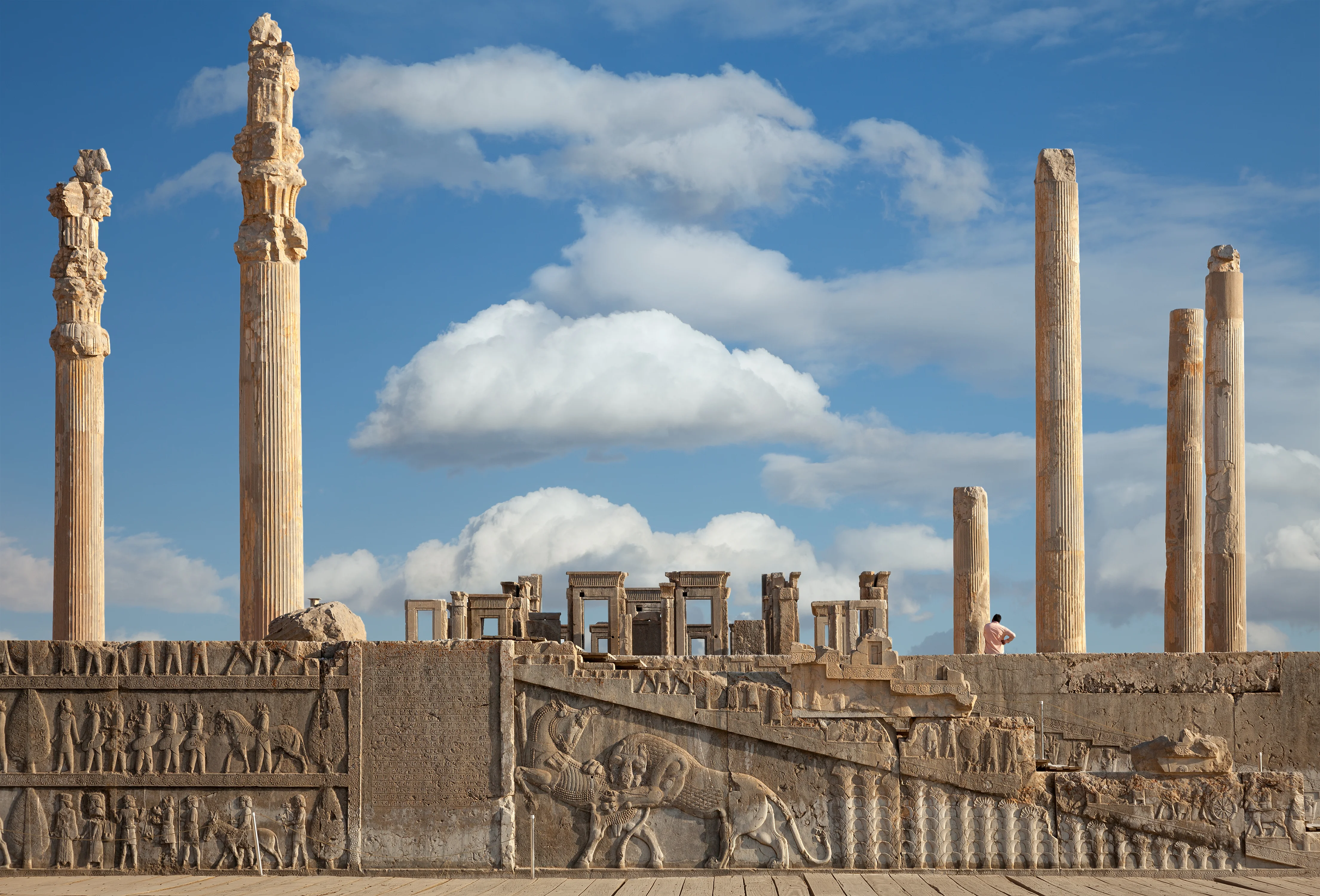
The name Iran itself comes from ancient Iranian words meaning “land of the Aryans.” Their religion was similar to the Hinduism of their cousins in India, with gods called devas (from where we get the words deity and divine in English). They had different, competing tribes and regions, most notably the Persians and the Medes, who are all mentioned in the Bible. When Cyrus the Great unified them and established an empire in the mid-500s BC, it became known as the “Persian Empire” after his dominant tribe.
Revolution 1: Zoroastrianism
We don’t really know when Zarathustra lived, whether it was closer to the era of King David, or if he was contemporary with Cyrus the Great. But the religion he established, Zoroastrianism, was a sharp change from the Iranians’ previous pagan religion. It defined the devas as demons, serving under the evil spirit Ahriman, while the creator God was named Ahura Mazda.
Some define this as monotheism, but I’d say it’s closer to duotheism—belief in two “gods,” one good and one evil. You can imagine it as a weird version of Christianity in which Satan is just as powerful as Jesus. It’s a belief in a cosmic fight between good and evil, and they worshipped in temples with holy fire.
We don’t know how fast it caught on, but it became the official religion of the Persian Empire and was incredibly influential for over a thousand years. There are still practicing Zoroastrians today.
Revolution 2: Islam
After 400 years of wars between the Zoroastrian Persian Empire and the Christian Byzantine Empire, both were exhausted, and in the 7th century, Persia was conquered by the Muslim armies. Once again, they changed who they were and gradually adopted the religion of the conquerors.
Unlike the Egyptians and the Mesopotamians, however, they largely resisted Arabization. They kept their Persian language and infused Persian culture and traditions into the religion of the conquerors. Iran had once again changed what it means to be Persian.
Revolution 3: Shi’ism
In the early 1500s, as the Ottoman Empire started taking shape in the west, the ruler of Persia, Shah Ismail, forcibly switched from Sunni to Shia Islam. This was a huge change, not unlike how European countries adopted Protestantism and broke with the pope a few decades later. Persian elites often saw themselves as heirs of an older and more sophisticated civilization than the Arab conquerors.
Living under a religion brought by desert nomads was always a source of humiliation. By adopting Shiism, Persia could now avoid being absorbed into the Arab Islamic world or the Ottoman Empire, while still being able to claim superiority by following the “only true” Islam.
Revolution 4: Secularism
After World War I, the Pahlavi dynasty wanted to push Iran into becoming a secular nation. Reza Shah, and later his son, looked at the Western world and at the secularism revolutions of Atatürk in neighboring Turkey and tried to follow suit. They wanted to push Islam into being a private faith only and forcibly removed anything religious from the public sphere, heavily leaning into Iran’s pre-Islamic history.
Men were forced to wear western suits and bowler hats, and the hijab was banned. Some religious women spent years not walking outside. The claim of the Pahlavis was that Iran was the cradle of civilization, influencing Greece and Rome and eventually Europe, so by becoming Westerners they didn’t adopt anything foreign; they just took back what was theirs.
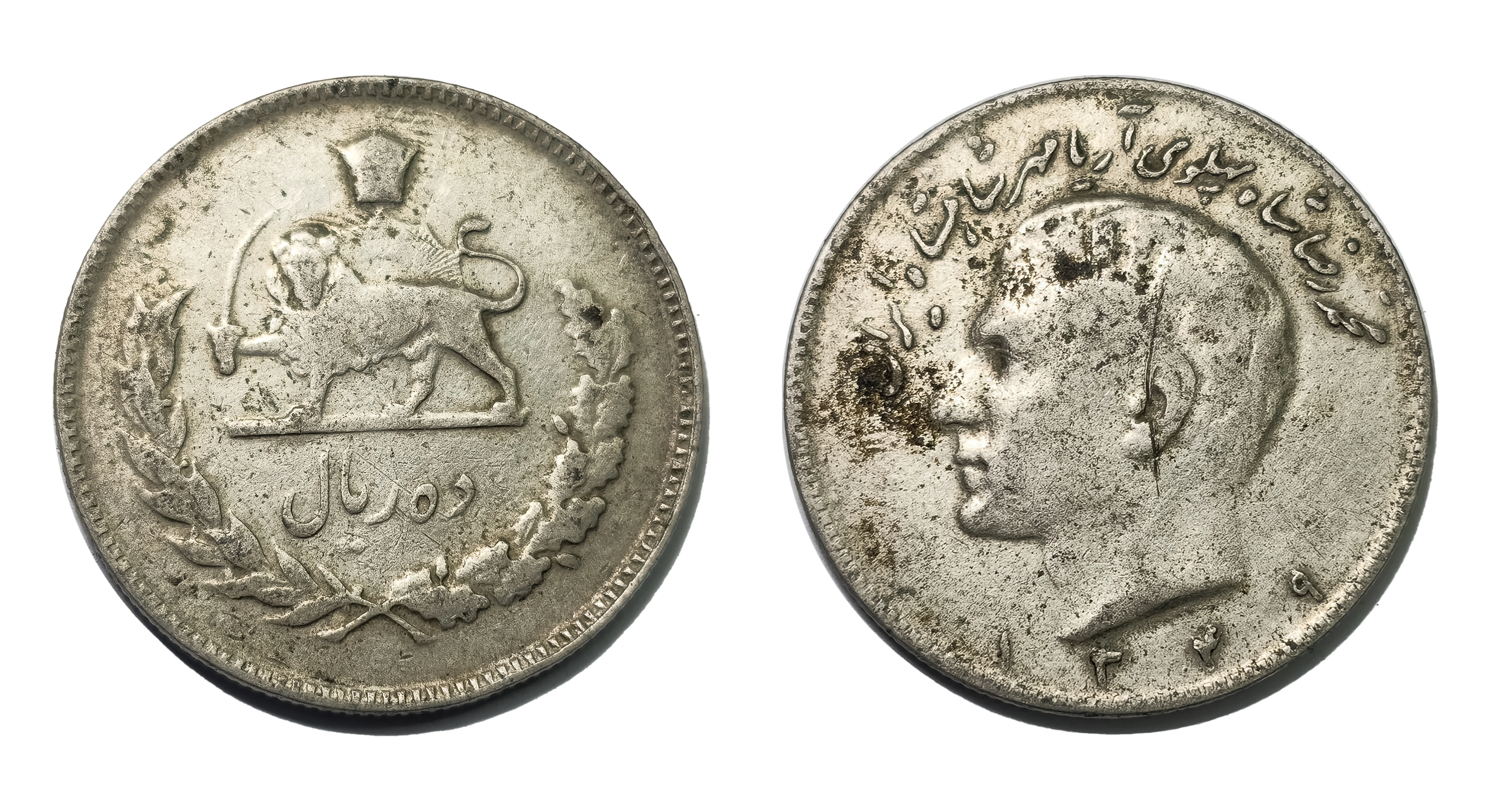
In the 1930s, they officially adopted the name Iran instead of Persia—a term with ancient roots that also resonated with the era’s emphasis on “Aryan” identity.
Revolution 5: The Islamic Revolution
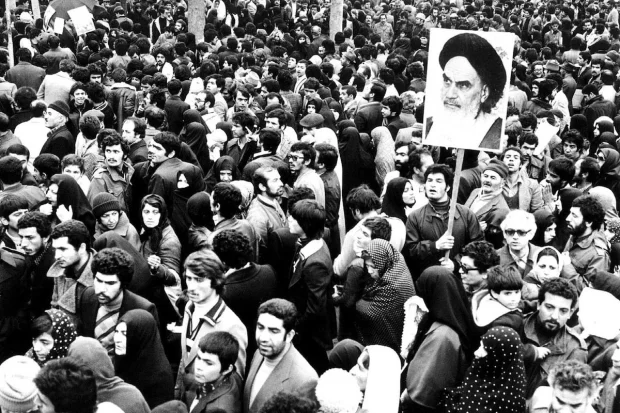
The latest revolution was in 1979, when the people rose up against the Pahlavis and Khomeini became the Supreme Leader. Khomeini did what every previous revolutionist before him did: “This is the true Iran; those before me gave you a false version.” It wasn’t hard to convince Iranians that Westernism was foreign and Islam was authentic.
But the Shia Islam of today’s Iran is not the same as the one of the 16th century.
Ali Shariati defined it (today's Iranian version) as “red Shiism” rather than “black Shiism.” It’s a Shia Islam infused by Marxist and Maoist ideas, turning a beloved religious figure, Imam Hussein, from a tragic martyr into a “Che Guevara” of Islam. It’s similar to how some Christians have tried to define Jesus as a “radical socialist” because he cared for the poor.
Shariati and other thinkers helped create a revolutionary language that made Shiism resonate with the anti-imperialist mood of the age, helping bring together Islamists, students, and much of the secular opposition against the Shah.
After the revolution, the new regime enforced strict religious rules, including mandatory hijab, and brutally suppressed dissent. The left-leaning secular students who helped the Islamists to power were eventually executed or forced to flee. I am thankful to Haviv Rettig Gur for his brilliant deep dive into the ideological origins of the current regime.
This cycle didn’t end in 1979.
In 2009, millions took to the streets to protest the rigged election results. Ever since, waves of unrest have returned again and again, often with increasing intensity, and many times they were brutally suppressed. Most recently, this occurred in January 2026. Those are not isolated events—they are part of a much longer historic pattern. The constant Persian struggle over its identity.
The protesters are not “western agents” revolting against “the real Iran.” On the contrary, the act of protesting is in itself the real, authentic Iran.
Every revolution in Iran has been an attempt to answer the same question: what does it mean to be Persian? And every revolution has claimed that it brings them the authentic Persian identity. But every time, the revolution always mixes this “authenticity” with modern ideas and outside influences, whether Islamic, Western, or Maoist.
Each one of these revolutions was much more than just a political shift. It was a change of identity, a switch in what Persia believed about itself, and a rewriting of its own history. The question is not whether there will be a sixth revolution that deposes the current regime. The question is when and how.
And maybe most importantly—will the next change be forced from above or grow organically from its own people?

Support our independent, on-the-ground reporting from Israel. Become a $5/month Ally.
Popular article:
interview Easter message of resurrection hope amid war at Jerusalem's Garden Tomb

biblical commentary Let my people go: a Passover message for today

4 IDF soldiers killed, 2 wounded in fighting in southern Lebanon, as Israel eliminates dozens of Hezbollah terrorists

Receive latest news & updates
A message from All Israel News
Help us educate Christians on a daily basis about what is happening in Israel & the Middle East and why it matters.
For as little as $10, you can support ALL ISRAEL NEWS, a non-profit media organization that is supported by readers like you.
Latest articles:
all israel edu North American Jewish organizations to recruit 100 professionals to combat antisemitism

all israel edu ‘No need’ for pre-election Iran strike, IDF chief says as gov’t, opposition trade blame for potential escalation – report
terror attack 2 Israeli soldiers killed, 2 terrorists eliminated in Hebron shooting; IDF says much larger attack was prevented
analysis A people dwelling securely? Israel’s strategic standing, 3 years after Oct 7
all israel edu Hamas on wheels: What I found in Dearborn reveals a troubling history and a battle over Israel