Steps to statehood: The legal stages of Israel’s establishment



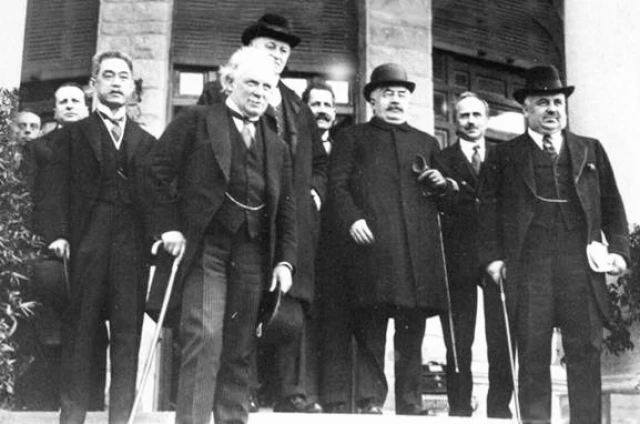
Despite what detractors say, Israel’s establishment has been a slow and steady journey grounded in international law, the first step of which came more than 20 years before the Holocaust.
Between the Battle of Beersheva on Oct. 31, 1917, and the capture of Jerusalem a week later, the British foreign secretary, Arthur James Balfour, issued a declaration of intent to create a national home for the Jewish people in the land of their forefathers in what would be the first legal step toward establishing the State of Israel.
The land of Palestine (along with much of the Middle East) had previously been under Turkish control for nearly 400 years, however, after General Edmund Allenby and the Anzac troops took Beersheva, swiftly followed by the fall of Gaza and Jerusalem, it was clear the Ottoman era was over.
Though there had always been Jewish communities living in the land throughout various empires and conquests, major waves of aliyah (immigration) began to pour in toward the end of the 19th century and the Zionist movement to establish a Jewish state began in earnest. Numerous pogroms and the tragic Dreyfus Affair convinced Theodor Herzl – considered the father of modern political Zionism – and others that the Jewish people could not live in safety or count on justice living in lands other than their own. However, it had to be done legally.
At the First Zionist Congress in Basel, Switzerland, in 1897, it was declared: “Zionism aims at establishing for the Jewish people a publicly and legally assured home in Palestine.”
"At Basel I founded the Jewish State,” Herzl announced at the time. “If I said this out loud today, I would be greeted by universal laughter. In five years, perhaps, and certainly in fifty years, everyone will perceive it."

Astonishingly, he was remarkably accurate. It was indeed legally established 50 years later, after several internationally recognized stages, the first of which was the Balfour Declaration.
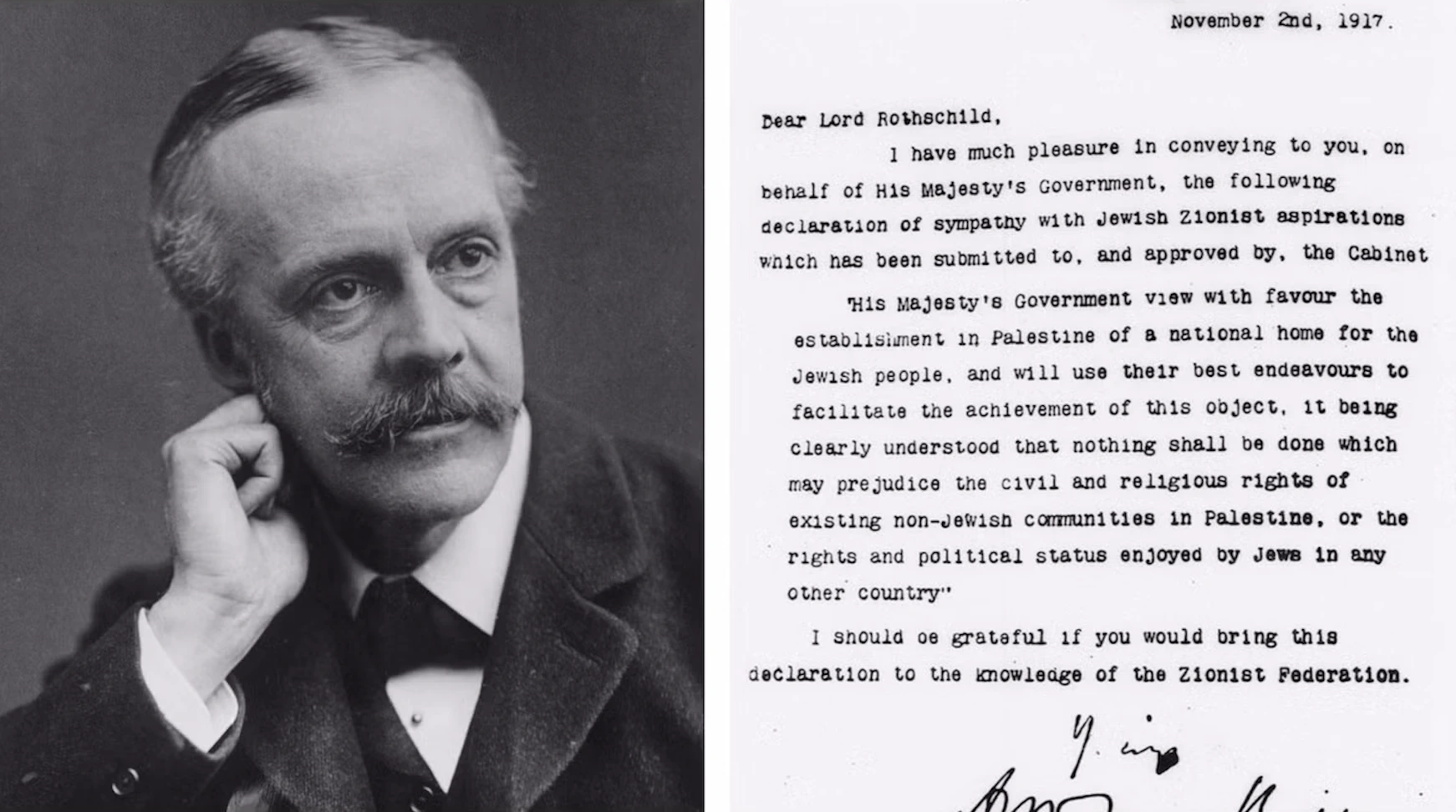
On Nov. 2, 1917, then-British Foreign Secretary Lord Arthur James Balfour wrote to a representative of the Jewish community in the United Kingdom to report that the Cabinet had agreed to establish a Jewish homeland in Palestine under certain conditions:
"His Majesty's Government view with favour the establishment in Palestine of a national home for the Jewish people, and will use their best endeavours to facilitate the achievement of this object, it being clearly understood that nothing shall be done which may prejudice the civil and religious rights of existing non-Jewish communities in Palestine, or the rights and political status enjoyed by Jews in any other country."
Liberated by the Allies from Ottoman occupation, the land was officially passed to the British in a statutory mandate by the League of Nations in 1920, as part of the Treaty of Sèvres. This gave Britain internationally recognized legal rights over the whole region of Transjordan (modern-day Jordan) and all of Palestine (modern-day Israel, with the West Bank and Gaza Strip).
Other areas were parceled out to other Allies in the same treaty. The mandate was to prepare the land and its inhabitants for independence, giving it back to its indigenous peoples, and the British government had recognized Jewish indigeneity and sought to give a small part to create a Jewish homeland there.
Though the Balfour Declaration was made before the Mandate was given to Britain, it was ratified at the San Remo Conference on April 25, 1920, and made a binding, legal document under Article 22 of the Covenant of the League of Nations.
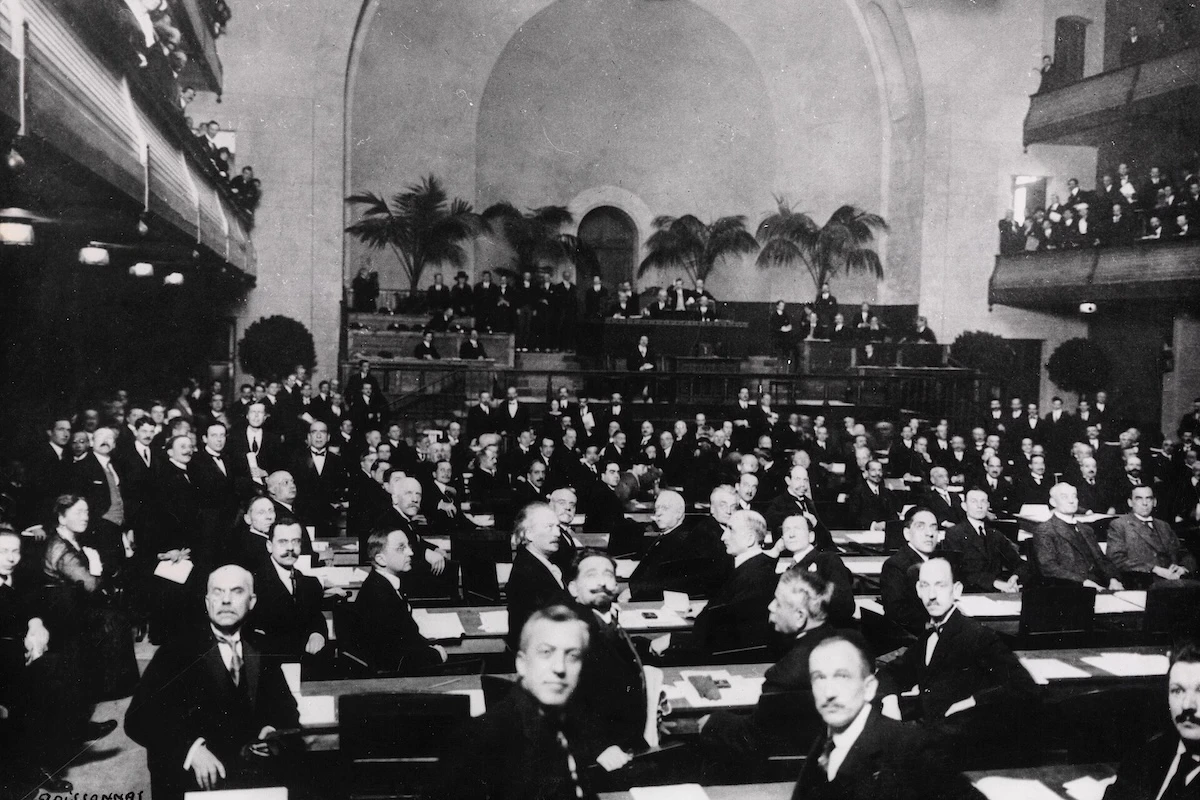
Two years later, the League of Nations also unanimously endorsed the Balfour Declaration on July 24, 1922, in a legal document titled “Mandate for Palestine,” with all 51 states of the League in agreement: “Recognition has been given to the historical connection of the Jewish people with Palestine and to the grounds for reconstituting their national home in that country.” From a legal point of view, there was no higher international body at the time.
In 1945, the United Nations was created, and in 1947, it also gave its official stamp to the Jewish homeland. Member states voted to partition the land under British Mandatory control in 1947, giving Arabs a larger area and a smaller area for the Jews under UN Resolution 181.
The British mandate included both Israel and Jordan, and the initial proposal was to give Transjordan to the Arabs and what is now Israel and the Palestinian Territories to the Jews. Ultimately, the UN resolution allotted 77% of the area west of the river as a Jewish homeland.
Certainly, there were far more Arabs than Jews in the region at that time, but still only just over a million, many of whom had come from neighboring countries because of the abundant employment created under the British mandate.
Towards the end of the Ottoman Empire, Turkey had been severely weakened and the economic situation in the nations under its control had been deteriorating for some time. Between the British providing new infrastructure – building new railways, ports and an efficient postal system – and Jewish and Christian philanthropy establishing schools, hospitals, and helping to develop agriculture, new life was breathed into the land. It was ready for the next chapter.
Despite the legality of the Balfour Declaration of 1917, ratified at San Remo in 1920, unanimously endorsed by the League of Nations in 1922, and the UN Partition Plan of 1947, the establishment of a Jewish state caused uproar and ultimately led to war.
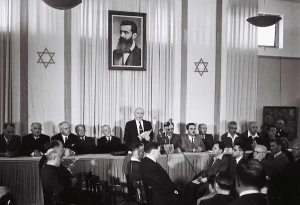
Five Arab armies swooped into the land from Egypt, Jordan, Syria, Lebanon, and Iraq, intending to drive the Jewish people into the sea. Against all odds, they lost, and Israel declared independence on May 16, 1948.
These four legal steps are significant in the establishment of the Jewish state, making a very strong case for its legitimacy, however, there are two additional factors that come into play, as author Dinesh D'Souza asserts.
“How do you get a country? One way is indigeneity, Israel gets a check. The second way is negotiation,” he posits, pointing to the internationally binding legal developments outlined above. “And the third is conquest. The war of 1948, War of '67, War of '73, Israel has held its borders with strength.”
D’Souza continues, “Israel checks all the boxes. Israel has all the three bases of legitimacy. And most countries don't. Most countries have maybe one. They're lucky if they have two, but I don't know very many, if any, that have all three.”
You might also like to read this: