Outgoing IAF Chief Tomer Bar concludes 39-year career, warns the absence of an Iran nuclear deal would be 'major failure'




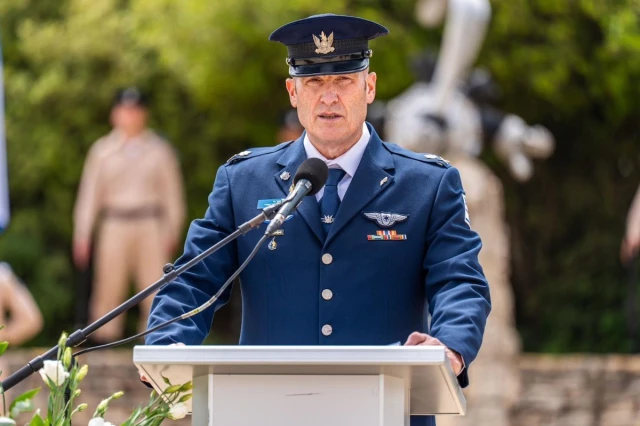
The outgoing commander of the Israeli Air Force (IAF), Maj. Gen. Tomer Bar, will conclude his 39-year military career marked by operations against multiple regional threats. During his tenure, the IAF evolved into a leading airpower and played a central role in the conflict with Iran and its regional proxies, including Hamas, Hezbollah and the Houthis in Yemen.
Israel's latest confrontation with Iran – referred to as Operation Roaring Lion – was marked by unprecedented military coordination between American and Israeli forces. In March, Bar personally took part in aerial strikes in Iran, reflecting a longstanding Israeli military ethos of leadership from the front. Under his command, the IAF also deepened coordination with Israeli ground forces.
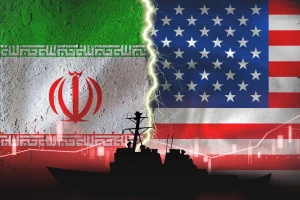
Despite these operational achievements, Bar cautioned that the absence of a nuclear agreement between the United States and Iran would constitute “a major failure.”
U.S. President Donald Trump has vowed to prevent Iran from acquiring nuclear weapons and has called for an end to its nuclear military program. However, Iranian authorities have so far rejected demands to halt uranium enrichment. Iran has also declined to scale back its ballistic missile program and its support for regional armed groups, including Hezbollah in Lebanon and the Houthis in Yemen.
Speaking on condition of anonymity, a senior IAF official told military correspondents that despite Israel's achievements, he and his colleagues have not forgotten the Hamas Oct. 7, 2023, attack.
“The events of that day will stay with me forever,” the official said. “Something deep broke, and all the military decision-makers understand that very well. The concept that preceded the disaster was wrong. We sat on the fence in the north and south while the enemy grew to enormous proportions,” he said.
“What does it matter to a civilian if we killed 100 terrorists in a strike? He isn’t looking for your constraints in distant arenas. He looks up at the sky and wants to know that you are protecting him in his own home,” the official said, referring to Israeli civilians who felt abandoned by the Israeli government and military during the Oct. 7 attack against Israeli border communities.
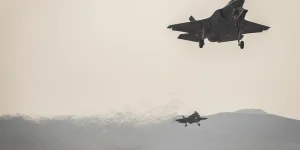
Last month, the IAF and U.S. Air Force established aerial supremacy over Iranian airspace. Looking ahead, the IAF officer warned of new emerging threats that would challenge Israel’s aerial supremacy.
“The absolute freedom of action we have today, in which a quartet of fighter jets reaches Iraq and Iran without interference, will not last forever,” the senior IAF officer argued. “Syria is rebuilding its army. Surface-to-air missile systems remain there, and they are working to restore them.”
He said the ongoing efforts by the U.S. to reach a diplomatic solution to the Iranian nuclear threat are crucial.
“Now we will see whether another ‘clarification’ is needed to make them sit down for negotiations,” he said. “Without a solution to the issue of uranium enrichment and the nuclear program, it will be one major failure.”
The senior Air Force official emphasized that unity must come first and warned against using the military uniform for political purposes.
“Cohesion must be placed above all else,” he argued. “Do not use the uniform to exert political influence. If we had not put the disagreements aside on October 7, half the air force would not be here. The fighters reported for the mission despite the irrelevant criticism hurled at us. One moment, they say we are ‘slaughtering children,’ and another moment they say we are ‘abandoning’ the ground forces. The reality is that we are acting together, with one heart, for the security of the state.”
You might also like to read this: