Israel develops AI-powered wildfire detection systems as major wildfires rage across US and Japan




Israel has been developing technology to predict, track, and stay ahead of wildfires – sometimes even before they start – as part of broader efforts to address a growing global challenge. Israeli officials say the systems are designed both for the common good and in response to the country’s own experience with recurring wildfire threats.
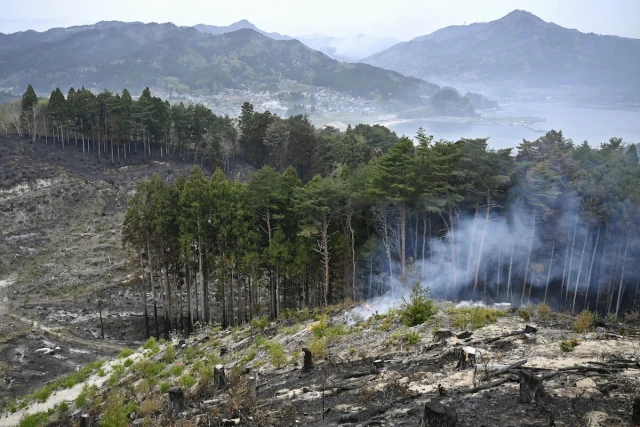
Although it is only the beginning of May, major wildfires have been burning across the United States and several other countries. In the United States, the massive Pineland Road and Highway 82 fires in Georgia have caused multiple fatalities, burned more than 50,000 acres, and forced large-scale evacuations. Another major blaze is currently burning in Japan’s Iwate Prefecture, causing several casualties and extensive property damage.
Fire officials across the Northern Hemisphere are warning that 2026 could be one of the worst years in recorded history for fire-related damage, as record-high temperatures, low levels of precipitation, and other conditions favorable to fires have become more severe and widespread.
Within Israel, firefighting strategy has been shaped by both environmental conditions and geography. While the most recent winter brought relatively strong rainfall – with many parts of the country receiving average or above-average precipitation – longer-term trends across the Levant continue to point toward increasing drought conditions. In addition, the proximity of major population centers to forested areas means that even small fires can quickly escalate into large-scale emergencies.
As a result, Israel has developed rapid-response firefighting units and deployed advanced systems aimed at significantly reducing wildfire detection times.
The technology includes monitoring stations connected through digital communication networks linked to satellites, drones, and centralized command hubs. These stations and drones are equipped with sensors and cameras that track temperature, humidity, wind direction, thermal imaging, acoustic signals, and other indicators. The data is fed into an AI-empowered central processor that helps the monitoring crews keep track of all these conditions in real-time and to be aware of potential threats earlier than traditional methods allow.
Among other benefits, the technology will help reduce false alarms – such as reports of haze or dust mistaken for smoke – which can divert firefighting resources and delay responses to real emergencies.
The main advantage this network of monitoring stations, drones and digital connectivity provides is that it can keep Israel’s forested areas under observation continuously and in all weather conditions, improving detection speed and increasing the likelihood that fires can be contained before spreading out of control.
Firefighting agencies in multiple countries have expressed interest in Israel’s innovations, opening the door to increased trade, training and inter-agency cooperation.
You might also like to read this: