Israel braces for inflation spike as Hormuz crisis drives costs even higher





Israel’s economy, battered but resilient after two and a half years of war, is about to enter another challenging period due to the ongoing standoff between the United States and the Iranian regime, which has resulted in the near-total shutdown of maritime traffic in the Strait of Hormuz.
Consumers in Israel can expect increases in the prices of many everyday commodities, starting with gasoline but also including milk and fresh produce. Rents for both commercial and residential properties are also projected to rise, while the already high cost and limited availability of airline tickets are expected to worsen in the months ahead.
As of midnight on Thursday, the average price of a liter of self-service 95-octane gasoline will be NIS 8.07 ($8.25 per gallon), pushing up the overall consumer price index for April. While the official figures will not be published until mid-May, financial analysts are already warning that the CPI could reach as high as 1.5%, bringing the annual inflation rate above 2%.
This means, among other things, that the Bank of Israel’s Monetary Committee is unlikely to cut interest rates in late May. As a result, borrowers – including those with mortgages – will continue to face elevated borrowing costs.
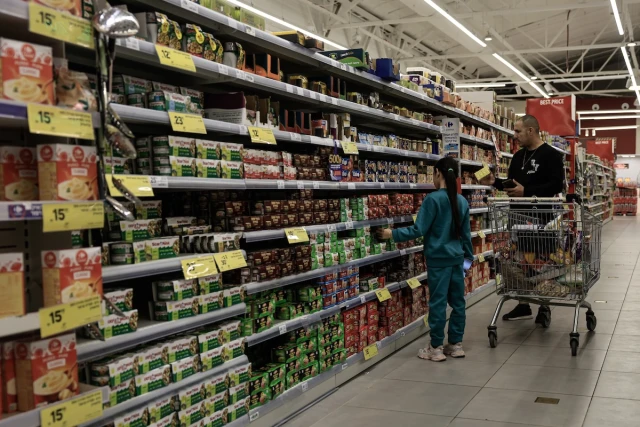
Prices of fresh fruit and vegetables in Israeli supermarkets are also being affected by supply shortages, as many farms are located near the Gaza border region and in the Galilee, both of which have come under attack in recent years.
The disruption to agricultural operations has led to a heavy reliance on imports from Turkey, Jordan, and the European Union. These supply lines are now threatened by political and diplomatic headwinds, rising transport costs, tariffs, and other pressures – all of which are passed on to consumers in the form of higher prices and reduced availability.
Citing similar pressures, Tnuva, Israel’s largest dairy supplier, announced this week that prices of milk, butter, and cheese will rise starting Sunday. Two smaller companies, Tara Dairy and Gad Dairy, said they will raise prices after Shavuot, while other food suppliers indicated they are likely to follow later in the summer.
Another major expense for Israeli households is rent. In central Israel, rents are projected to increase by as much as 6% due to rising demand.
One factor driving that demand is an increase in interest among Jewish communities abroad – particularly in Western countries – in making aliyah as a result of rising antisemitism and other challenges. New immigrants and more established Israeli citizens face the prospect of higher taxes.
The government owes substantial sums to defense contractors for purchases made over the past two and a half years and is continuing to procure large stockpiles of ammunition. Many non-defense agencies have already been told to prepare for budget cuts, leaving charities and humanitarian organizations scrambling to fill the gaps.
You might also like to read this: