Bank of Israel lowers economic growth projection as Iran war weighs on economy



The Bank of Israel on Monday lowered its 2026 economic growth forecast from 5.2% to 3.8%, citing the ongoing war with the Islamic Republic of Iran.
The updated forecast is based on the assumption that hostilities with Iran and its proxy, Hezbollah in Lebanon, will conclude by the end of April. The bank also signaled concern over the war’s intensity and duration, noting that the conflict has now surpassed one month with no clear end in sight.
“Insofar as the fighting continues, economic activity is being negatively affected mainly by restrictions on the home front due to missile fire and threats, absences from work due to the shutdown of the educational system, and mobilization of the military reserves,” the bank said in an official statement.
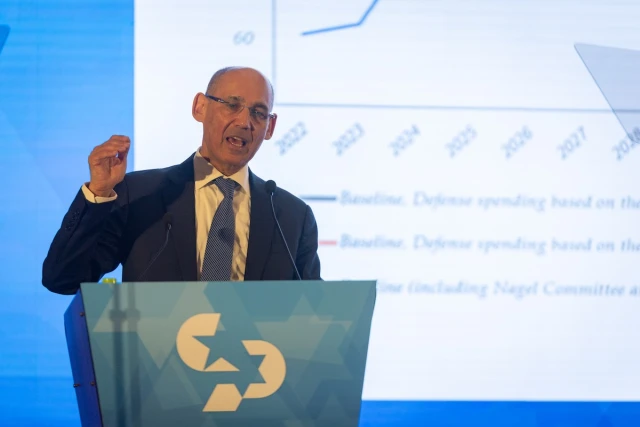
Bank of Israel Governor Amir Yaron addressed the economic situation at a press conference in Jerusalem.
“Recent weeks, since the beginning of Operation Roaring Lion, have been marked by considerable geopolitical uncertainty, and the war’s impacts on the economy and on real activity can be seen across all industries,” Yaron stated.
“On the demand side, there is a decline in credit card expenditures and in tourism, and on the supply side, there is an adverse impact on labor supply due to employee absences and military reserves call-ups, alongside disruptions in the supply chains,” he added.
Despite the concerns, Yaron emphasized the Israeli economy’s continued resilience and flexibility after over two years of war with Iran and its regional terrorist proxies, including Hamas in Gaza, Hezbollah in Lebanon and the Houthis in Yemen.
“However, even at this challenging time, the economy continues to show resilience, flexibility, and robustness, as has been the case for the past two and a half years as well,” he stated.
The Israeli Finance Ministry also lowered its 2026 economic growth forecast from 3.8% to 3.3%.
Looking ahead, Yaron believes Israeli economic growth will increase to as much as 5.5% in 2027, provided that the geopolitical situation in the Middle East stabilizes.
“Defense spending has increased and is expected to remain elevated in the coming years,” Yaron assessed.
“Consequently, the government faces a growing challenge in identifying sources that will allow for a reduction in the debt-to-GDP ratio, while simultaneously supporting defense needs and making the investments required to sustain long-term economic growth, chief among them improvements and investments in education and infrastructure.”
He added: “It is therefore important to build fiscal buffers to prepare for future shocks or crises.”
“As the deficit will be higher than expected, it would have been appropriate to tighten the belts further, especially in budgets that do not support growth, to make the right adjustments, reduce the coalition budgets, and the expenses of less essential ministries,” the bank governor concluded.
The global credit rating agency Fitch decided last Friday to maintain Israel’s “A” credit rating despite the war with Iran. While warning of the geopolitical risks, the credit rating agency predicted that Israel’s economy would likely benefit in the long term from the severe degradation of Iran’s and Hezbollah’s military capabilities.
“Wars are generally inflationary and damage growth,” Leader Markets Capital macroeconomist Jonathan Katz explained. “The labor market is tightening due to reserve mobilization, energy prices are rising, and flight prices are expected to increase."
“These developments also support higher food prices [due to rising fertilizer costs],” he added, noting that the war has pushed up both agricultural and energy prices.
You might also like to read this: