EXCLUSIVE INTERVIEW: 'Legends of the Lost Ark' docudrama: Archaeologist Chris McKinney investigates fate of the biblical artifact
McKinney discusses the history, legend and mystery surrounding the Ark of the Covenant



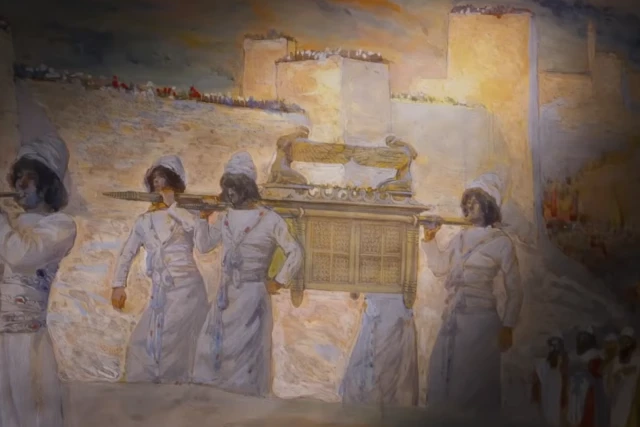
A new docudrama addressing one of the Bible’s greatest mysteries is drawing attention for its unusual approach – grounding the search for the Ark of the Covenant in ancient sources rather than modern speculation. The film "Legends of the Lost Ark" investigates what may have happened to the sacred object following the destruction of the Temple in Jerusalem in 586 B.C.
ALL ISRAEL NEWS correspondent Kayla Sprague conducted an interview with archaeologist Dr. Chris McKinney, an associate professor of archaeology at the Lanier Center (LCA) at Lipscomb University in Nashville, TN. McKinney conducts the research and serves as the guiding scholar throughout the film.
McKinney spoke about his lifelong fascination with the biblical world in the project. “I am a hopeless addict when it comes to the world of the Bible,” he said, describing how a teenage trip to Israel cemented his calling. “I just saw that the stuff was real… I can go and touch it with my hands.”
Unlike many popular theories about the Ark’s whereabouts, the film, directed by Stephen Pettit and produced by Gesher Media, focuses on what the earliest traditions say. “Everybody wants to know where it is, and how do we find it,” McKinney explained. “But that may not be a question we can answer.” Instead, the film examines “what did the earliest sources that we have say happened to it,” avoiding what he described as “obscure and conspiracy theory-driven” claims.
At the heart of the film are three ancient legends that emerged after the fall of the First Temple. These traditions share striking similarities. “All three legends assert that it is Jeremiah who is the one who is connected with the hiding of the Ark of the Covenant,” McKinney noted. They also agree that the Ark was hidden before Jerusalem’s destruction and that it will one day be revealed. However, they diverge on a crucial element: location.
At the same time, McKinney emphasized that the real value of these traditions is not simply in trying to pinpoint geography, but in understanding the worldview behind them.
A key element of “Legends of the Lost Ark” is its effort to move beyond modern speculation and instead reconstruct the conversation around the Ark through ancient traditions and early textual sources. McKinney emphasized that the goal is not to chase sensational theories, but to understand how ancient communities themselves wrestled with the Ark’s disappearance after the destruction of the First Temple.
In the interview, McKinney explained that the film is anchored in three early post-exilic traditions that consistently connect the prophet Jeremiah to the Ark’s concealment. While the sources differ on where it was hidden, they converge on several core ideas – including that the Ark was hidden before Jerusalem’s fall and that it is destined to be revealed in the future.
“The real value lies in understanding why these traditions developed,” McKinney said, pointing to the theological questions that emerged in the wake of the Temple’s destruction. For Second Temple-era Jews, the Ark’s disappearance raised profound theological questions about God’s presence, particularly in relation to the Temple itself. “How did they understand their relationship to the temple in light of the Ark’s absence?” McKinney asked. These interpretive traditions, he added, also help explain why the Ark continued to capture the imagination of later generations, even as its physical location remained unknown.
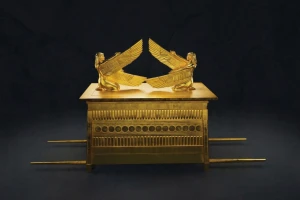
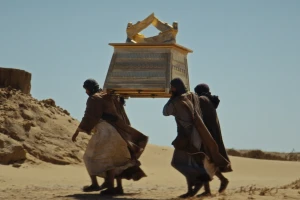
The docudrama also challenges popular visual assumptions shaped by modern media. Rather than the familiar cinematic portrayals, McKinney highlighted archaeological parallels in the ancient world, particularly Egypt.
“The Ark of the Covenant has a very clear archaeological background,” McKinney said, noting parallels with sacred objects depicted in ancient Egyptian temples, including those found on reliefs, carried on poles and associated with winged figures.
McKinney told Sprague that some of these connections were once widely recognized by scholars, but later faded from mainstream discussion. In recent years, however, he said there has been a renewed interest in these parallels. “You start just in the last 10 years, people saying… it actually is connected to ancient Egypt. And they don’t realize they’re rediscovering this whole line of interpretation.”
The film explores what the Ark actually looked like – challenging common assumptions shaped by pop culture. “People just assume they know what the Ark looked like,” he told Sprague, referencing images popularized by Hollywood. But archaeological evidence points to a different origin.
Beyond ancient texts and artifacts, "Legends of the Lost Ark" highlights cutting-edge technology that could reshape any future archaeological exploration in Jerusalem. Known as "muon detection," the technique can identify hidden voids beneath the surface without excavation.
“It can look through rock… in much the same way that an X-ray can look through your body,” McKinney said. This technology could prove especially significant for studying the Temple Mount, a site largely inaccessible to archaeologists. He described it as “this black hole in archaeology… accessible potentially through these imaging techniques.”
Despite the scientific elements, McKinney emphasized that the Ark’s story is ultimately about more than just discovery, but about its central symbolic role in the biblical narrative.
“I’ve come to think that the Ark of the Covenant is essentially the incarnation of the Hebrew Bible,” he said, describing it as the place where God’s presence dwelt among His people.
The film opens and closes with passages from the Book of Jeremiah, framing the Ark within the broader narrative of loss and hope.
“The genius of the Hebrew Bible… is not only does it deal with the high points, it really does well with the low points,” McKinney said. The destruction of the Temple, he noted, was not just a tragedy but a turning point that shaped both Judaism and Christianity.
As for whether the Ark might one day be found, McKinney remains hopeful. “There’s no question in my mind that it does survive in spirit,” he said. But regarding its physical existence, he expressed an even deeper conviction: “No good thing is lost.”
Even so, McKinney believes that the ancient legends themselves suggest a future role for the Ark in a redemptive story. “All three of the legends hint at its cosmic redemptive significance,” he said, describing one tradition in which the Ark is revealed and God’s Spirit is poured out on His people.
"Legends of the Lost Ark" invites viewers to wrestle with the mystery rather than resolve it. For McKinney, that journey of discovery is part of the appeal.
“We never know what is going to be found,” he said. “That can really change our perspective on how we read the text and the world behind it.”
Click here for showtimes and tickets in your area.
This article was produced in partnership with Gesher Media.
You might also like to read this: