Archaeologists uncover new evidence at Sea of Galilee site, strengthening case for ancient Bethsaida




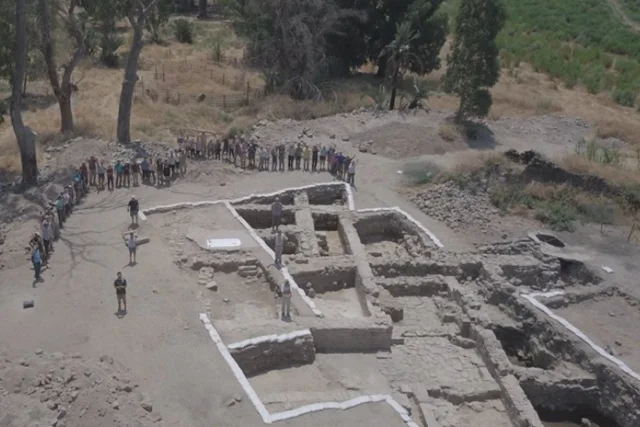
Archaeologists excavating the el-Araj site on the northeastern shore of the Sea of Galilee have uncovered artifacts and archaeological layers suggesting the area may be ancient Bethsaida, the fishing village identified in the Gospel of John as the hometown of Jesus’ apostles Philip, Andrew and Peter. The findings have generated growing interest in the Christian world and drawn large numbers of pilgrims from all denominations.
Prof. Steven Notley, considered one of the world’s most respected scholars on early Judaism, Christian origins, and the historical geography of the New Testament, recently presented some of these findings at an academic symposium in Washington, D.C.
He spoke about the excavations which, in 2018, revealed remains of a basilica which dated to the Byzantine Era, indicating that the early Church identified the site’s significance just a few centuries after the events described in the Gospels. Researchers say the discovery strengthens the case that el-Araj is the location of ancient Bethsaida.
In 2023, the archaeological team found a first-century house beneath the apse of this basilica. The apse was the semicircular recess often located at the end of church buildings from this era. Notley described these findings as confirmation of an account written by Willibald, a bishop from the Bavarian city of Eichstatt, who visited the Holy Land in the year 725 and recorded his impressions of a church in Bethsaida built above the home of Peter and Andrew.
Uncovering this ancient home was part of a broader excavation process that uncovered fishing weights, pottery shards and other household items commonly used in ancient Galilee.
"We found a wall from a first-century structure beneath the apse,” Notley said. “There’s no sign saying, ‘Peter slept here,’ but archaeologically speaking, it’s hard to get better evidence than this.”
Other significant findings in the basilica include a mosaic floor, found in 2022, which has the following words inscribed in biblical Greek: “Chief of the Apostles and keeper of the keys of heaven, pray for him and his children George and Theophanos.”
Notley also noted that a fire at the site in 2025 coincidentally led to evidence of columns and other ancient construction elements that had previously been hidden beneath a thick layer of trees and bushes.
The excavations at the site are ongoing and visitors interested in viewing them can find more information at the official website: https://www.bethsaida-julias.com/.
For archaeology enthusiasts, it is recommended to visit Tel Beit Tzeida, where a magnificent and royal city from the biblical period and a 2000-year-old fishing village were discovered.
You might also like to read this: