Israel built two secret bases in Iraq, one also used during 12-Day Iran War last year
Discovery of secret site by Bedouin led to his death, clash with Iraqi forces




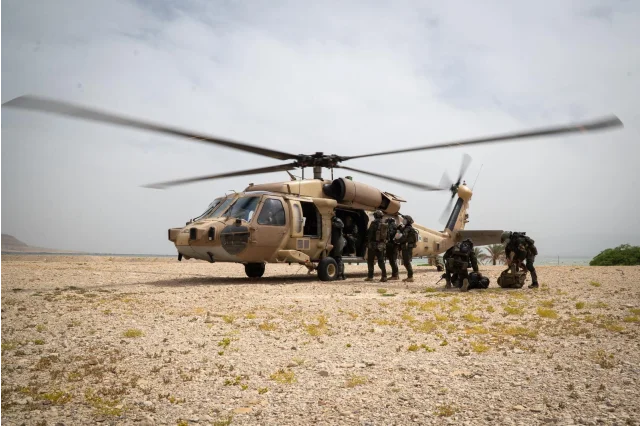
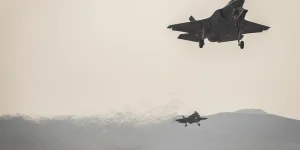
Israel built two secret air bases in Iraq, a report in The New York Times stated, based on testimony from Iraqi officials.
Following a previous report that Israel had constructed a temporary forward air base in Iraq during Operation Roaring Lion this year, a new NYT report claims that Israel operated a second base in Iraqi territory that was abandoned after its discovery by a Bedouin shepherd in early March.
The second base, reportedly located in the western desert of Iraq, was used during the 12-Day War, Operation Rising Lion, in June 2025.
Israeli planning for the Iraqi bases began in late 2024, following Iran’s ballistic missile attacks on Israel, which prompted Israeli leaders to reassess the scale of the threat and conclude that additional strikes inside the Islamic Republic may be necessary to disrupt its missile capabilities.
The IDF then began to scout out potential sites to be used as forward bases should there be a need for a rescue operation, as happened with the U.S. fighter pilots shot down over Iran this past March.
The base in western Iraq, near the town of al-Nukhaib, was reportedly abandoned after its discovery, but not before Iraqi forces had begun to investigate.
According to the NYT, the Bedouin who discovered the site, Awad al-Shammari (29), was killed by Israeli forces, who feared he would leak the location to Iraq.
After seeing the military outpost, al-Shammari reportedly contacted the regional military command to report he had seen helicopters, tents, and soldiers near a landing strip in the desert.
The United States appears to have been aware of the base, but did not notify the Iraqi government, which technically remains in a state of war with Israel following the participation of Iraqi troops during the 1948 War of Independence.
Israel appears to have believed that the U.S., which plays a significant role in Iraq’s security, would not disclose the base.
Why keeping track of everything matters:
— Scharo Bajalan (@ScharoBajalan) May 17, 2026
On July 14th 2025 a shepherd in Syria captured footage of 2 cargo planes of the Israeli airforce flying at low altitude over the Syrian desert.
Today it is major news that Israel operated at least 2 operation bases on Iraqi soil in the… pic.twitter.com/I3Ib9AUCqi
Waad al-Kadu, an Iraqi lawmaker who attended a confidential parliamentary briefing about the Israeli base, told the NYT that America's failure to disclose the base to Iraqi authorities “shows a blatant disregard for Iraqi sovereignty, its government and its forces, as well as for the dignity of the Iraqi people.”
Iraqi security officials reported that during the June 2025 conflict – and in the most recent conflict – the U.S. forced Iraq to shut down several radars to protect its aircraft in the area. However, this move also prevented the Iraqi military from noticing Israeli aircraft landing at the two forward bases.
Maj.-Gen. Ali al-Hamdani, commander of the Iraqi military’s Western Euphrates Forces, told the NYT that the military had suspected Israel's presence in the desert even before al-Shammari contacted them.
He said the military conducted “surveillance monitoring” of the site for several weeks, but that requests for information from the U.S. were not answered.
Al-Shammari's family allegedly did not know what happened to him and searched for several days before three Bedouins who witnessed his killing told them what had happened.
They described seeing a helicopter chasing the pickup truck al-Shammari was driving, firing on it repeatedly until it stopped.
“We were told that a burned-out pickup truck, the same as Awad’s, was out there, but no one dared to go there,” Awad’s cousin, Amir al-Shammari, told the NYT. “When we got there, we found the car and body burned.”
Awad’s family reportedly buried him next to the vehicle.
Awad was not the only Iraqi killed over the discovery of the secret base. A day after al-Shammari’s report, the Iraqi regional command reportedly dispatched reconnaissance units to the area. Those units also came under fire, killing one soldier and injuring two others, and destroying two vehicles.
Gen. al-Hamdani said their efforts to get clarity on the situation from top Iraqi military officials were unsuccessful. Eventually, Gen. Abdul-Amir Yarallah, the chief of staff of Iraq’s armed forces, called his U.S. counterparts, who acknowledged that the site did not belong to American forces. At that point, Gen. al-Hamdani said he understood that the site belonged to Israel.
However, after the strike on the Iraqi forces, meant to distance them from the area, the Israeli forces quickly evacuated the site.
The Iraqi government has not officially acknowledged the presence of either Israeli base, nor has the Israeli government.
You might also like to read this: