Israel’s defense groups are becoming Europe’s industrial partners



Europe’s rearmament is creating an unusual alliance between Israeli defense companies and struggling European manufacturers. What began as emergency procurement after Russia’s invasion of Ukraine is turning into something more structural – a reorganization of parts of Europe’s industrial economy around defense production. Israeli firms are positioning themselves at the center of it.
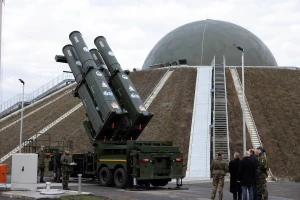
Rafael’s reported negotiations with Volkswagen over the production of Iron Dome-related components in Germany are the clearest signal yet.
According to reports by German business publications WirtschaftsWoche and Handelsblatt, Rafael and Volkswagen are close to establishing a joint venture to convert Volkswagen’s Osnabrück facility from producing Cabriolets to manufacturing trucks, launchers, and other platform components for air defense systems, including Iron Dome and potentially Iron Beam.
The deal reflects more than opportunism. Europe is discovering that defense spending commitments are meaningless without manufacturing capacity. NATO members are now targeting defense expenditure of 5% of GDP by 2035, while Germany alone has committed hundreds of billions of euros towards military expansion and industrial renewal.
Yet Europe’s traditional defense champions – Rheinmetall, Leonardo, Saab and BAE Systems – already face years-long order backlogs.
Israeli groups arrive with a different proposition. Unlike many European peers still scaling production, Israel’s defense companies have systems tested under wartime conditions and, crucially, immediate operational credibility.
The wars in Ukraine and the Middle East have transformed battlefield validation into a commercial advantage. Battlefield performance has become a more powerful sales tool than technical specifications.
That shift is particularly evident in air defense. Europe’s renewed vulnerability to missile and drone attacks has accelerated demand for layered interception systems. Rafael’s Iron Dome has already been sold to Finland and Romania, while Greece is also examining the system. EuroSpike anti-tank missiles – produced by the European joint venture EuroSpike, in which Rafael holds a 20% stake – are already deeply embedded across NATO armies.
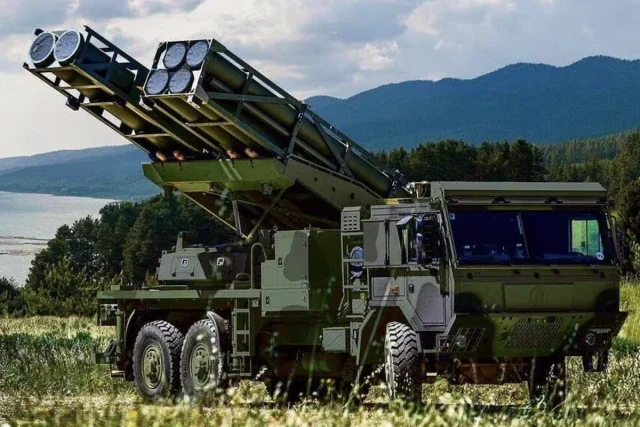
Elbit Systems, meanwhile, is advancing plans to manufacture its EuroPULS rocket system in Germany through partnerships with KNDS Deutschland and Diehl, part of a broader effort to establish a Europe-based missile production network serving multiple countries across the continent. According to the German publication Hartpunkt, the program could be tied to contracts worth roughly €6 billion.
The industrial logic is equally compelling. Germany’s automotive sector – which accounts for roughly 5% of the country’s economic output – is under growing strain from weak electric vehicle demand, intensifying Chinese competition and rising production costs. Parts of the industry are increasingly confronting what analysts describe as a structural crisis rather than a temporary downturn. Volkswagen’s Osnabrück factory has become emblematic of the pressure facing the sector, with the site expected to close by 2027 and roughly 2,300 jobs at risk.
Against that backdrop, defense manufacturing is emerging as an attractive alternative for industrial groups seeking stable long-term demand supported by government spending commitments rather than volatile consumer cycles.
This is not entirely new. Rheinmetall has already partnered with automotive suppliers and manufacturers to expand production capacity. But Israeli companies are taking the strategy further by embedding themselves directly into European industrial ecosystems.
Manufacturing within Europe helps address logistical vulnerabilities and delivery bottlenecks that became more pronounced during wartime supply disruptions. For European buyers, local production offers reassurance that deliveries can continue even during regional conflict. For Israeli defense groups, it creates a more durable strategic position by increasingly tying future maintenance, upgrades and supply chains to Israeli technology and expertise.
The structure of these partnerships also reveals how carefully intellectual property is being managed. Sensitive technologies and interceptor production are expected to remain in Israel or the US, while European plants focus on chassis production, launch systems, generators and support vehicles. Israeli companies want European contracts without surrendering their technological edge.
Investors have already recognized the scale of the opportunity. Israeli defense shares surged over the past two years as war orders accumulated. Elbit Systems, Aryt Industries, Next Vision and smaller specialized suppliers all benefited from a global rush into defense equities.
The Tel Aviv Defense Index, launched only last November, climbed sharply before retreating by more than 40% from its March peak as markets began pricing in potential geopolitical stabilization.
The correction appears more rational than alarming. Valuations had become difficult to justify even against buoyant earnings growth. As Itai Lipkovich, chief executive of Horizon Capital Markets, notes, the sector’s largest listed companies were trading at earnings multiples well above global defense peers, with some smaller companies reaching triple-digit valuations.
Investors were no longer pricing in stronger defense spending alone. They were assuming today’s extraordinary demand conditions would persist for years.
The challenge is that defense demand rarely moves in straight lines. Europe’s current spending cycle appears durable, but equity markets tend to price future normalization long before order books begin to weaken.
That partly explains why strong operational news has recently failed to support share prices. Elbit Systems recently secured a new $212 million contract from the US Army to supply advanced night-vision systems, while Next Vision, which produces stabilized drone cameras, continues to report strong demand with an order backlog of roughly $289 million.
Investors are increasingly focusing less on headline contract wins and more on execution risk, production bottlenecks and the long-term sustainability of margins.
Yet the recent correction may also reflect markets moving too quickly to price in a calmer geopolitical environment. As Yossi Barak, chairman of Barak Finance Group, recently noted, the pullback in defense shares “is not necessarily a change in the fundamental story of the industry itself”, particularly given that geopolitical tensions are likely to remain a persistent feature of the global landscape.
Still, the broader structural trend remains intact. Europe is rebuilding defense manufacturing after decades of underinvestment. Israeli firms are unusually well placed because they combine combat-tested systems with a willingness to localize production.
In other words, they occupy a commercially attractive middle ground: more willing than US peers to localize production, yet often faster to deploy than Europe’s overstretched incumbents.
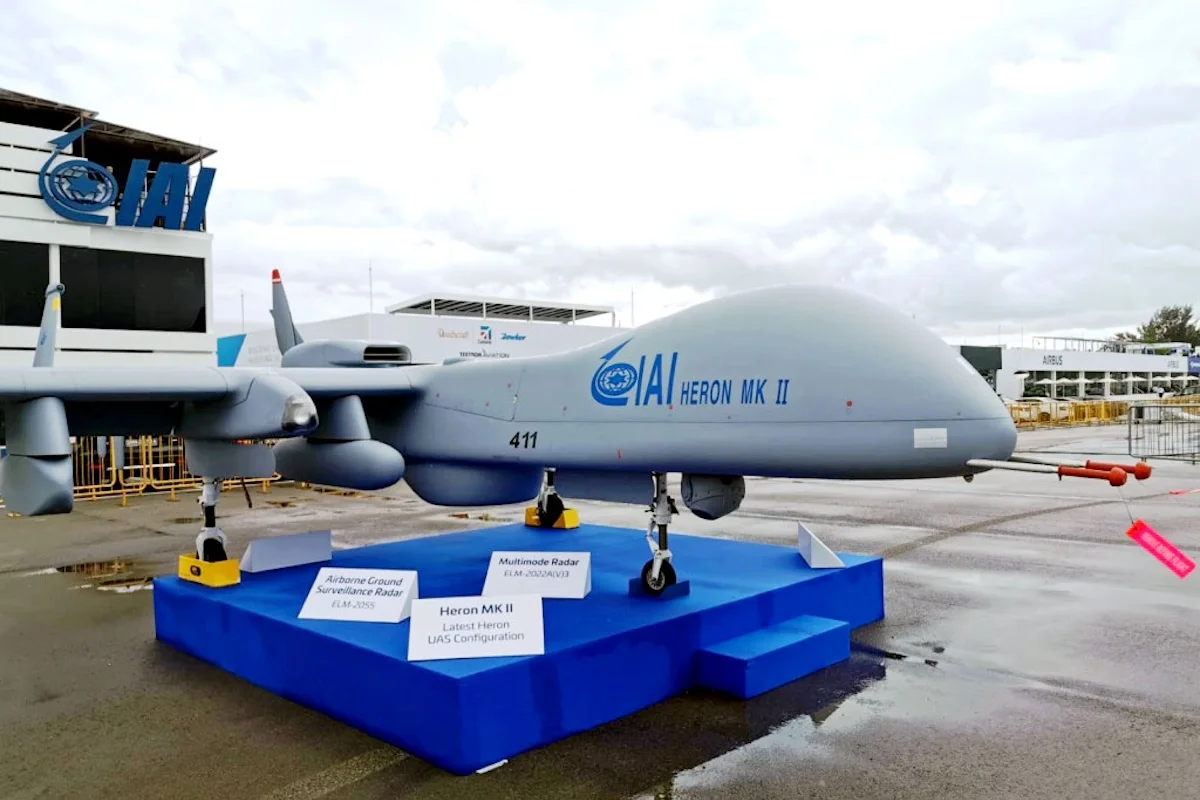
There are also geopolitical advantages. Germany’s growing defense relationship with Israel increasingly extends beyond procurement into industrial integration. Israel Aerospace Industries’ co-operation with ThyssenKrupp Marine Systems on unmanned submarines demonstrates how far these partnerships are expanding beyond missile systems alone.
Yet risks remain substantial. Political opposition inside Germany could still derail parts of the Volkswagen arrangement. Volkswagen’s history during the Nazi era and its post-war identity as a civilian manufacturer make any return to defense-linked production politically sensitive.
Labor unions retain significant influence over strategic decisions within the company. Even producing defensive systems rather than offensive weapons may not eliminate resistance.
There is also the question of whether Europe eventually prefers strategic autonomy over partnership. The current urgency favors rapid deployment and external expertise. Over time, however, political pressure may shift towards building wholly domestic capabilities rather than relying on Israeli or American technologies.
Local production partnerships partly solve this problem, but not entirely.
For investors, the distinction between cyclical enthusiasm and structural transformation matters. The sharp rally in Israeli defense shares probably ran ahead of fundamentals, and the recent correction reflects that reality.
Yet the broader shift appears genuine. Israeli firms are moving beyond traditional export cycles and positioning themselves inside a European reindustrialization effort backed by multi-year fiscal commitments.
If successful, the Volkswagen-Rafael partnership may ultimately matter less as an individual deal than as evidence of a wider trend: Europe’s military expansion is reshaping the continent’s industrial economy while embedding Israeli defense technology more deeply into European manufacturing and supply chains.
You might also like to read this: