Stolen rare ancient coins returned to Israel by US authorities



The Israel Antiquities Authority (IAA) announced on Wednesday that two ancient coins allegedly smuggled out of Israel have been returned by the United States. A formal handover ceremony was held in New York on Monday following a joint recovery operation.
U.S. Homeland Security and the Antiquities Trafficking Unit (ATU) of the Manhattan District Attorney’s Office acted in cooperation with the IAA’s Theft Prevention Unit to recover the artifacts.
“These extraordinary coins represent an important piece of history that is finally coming home,” said ATU chief Colonel Matthew Bogdanos, at the ceremony. “Furthermore, they represent an extraordinary partnership between the Antiquities Trafficking Unit in New York and the Israel Antiquities Authority. This is a partnership that should serve as a model for the return of looted cultural heritage around the world.”
“The theft of antiquities is an attempt to erase this history of ours and cut us off from our roots. They will not succeed,” Israeli Heritage Minister Amichai Eliyahu said. “We will continue to act resolutely together with partners around the world to stop this phenomenon and to protect our heritage.”
The rare coins reportedly bear marks that indicate they were minted decades before the First Advent of Jesus Christ.
One side of the coin bears markings depicting the seven-branched menorah that stood in the Temple in Jerusalem at the time, while the other side shows the showbread table, another sacred object used in the Temple. It is the only known coin found to feature a depiction of the seven-branched menorah, and archaeologists date it to the reign of the last Hasmonean king, Mattathias Antigonus, who ruled in Jerusalem from 40 to 37 B.C.
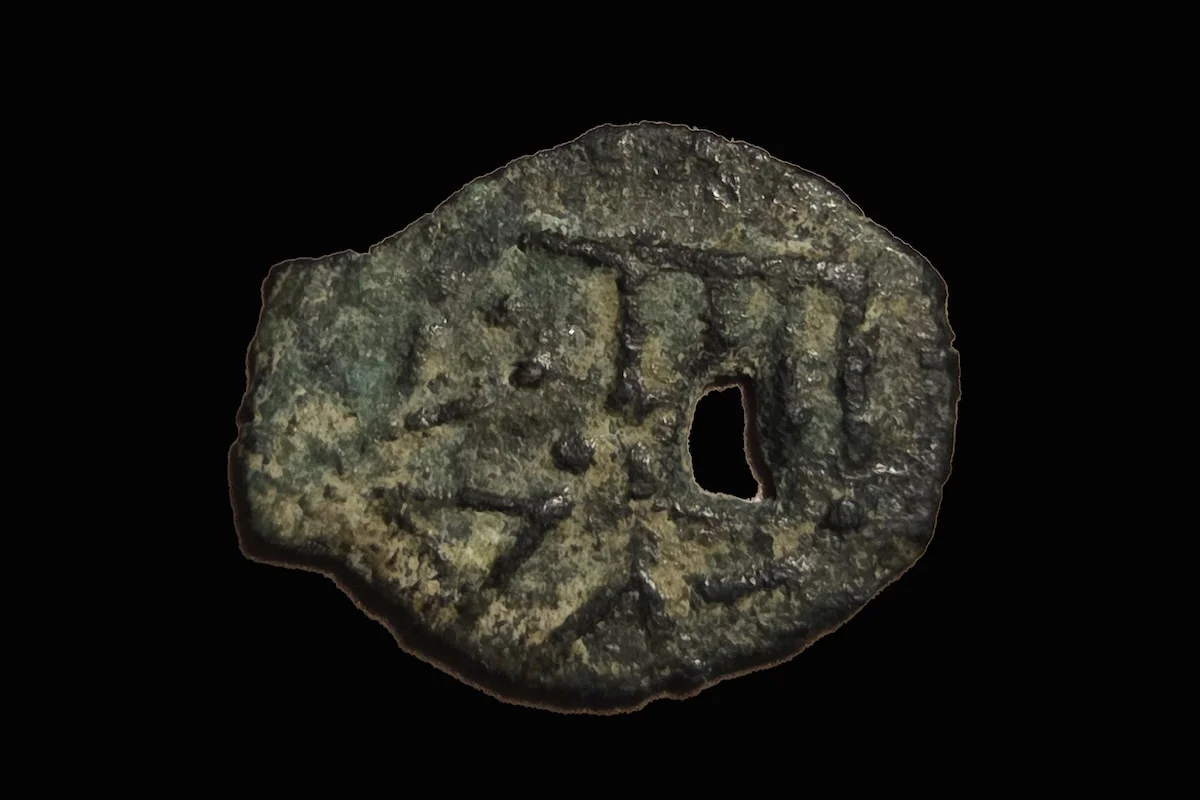
Such a coin, which is an artifact from a time that saw the last of the Hasmonean dynasty and the independent Jewish kingdom they ruled, is classified as an “Item of National Importance” by the Israeli government and is therefore prohibited from being taken out of the country.
According to historical analysis, the minting of coins with distinctly Jewish features was part of a campaign by King Antigonus to win favor among his subjects and instill in them a sense of national pride to support him in his struggle against the Romans and their client, King Herod, who sought control of the kingdom himself.
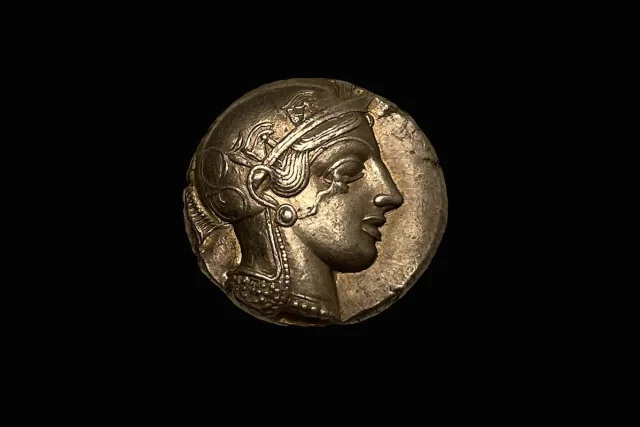
The second coin recovered is a silver tetradrachm, modeled on coins minted in Athens, Greece and widely used as currency across the ancient Eastern Mediterranean. It was struck in ancient Ashkelon around 2,500 years ago, when the region was under Persian rule.
One side depicts the Greek goddess Athena, while the other features an owl with spread wings, along with inscriptions in ancient Phoenician script identifying the city of minting.
It is one of only two such coins ever discovered, and the other is held in the Israel Museum’s coin collection in Jerusalem.
You might also like to read this: