Trump outsmarts Democrats again on Iran

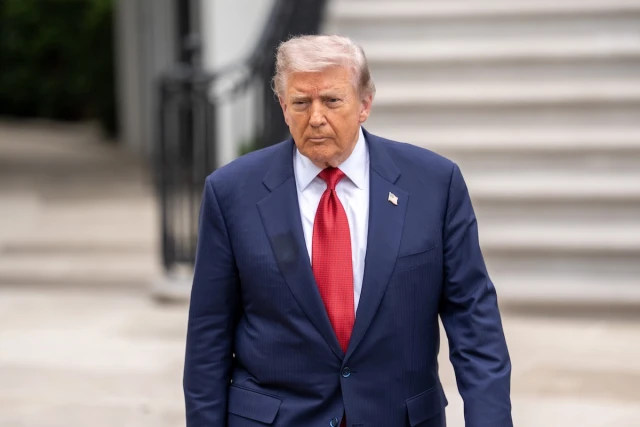
Congressional Democrats have strongly criticized U.S. President Donald Trump on a range of issues, including his handling of the recent military conflict with Iran. Lawmakers from the party have sought to place greater limits on the administration’s military authority, but Trump’s latest move may complicate those efforts.
At the center of the controversy is Trump’s decision to formally notify Congress that hostilities with Iran have effectively “terminated,” even as the U.S. continues military pressure in and around the Strait of Hormuz and maintains close coordination with Israel.
Under the War Powers Resolution, presidents are generally required to seek congressional authorization if military hostilities continue beyond 60 days. Democrats had been preparing to challenge the administration over that issue, but Trump’s notification could reduce the immediate legal and political pressure surrounding the matter.
It all fits a familiar pattern for Trump. He often moves aggressively enough to project strength while simultaneously preserving flexibility, so he’s never trapped politically, militarily or diplomatically. In many ways, it’s quintessential Trump: always staying one step ahead politically while keeping his options open and refusing to get boxed into a corner.
That’s exactly what appears to be happening now because this major political maneuver in Washington has him avoiding a bruising congressional showdown over Iran, while still keeping maximum pressure on Tehran and standing firmly with Israel.
House Democrats had been considering repeated votes to challenge Trump’s authority regarding Iran, but what are they going to do?
That doesn’t mean tensions are actually over. Far from it.
U.S. and Iranian forces have exchanged fire multiple times in the Strait of Hormuz after Iran launched missiles and drones toward American naval vessels. The U.S. responded with strikes on Iranian launch sites and command centers.
So while Trump says the war phase has ended, the region still looks extremely volatile.
There’s no guarantee that both sides will come to any agreement, even though the president continues to say that he’s hopeful.
Meanwhile, Democrats argue that Trump is trying to wage a shadow war without Congress formally weighing in. Republicans counter that Trump is preventing Iran from threatening Israel, destabilizing the Middle East, and potentially pursuing a nuclear weapon.
In the middle of all of it all is Israel, waiting to see whether politicians in Washington will try to force Trump's hand.
Senator Tim Kaine of Virginia, one of the leading Democratic voices pushing back on Trump’s Iran strategy, demanded immediate congressional action earlier in the conflict. “The Senate should immediately return to session and vote on my War Powers Resolution,” Kaine said, calling the administration’s actions “dangerous” and “unnecessary.”
Senator Andy Kim of New Jersey echoed that concern, saying Congress needed to “reassert the American people’s will” because Americans “don’t want to be at war.”
Senate Minority Leader Chuck Schumer has been walking a political tightrope that many Democrats now face concerning Israel and Iran. He said, “Iran must never be allowed to attain a nuclear weapon,” while also warning that Americans “do not want another endless and costly war in the Middle East.”
Meanwhile, Republicans are largely rallying behind Trump. House Speaker Mike Johnson forcefully defended the administration. “Today, Iran is facing the severe consequences of its evil actions,” he said after the initial U.S.-Israel strikes earlier this year.
Senator Lindsey Graham of South Carolina praised the military operation as happening “in the nick of time” to stop Iran’s nuclear ambitions.
Still, Trump seems to understand the political risk here. A major Middle East war could fracture parts of his own coalition, especially among “America First” conservatives who remain deeply skeptical of foreign entanglements.
That’s why to many supporters this latest move feels so politically strategic. Trump still looks tough on Iran, continues his strong support for Israel and keeps military pressure on Tehran. But he also preserves the ability to say America is not entering another full-scale Middle East war.
In other words, he is keeping all of his options open. And that has long been one of Trump’s core political instincts: never allow yourself to get cornered into only one path forward. It’s another chapter in the political "art of the deal."
President Trump is fully aware that he not only has to deal with the obstacle of Democrats trying to stop him from continuing to pursue military intervention in Iran, but also his own base, which has no appetite for an extended conflict.
Compounding the issue are midterm election voters who see high gas prices and other economic effects of the Iran conflict and could easily express their frustration at the ballot box come November.
There are no doubt challenges ahead for this president, but if we’ve learned one thing from his two terms in the Oval Office, it’s this: don’t bet against Trump. He always has something up his sleeve.
You might also like to read this: