Israel’s $2 trillion wealth boom driving shekel higher




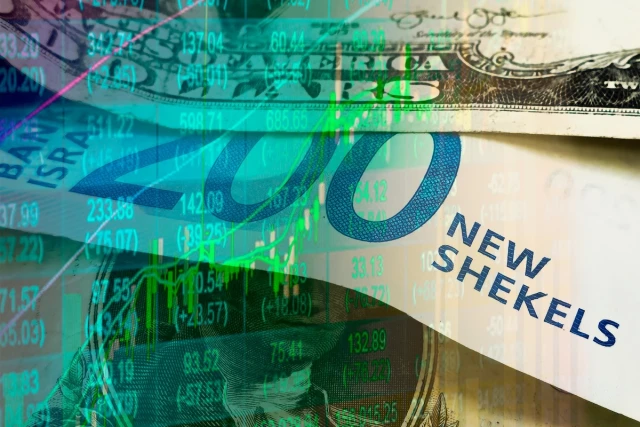
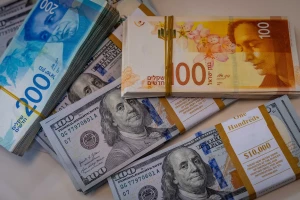
Israel’s shekel has surged to its strongest level against the dollar in more than three decades, a rally that appears to reflect the easing of geopolitical tensions, a weaker U.S. dollar, strong global equity markets and resilient domestic growth despite war on multiple fronts.
The shekel is increasingly being driven not just by economic performance, but by the mechanics of Israel’s rapidly expanding financial wealth and the way institutional investors manage it.
That distinction matters. One reflects economic confidence, while the other reflects the scale of capital flows moving through Israel’s financial system.
According to Bank of Israel data, the Israeli public’s financial assets reached a record NIS 7.4 trillion (about $US2.32 trillion) at the start of 2026, an increase of NIS 1.1 trillion (about $345 billion) in a single year and roughly 80% over six years. At that scale, even relatively small portfolio adjustments can create major currency movements.
The composition of that wealth has also shifted. The share of risk assets – equities and corporate bonds – rose from 39% at the end of 2022 to 48% by early 2026, increasing investors’ exposure to market swings.
At the same time, the ratio of financial assets to GDP climbed from around 285% two years ago to roughly 350%. That does not necessarily signal overvaluation, since markets price future earnings rather than current output, but the widening gap raises questions about sustainability if asset prices continue outpacing the broader economy.
The impact on the shekel has been direct.
A large share of Israeli savings is invested abroad through pension funds and insurance companies heavily exposed to global equities. As those foreign assets rise in value, so does currency exposure. To manage that risk, institutions hedge by selling dollars and buying shekels.
What would normally be a background market process has become a dominant force.
Institutional investors sold more than $23 billion in foreign currency during the second half of 2025 alone – a record for a six-month period and equivalent to roughly 3.5% of GDP. The stronger global markets perform, the stronger the shekel becomes.
What makes the current rally unusual is that these flows now appear large enough to override traditional macroeconomic signals. The shekel has continued to strengthen even during periods when external conditions would typically favor the dollar, suggesting that balance sheet adjustments are exerting more influence on the exchange rate than conventional economic indicators.
A second trend is reinforcing the move.
As domestic wealth expands, Israeli investors are increasingly directing money back into local markets. Holdings of domestic equities have more than doubled over a two-year period. Part of that reflects familiarity and easier access, including dual-listed shares traded in shekels. But part of it is also currency-driven.
As noted by Meitav chief economist Alex Zabezhinsky, a persistently stronger shekel reduces the attractiveness of unhedged foreign investments, encouraging investors to shift more capital into domestic assets.
That further strengthens the currency. Money that might otherwise flow abroad stays within Israel’s financial system, while institutions converting foreign currency into shekels increasingly deploy that liquidity into local markets.
The interaction between these forces is creating what economists describe as a “wealth effect.” As financial assets rise, households tend to feel more financially secure and spend more freely.
In Israel’s case, the scale is striking. The increase in financial assets over the past year alone exceeded total wage income, amplifying the impact on consumption and broader economic activity even without comparable wage growth.
For the Bank of Israel, that creates a policy dilemma.
A stronger shekel helps contain inflation by lowering import costs, but rising wealth and consumption support domestic demand. In that environment, traditional tools such as interest rate adjustments become less effective.
For now, the central bank has chosen not to intervene in the foreign exchange market. With inflation remaining within its 1-3% target range and financial conditions relatively stable, there is little immediate pressure to act. Foreign exchange reserves stand at roughly $228 billion, but they are generally held for more acute market stress.
Interest rate expectations are also reinforcing the trend.
Speaking at a recent conference hosted by the Aharon Institute, Bank of Israel Governor Prof. Amir Yaron said additional rate cuts could become possible if geopolitical tensions ease further, while emphasizing that any move would remain data dependent. Markets are currently pricing-in additional easing over the coming year, potentially bringing the policy rate toward 3.5%.
As long as the central bank avoids more decisive action, downward pressure on the dollar-shekel exchange rate is likely to persist.
The dynamic, however, could reverse quickly.
If global equity markets continue rising, the current mechanism will likely persist. But if markets fall sharply, the process could unwind just as fast. Declining asset prices would reduce the value of foreign holdings, lowering the need for hedging and potentially triggering renewed dollar buying.
Geopolitical risk still matters, but it no longer appears to be the dominant driver of the currency. The shekel’s recent appreciation has continued even during periods when traditional risk indicators would normally point toward caution, underscoring how strongly internal financial dynamics are influencing the market.
For investors, the implication is increasingly clear: the shekel is no longer simply a reflection of economic strength. It is being shaped by rising financial wealth, growing risk appetite and the mechanics of institutional portfolio management.
The shekel’s strength is real. Whether that strength proves durable is not as certain.
You might also like to read this: