UAE praises PM Netanyahu call after Iran attack; US hesitant to resume military action in Iran
Gulf states concerned over US failure to prioritize security amid Iranian threat






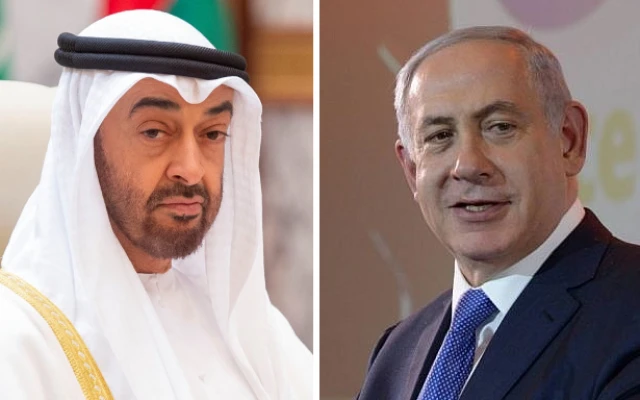
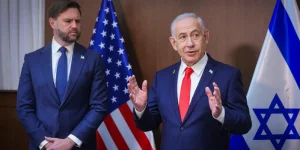
United Arab Emirates President Sheikh Mohamed bin Zayed Al Nahyan received calls from a number of world leaders, including Israeli Prime Minister Benjamin Netanyahu, condemning Iran's attacks on civilian sites and facilities, UAE news agency WAM reported.
WAM said the leaders “affirmed their countries’ solidarity with the UAE and support for measures it takes to safeguard its security and stability, and ensure the safety of its citizens.”
The public acknowledgment of the call with Netanyahu appears to signal a growing alignment with Israel, as Arab and Muslim states have offered limited assistance or public support to the UAE during the Iranian attacks.
The Israeli embassy in the UAE posted a message on 𝕏 confirming the phone call between the two leaders, describing the Iranian attacks as “a grave violation of sovereignty and a threat to regional stability.”
Prime Minister @netanyahu held a call today with the President of the United Arab Emirates, His Highness Sheikh Mohamed bin Zayed Al Nahyan.
— Israel in the UAE (@israelintheUAE) May 6, 2026
During the call, Prime Minister Netanyahu expressed Israel's firm condemnation of the Iranian terrorist attacks targeting civilians and… pic.twitter.com/xxTRUGcaOV
“As always, Israel stands in steadfast solidarity with its closest allies and remains committed to our shared pursuit of peace and security,” the statement concluded.
According to a report in The Wall Street Journal, the UAE and other Gulf states have grown increasingly concerned by what they see as a limited U.S. response to Iran’s targeting of Emirati oil infrastructure during the ceasefire, warning that it could embolden Tehran to carry out further attacks.
The Iranian regime fired more than a dozen missiles and drones at the UAE on Monday, striking the country’s sole oil export port in Fujairah. U.S. President Donald Trump did not publicly condemn the strikes or order retaliation. On Tuesday, U.S. Defense Secretary Pete Hegseth said that from Washington’s perspective, “the cease-fire certainly holds.”
Dania Thafer, director of the Gulf International Forum think tank, told the WSJ, “From the perspective of the Gulf states, it looks like the U.S. is not prioritizing their security and basically threw the Gulf states under the bus. If the U.S. doesn’t respond, then the Iranians will conclude that the U.S. doesn’t want to go back to war – and this affects deterrence.”
While the U.S. presents a posture of being unwilling to resume military operations, Iranian leaders continue to maintain a belligerent stance in their public discourse.
“We know full well that the continuation of the status quo is intolerable for America, while we have not even started yet,” Iran’s parliament speaker and chief negotiator, Mohammad Bagher Ghalibaf, wrote on 𝕏.
The UAE has so far refrained from responding militarily to the Iranian attacks, however, the foreign ministry said it “reserves its full and legitimate right to respond to these attacks.
Iranian state media cited a senior official who claimed the attack was not aimed at the UAE, but was a response to “American military adventurism.”
“The Islamic Republic had no plan to attack [these facilities],” the official was quoted as saying. “What happened is the product of American military adventurism aimed at creating a passage for ships to illegally cross the restricted Strait of Hormuz.”
On Wednesday evening, Israeli Prime Minister Benjamin Netanyahu held a Security Council meeting, where he said he would speak with Trump about the situation in Iran.
You might also like to read this: