Israel concerned Iran deal negotiated by US won't restrict Tehran's ability to threaten the Jewish State
Iran claims negotiations are only about end of war, not nuclear issue, contradicting Trump


Israeli defense officials are concerned that the agreement being developed between the United States and the Islamic Republic of Iran may not address several of Israel’s war goals and could end up allowing Iran to threaten the Jewish State, Ynet News reported Thursday.
U.S. President Donald Trump told Fox News on Wednesday evening that an agreement on a memorandum of understanding to permanently end the war could be reached within a week, after he stopped "Project Freedom," which guided merchant vessels through the Iranian-blockaded Strait of Hormuz at the request of Pakistan, which mediates the talks.
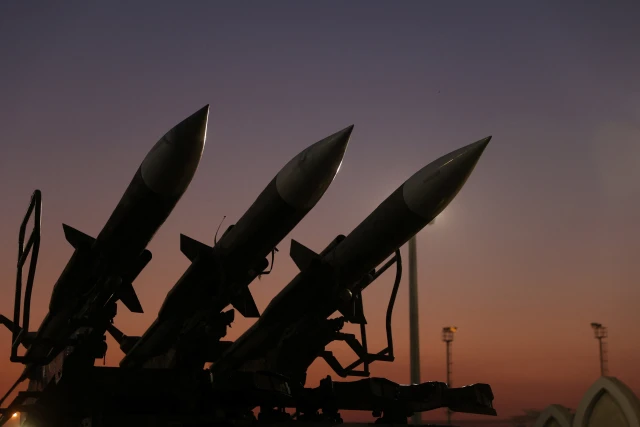
Among the concerns held by Israeli officials is that Iran’s ballistic missile program may not be covered by the emerging agreement.
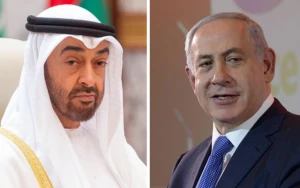
Besides attacking Israel with ballistic missiles during the recent conflict, the Iranian regime also targeted Israel’s Abraham Accords partner, the United Arab Emirates, launching more missiles at the UAE than any other country. While the U.S. and Israeli military operations were still ongoing, the UAE said that any negotiated agreement with Iran must address the issue of ballistic missiles.
Other Gulf states, such as Saudi Arabia, also urged the U.S. to deal with the Iranian ballistic missile and drone threat during the war. Even U.S. officials have expressed concern that Iran is taking advantage of the current ceasefire to rebuild its missile stockpile.
Additionally, defense officials are concerned that a deal might limit Israel’s freedom of operation against Hezbollah in Lebanon, as Iran has insisted that any ceasefire or agreement with the U.S. must include strikes on its proxy in Lebanon.
However, there are no indications that the current agreement under discussion would limit Iran’s financing or arming of its regional proxies, which have targeted Israel, as well as U.S. forces in the area and even Gulf states during the war.
A report in NBC News claimed that U.S. President Trump canceled Project Freedom, the operation meant to help secure shipping through the Strait of Hormuz, after Saudi Arabia denied the U.S. the use of its bases in Saudi territory or overflight permission to support the operation. If true, the report appears to indicate a shift in Saudi Arabia’s previous position, in which it supported a strong U.S. response to Iranian attacks on its territory and those of its neighbors.
Another Israeli concern is that the agreement could release billions of dollars of frozen Iranian funds, which could become available to the regime, allowing it to begin rearming and strengthening its proxies in the region.
Israeli sources told Ynet that most in Israel’s security establishment support the continuation of the naval blockade on the Strait of Hormuz, since the Islamic Republic is collapsing from within. The belief is that an agreement would undermine the war's achievements, as Iran is expected not to honor the agreement's details.
“This is disastrous for Israel," said an Israeli source familiar with the details. "This is a bad agreement that only perpetuates the rule of the ayatollahs. It is a lifeline for them, when every day that passes, they are getting closer to collapse.”
Israeli officials are also disappointed that the agreement apparently only limits uranium enrichment to 15 years, in spite of U.S. President Donald Trump declaring, “Iran will never have a nuclear weapon.”
“How is this much different from Obama's nuclear agreement?” one Israeli source asked. “There was a sunset clause there, and there is one here. Iran contributed anyway and, in any case, will have to wait, and then it will explode with a bomb when Trump is no longer here.”
However, a government official told Israeli news outlets on Wednesday evening that Israel was not caught off guard by U.S. actions.
“The Americans did not surprise us,” the official stated. “Prime Minister Netanyahu is in constant contact with President Trump, and they have almost daily conversations. There is direct contact between the Prime Minister’s people and the President’s people.”
At the same time, despite comments by President Trump claiming that a deal could be reached soon, Iranian leaders and media continue to take a belligerent tone.
The regime-affiliated Tasnim news agency cited a source “familiar with the details” as saying, “despite claims by the American media that Iran and the US are close to a final agreement to end the war, Iran has not yet given an official response to the Americans' final text, which contains several unacceptable clauses.”
The same source said that recent statements by Trump are an attempt to excuse his withdrawal from failed policies.
“The 'propaganda' in the American media is aimed at justifying Trump's withdrawal from his latest action, which was wrong,” the official stated. “The language of force and threats is ineffective - and makes the situation worse for the Americans. Iran has resumed examining the proposal and will inform the mediator when it reaches a conclusion.”
On Wednesday afternoon, President Trump issued another threat, saying that if Iran does not agree to the deal, “the bombing starts.”
“Assuming Iran agrees to give what has been agreed to, which is, perhaps, a big assumption, the already legendary Epic Fury will be at an end, and the highly effective Blockade will allow the Hormuz Strait to be OPEN TO ALL, including Iran,” Trump wrote on Truth Social. “If they don’t agree, the bombing starts, and it will be, sadly, at a much higher level and intensity than it was before. Thank you for your attention to this matter!”
Shortly after Trump's post, Iranian officials told the Qatari newspaper Al-Araby Al-Jadeed that the U.S. is still making “excessive demands.”
The officials also claimed that “the negotiations are focused on ending the war, not on the nuclear issue,” contradicting Trump’s claims that the negotiations will ensure that Iran never has a nuclear weapon.

The All Israel News Staff is a team of journalists in Israel.
You might also like to read this: