Around 92% of Gaza Envelope residents have returned to their homes – report
Reconstruction effort aims to double population of southern border area, amid lack of trust in government




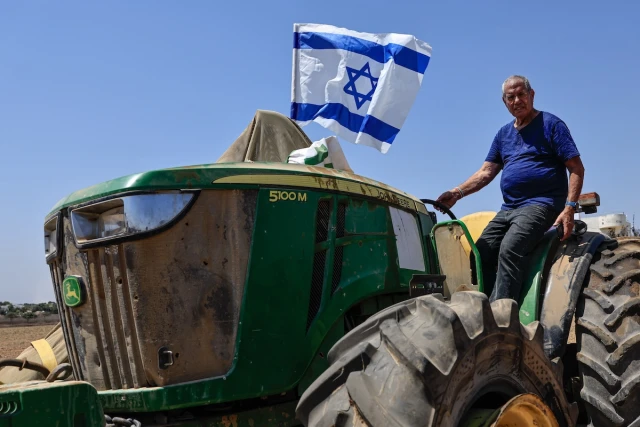
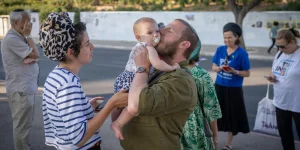
Two and a half years after the Oct. 7, 2023, Hamas attacks in southern Israel, most residents of the Gaza Envelope have returned to their homes, a report from the Tkuma Directorate stated.
The report, released on Sunday, said that 92% of the residents on the Israeli side of the Gaza Strip have returned to their communities, along with around 3,000 new residents.
The Tkuma Directorate is a government agency established to oversee the rehabilitation and revival of communities in southern Israel located within seven kilometers (about 4 miles) of the Gaza border, as well as northern communities affected by the war. It was created shortly after the Oct. 7 attack, on Oct. 19, under the authority of the Prime Minister’s Office, to coordinate the recovery of areas damaged during the conflict.
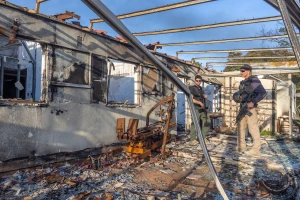
The 92% return rate does not include communities that were heavily damaged in the Hamas attacks and have yet to reopen to residents, such as Be’eri, Holit, Nir Oz, and Kfar Aza, which remain under renovation and are not expected to welcome residents back until 2027. Another hard-hit community, Kissufim, is slated to begin receiving returning residents this summer.
However, five additional communities, Nirim, Re’im, Kerem Shalom, Ein HaShlosha, and Nahal Oz, all saw a return of residents starting last year.
One of the Tkuma Directorate's objectives is to double the region’s population, currently estimated at 65,000, by 2033, with a focus on rehabilitating the Sapirim industrial zone and providing grants for farms and agricultural projects in the area.
“The goal is not only to return the situation to its former state, but to make the Tkuma region the most attractive and prosperous region in Israel,” Tkuma said, “while strengthening the economy, tourism and the personal security of every resident.”
Finance Minister Ze’ev Elkin, who oversees the budget for the Tkuma Directorate, said, “Within a relatively short period of time, the Tkuma Directorate has succeeded in leading a large-scale reconstruction process and achieving significant achievements. The return of over 92% of the residents, along with the absorption of new ones, is a testament to the resilience of the region. An investment of over NIS 11 billion has laid a solid foundation for long-term growth.”
In addition to housing and economic investments, the Tkuma Directorate has earmarked NIS 827 million ($280 million) for a security initiative known as “New Horizon,” designed to incorporate lessons learned from the Oct. 7 Hamas attack.
According to the report, the program focuses on upgrading physical defenses – such as fences, gates, protection systems, and fortified spaces – alongside the deployment of advanced technological solutions.
It also prioritizes bolstering local emergency response teams, enhancing rapid-response capabilities, and improving coordination with the IDF and other security forces across the region.
The Tkuma report indicated that trust in state institutions has fallen to 40%, compared to around 76% trust in local authorities. It also found that only 28% of residents reported feeling a sense of personal security in the region.
Ohad Cohen, head of the “Future of the Envelope” organization, told Walla News that there is still significant work to be done.
“You can't talk about successful reconstruction only through budget tables – the reconstruction of the border area cannot end with performance reports and work plans,” Cohen said. “It must be measured by a simple question: Do the residents feel safe, believe in the country, and see a real change in their lives? At the moment, the answer is still not sufficient.”
You might also like to read this: