Opening of dozens of fancy restaurants in Gaza doesn’t disprove genocide, Al Jazeera claims
Israeli social media users share posts bemoaning the horrors of the ‘Nutella genocide’




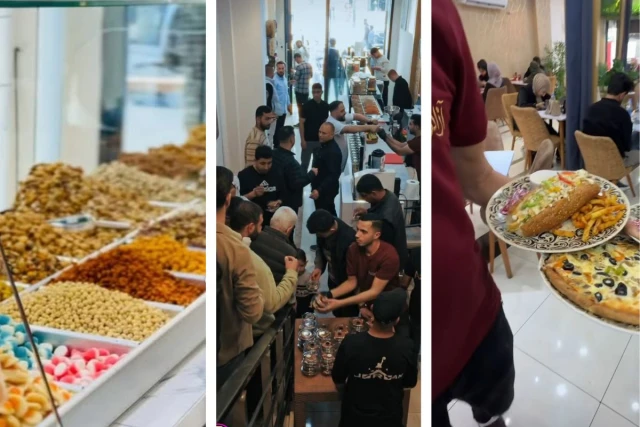
A recent opinion piece in Al Jazeera argues that dozens of social media posts from recent weeks showing newly opened upscale restaurants and cafes in Gaza do not disprove claims of genocide.
“Social media is full of posts showing off photos and videos of fancy-looking cafes and restaurants in Gaza,” Palestinian author Eman Abu Zayed, writes. “Pro-Israeli accounts often use these images to claim that life is back to normal in Gaza, that people are not suffering and that no genocide ever took place.”
While admitting that the videos and the restaurants and cafes depicted in them are real, Zayed claims that they don’t disprove the genocide narrative. She claims that the massive destruction of Gaza’s infrastructure, in which an estimated 80% of all buildings in Gaza were destroyed, is the real proof, as well as the sharp economic disparity between those who “profiteered” from the war, and those who didn’t, is another proof.
She also indicates that the increased price she paid for food in a cafe that she used to frequent before the war is another sign that the genocide was real.
Tablet Magazine editor Liel Leibovitz said the opinion piece is just another example of the lies and “blood libels” used by pro-Palestinian accounts over the past three years.
“‘The Israeli genocide is guilty of creating too many fancy restaurants in Gaza’ is peak, perfect retardation,” Leibovitz wrote on 𝕏. “Congrats, guys: after three years of crazy lies and blood libels, you finally hit rock bottom.”
In late April, Fox News reported that even the UN-reported data on Gaza does not support claims of a famine, with acute malnutrition cases in children witnessing a stark drop as soon as the October 2025 Gaza ceasefire was implemented.
It noted that despite a sharp increase in the amount of humanitarian aid entering Gaza in April 2026, social media saw “a spike in messaging alleging ‘engineered starvation’ in Gaza,” with Doctors Without Borders (MSF) accusing Israel of trying to “destroy the conditions of life.”
Fox cited a study by the media watchdog group HonestReporting, which noted a “continued use of famine-related language across social media and ideologically aligned outlets” in early April.
1/
— HonestReporting (@HonestReporting) April 29, 2026
🚨 A new narrative is spreading across media: Gaza is facing an “Israel‑engineered famine.”
THIS IS A LIE.
Our investigation shows Hamas admitted Gaza had months of food, then built a famine story and pushed it through influencers and media. pic.twitter.com/UndvL7cc4C
HonestReporting says the famine narrative “was further reinforced by coverage in outlets including Drop Site News, Middle East Eye, Mondoweiss and Al Jazeera English.”
Many in Israel first became aware of the launch of the new restaurants and cafes through an Israeli social media account called Imshin, which began to repost videos from Palestinian social media accounts in Gaza even before the Oct. 7 Gaza War.
Naji al-Sawafiri goes to the opening of Azad Café, al-Jalaa St. Gaza City, although he doesn't know the owner. He meets our old pal, bodybuilder Maher Habboush.
— Imshin (@imshin) April 22, 2026
Naji comments, while stuffing his face with "chicken pizza", a popular Gaza dish, that every day they go to openings.… https://t.co/8lYzN6Bcwu pic.twitter.com/29cmmMU7KE
However, after the war started, when videos and posts shared by Imshin contrasted sharply with the genocide and starvation narratives being propagated on mainstream media and many pro-Palestine social media accounts, Israelis began to take notice.
Snickers and Twix choc bars - 4 for 10 shekels ($3.35) at Sky Mall on al-Samer next to Dahab Sweets, Gaza City.
— Imshin (@imshin) April 26, 2026
Timestamp: 1 day ago#TheGazaYouDontSee
Link in 1st response https://t.co/hcnDdMBWQX pic.twitter.com/AgWqu9MjJA
Another social media channel which began to post similar content is the “GAZAWOOD - the PALLYWOOD saga” account, which regularly posts videos of staged or fake videos alleging to depict horror and atrocities from Gaza.
When it became known that large shipments of Nutella and Coca Cola had been delivered to Gaza during the middle of the alleged famine, the GAZAWOOD account posted videos from Palestinians showing cafes serving Nutella desserts.
The famine narrative collapses quickly when the receipts show Nutella pic.twitter.com/rlU7sGKY61
— GAZAWOOD - the PALLYWOOD saga (@GAZAWOOD1) September 10, 2025
Some Israeli social media accounts even began to refer to the discrepancy as the “Nutella genocide.”
Meanwhile, the IDF’s Coordination of Government Activities in the Territories: (COGAT) unit, which supervises military activities in the Palestinian territories, rejects claims of food shortages or famine.
Since the start of the ceasefire, approximately 150,000 tons of flour have entered Gaza, averaging 22,000 tons per month.
— COGAT (@cogatonline) May 3, 2026
To put that into perspective, this volume is enough for 9.4 million pitas daily
That's between 4- 5 pitas per person, every single day pic.twitter.com/KuCcjDJv6r
COGAT posts almost daily detailing the numbers of aid trucks entering the Gaza Strip, and giving updates on the quantities of various aid supplies brought in by the IDF and its partners. According to COGAT, 600 aid trucks have been entering Gaza daily for the past several weeks.
"We continue to facilitate the entry of humanitarian aid through all authorized routes with no limit on the amount of aid that can enter," the office said.
You might also like to read this: