Dearborn, Michigan: The anti-Israel epicenter of the United States?


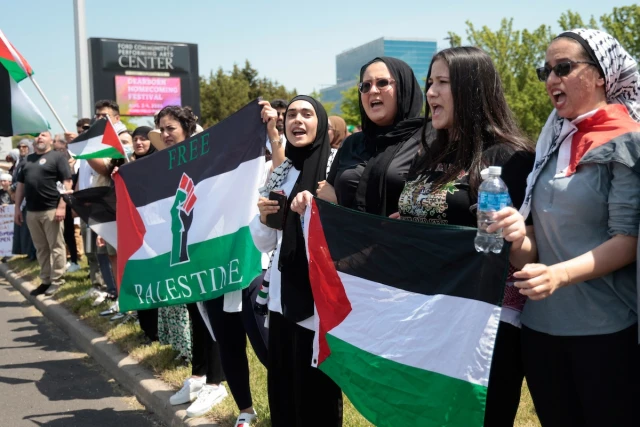
There’s a city in America right now that’s definitely on the map, but maybe not for the right reasons. Dearborn, Michigan, is not necessarily the destination you might choose for a luxury vacation. However, if you're looking to partake in some solid anti-Israel events and sentiment, it may be the perfect spot.
Dearborn has long been known as the heart of Arab-American life, but it is now turning into a political and cultural battleground over Israel. At the center of it all is a mayor, a congresswoman, and a growing set of questions that aren’t going away.
Let's start with this: the aftershocks of a recent synagogue attack in West Bloomfield, Michigan, about 30 minutes north of Dearborn, are still being felt. Jewish communities across the state remain on edge after a naturalized U.S. citizen from Lebanon rammed his truck full of gasoline and explosives into the synagogue and opened fire. He died, but thankfully, nobody else did. So that’s the backdrop.
Now let's move inside a city council meeting in Dearborn because the City Hall there has been a hotbed of activity. In one widely viewed confrontation, Mayor Abdullah Hammoud told a resident he was “not welcome here” after the man raised concerns about extremism during a heated exchange. In another moment, residents asked city leaders to clearly denounce Hamas and Hezbollah – and got no direct response.
“What you’re seeing in Dearborn is not just disagreement – it’s escalation,” said Niraj Warikoo, a reporter from The Detroit Free Press. “These meetings have become a reflection of global tensions playing out at the local level. When residents feel like their concerns aren’t being addressed directly, it only fuels more frustration on all sides.”
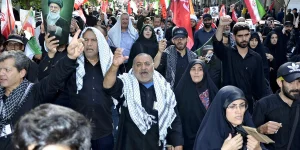
It's not just inside the council chamber. Outside, tensions have spilled into the streets. Protesters are clashing over religion, identity, and the war in the Middle East. It's happening on both sides of the debate about Israel. Emotions are boiling over, and slurs are flying back and forth. One dispute centered on the broadcasting of the Islamic call to prayer over loudspeakers in Dearborn. Of course, adding fuel to the fire is Congresswoman Rashida Tlaib, a well-known, outspoken anti-Israel critic who remains one of the most prominent national voices when it comes to Israel.
“There’s a real debate happening right now about where criticism of Israel ends and something else begins,” said Jonathan Greenblatt, CEO of the Anti-Defamation League. “Leaders have a responsibility to be clear, especially in moments of crisis. Ambiguity can create fear, even if that’s not the intent.”
This all deserves a closer look at Abdullah Hammoud, the Democratic mayor of Dearborn since 2022. He truly has emerged as a prominent local voice criticizing Israel and U.S. policy toward the Gaza conflict. A Lebanese-American Muslim leader, he has frequently aligned himself with pro-Palestinian activism and calls for a ceasefire.
Hammoud drew national attention after defending Rep. Rashida Tlaib, praising her stance against what he described as “U.S. government-backed genocide” in Gaza and supporting her ceasefire demands. His rhetoric has also included urging voters to protest American policy by voting “uncommitted” in the 2024 Democratic primary.
Critics point to his presence at rallies where harsh anti-Israel chants were heard and to his broader framing of Israel’s actions as unjust or oppressive. Supporters, however, argue that he is reflecting the views of a large Arab-American constituency deeply affected by the conflict.
Regardless, the anti-Israel aspect here is larger than just Dearborn. What’s happening in this city is actually shaping politics across the entire state of Michigan.
Take the U.S. Senate race. Candidate Abdul El-Sayed has found himself in the middle of a growing controversy after campaigning alongside political online streamer Hasan Piker, a figure who has drawn criticism for past comments about Israel and the Oct. 7 attacks. Many pro-Israel supporters say he is clearly antisemitic.
Some Democrats and Jewish leaders raised concerns about the optics, especially at a time when tensions are already running high, but El-Sayed didn’t back down, signaling that he’s more focused on energizing his base than backing away from a controversy over Israel.
“Michigan is becoming a microcosm of a much larger national divide,” says former Michigan House Representative Bill Ballenger. “What you’re seeing is not just demographic influence – it’s ideological influence. And it’s reshaping how politicians approach one of the most sensitive issues in American politics.”
Part of the problem in certain parts of Michigan – and quite frankly, many other hotbed areas around the country – is that some local leaders have been more forceful in speaking about Palestinian suffering but less so when it comes to condemning antisemitism or addressing fears within Jewish communities.
Sadly, in Michigan, and especially Dearborn, that trend is expected to increase in the years ahead.
You might also like to read this: