Why Jews count the Omer and why these seven weeks matter




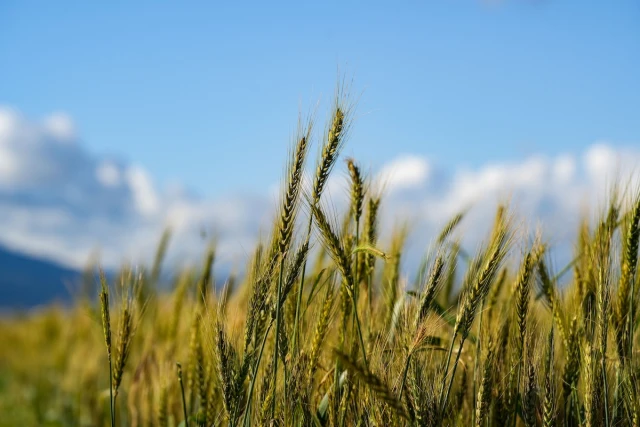
God commanded the children of Israel to “count the omer” – an omer being a measurement of wheat – for 50 days, beginning on the first Sabbath after Passover. This seven-week period culminates in the aptly named Feast of Weeks, or “Shavuot,” which means “weeks” in Hebrew.
“You shall count seven full weeks from the day after the Sabbath, from the day that you brought the sheaf of the wave offering. You shall count fifty days to the day after the seventh Sabbath. Then you shall present a grain offering of new grain to the Lord” (Leviticus 23:15-16).
It is from these 50 days that we get the word "Pentecost," with "pente" meaning 50 in Greek, and "pentecost" meaning fiftieth. Pentecost, the Feast of Weeks and Shavuot are all different names for the same thing.
Each evening for seven weeks, a blessing is said right before stating the number of days and weeks since the counting began. The blessing is as follows:
“Blessed are you, Adonai our God, Sovereign of the Universe, who has sanctified us with your commandments and commanded us to count the omer.”
But why? Why did God want Israel to count those days from Passover to the Feast of Weeks? A bit like a Jewish advent calendar (except twice as long), counting the omer is a way to simultaneously build anticipation and also prepare for what’s coming.
The term omer, usually translated as a sheaf, is a specific measure of unthreshed grain stalks allocated for the Temple offering. The Feast of Weeks has a very harvest festival feeling about it, with the seven species that God promised would be waiting in the land of Israel all on display:
“For the Lord your God is bringing you into a good land… a land of wheat and barley, of vines and fig trees and pomegranates, a land of olive trees and honey” (Deuteronomy 8:7-8).
But it is much more than a harvest festival. In Jewish tradition, it was at Pentecost, 50 days after Passover, that the Torah was given at Sinai, whereas Christian tradition emphasizes the giving of the Holy Spirit. Both were gifts from God, Word and Spirit, at the emergence of the two faith communities.
The twelve tribes of Israel became a faith community after believing and obeying God’s word at Passover, putting blood on their doorframes in faith, and then, 50 days after the Exodus, they sealed the deal by agreeing to enter into the Sinai covenant. Some 1,500 years later, the Spirit fell on the disciples of Jesus at Pentecost, giving birth to the early church.
God’s precious Word and Spirit were imparted in order to help us on the journey as we follow God’s ways.
The Bible states that the counting should start the day after the Sabbath in the Passover week, meaning that the fiftieth day should also land on a Sunday. However, in rabbinic tradition, the Sabbath does not necessarily mean Saturday, and so 50 days on can land on any day of the week, depending on when the counting starts.
Jonathan Miles, director of the Israel-based medical charity Shevet Achim, contends that the “day after the Sabbath” deliberately points to resurrection Sunday. He writes, “The Sunday of Passover week, the day after the Sabbath, is set apart by Moses as the Feast of First Fruits: the barley harvest in the land is just ripening, and the first sheaf must be presented before the LORD before all the rest may be gathered in. Immediately, we think of Paul’s picture of Jesus as the first fruits of those risen from the dead.”
This Messianic signpost is obscured by the rabbinic ruling that would highlight the significance of that Sunday, resulting in landing on a different day once 50 days were counted.
As Miles explains, “the Pharisees claimed that “the day after the Sabbath” of Passover week wasn’t really Sunday, but rather whichever weekday happened to fall after the first day of Passover, since that day also was treated as a day of rest.”
He continues, “There is no Torah precedent, however, for such an interpretation of 'Sabbath,' and this new reading of the text had a radical effect: the Feast of First Fruits, and Pentecost seven weeks later, would no longer fall on a fixed day of the week. Especially the Torah would not single out so uniquely the Sunday of Passover week, the day on which certain heretical Jews claimed the Messiah was raised from the dead!”
After rising from the dead, Yeshua walked the earth for 40 of the 50 days during the counting of the omer. Christian kids might have a good grasp of how long 25 days is after several years of Advent calendars, and Jewish people know that the counting of the omer lasts for quite a long time. This gives us a good feel for how long Yeshua was around on earth after His resurrection, teaching, enjoying time with His disciples, and eating fish. It’s almost six weeks!
Yeshua ascended to heaven after 40 days and 10 days later the Spirit came in a wonderful and dramatic way, transforming the frightened friends of Yeshua into courageous witnesses.
“I will not leave you as orphans; I will come to you,” Yeshua promised. “Yet a little while and the world will see me no more, but you will see me. Because I live, you also will live” (John 14:18-19).
The disciples became grains of wheat that bore fruit yielding many hundredfold more. As a result of these 12 bold brothers who were clothed with power from on high, approximately a third of the world believes in the Jewish Messiah today. The giving of the Spirit was what signaled the time for the Gentiles to be included in the commonwealth of Israel, allowing anyone to access God through the Messiah’s sacrifice.
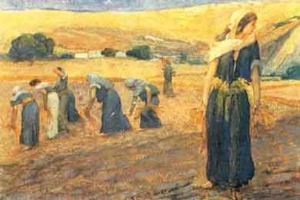
The theme of Jew and Gentile being joined together is a feature of Shavuot, the Feast of Weeks. It is seen in the story of Ruth and Boaz, traditionally read at Shavuot because of the harvest motif and the mention of leaving grain for the poor in the Shavuot instructions in Leviticus 23. It is also seen in the waving of two loaves as part of the celebration, with bread representing fellowship:
“You shall bring from your dwelling places two loaves of bread to be waved, made of two tenths of an ephah. They shall be of fine flour, and they shall be baked with leaven, as firstfruits to the Lord" (Leviticus 23:17).
Whether it lands on Sunday or not, the Counting of the Omer leads up to the Feast of Weeks, where God’s generous gifts to us are on center stage. The seven species and the goodness of the land, the gift of the Torah – His precious word to us, and for those who hold to the New Covenant, it is also the day to celebrate the giving of the Holy Spirit.
“This is what was uttered through the prophet Joel,” Peter announced in Jerusalem on that fiftieth day of Pentecost:
“And in the last days it shall be, God declares, that I will pour out my Spirit on all flesh… And it shall come to pass that everyone who calls upon the name of the Lord shall be saved” (Acts 2:16-17, 21).
You might also like to read this: