AI boosted Israeli Air Force capabilities during Iran war





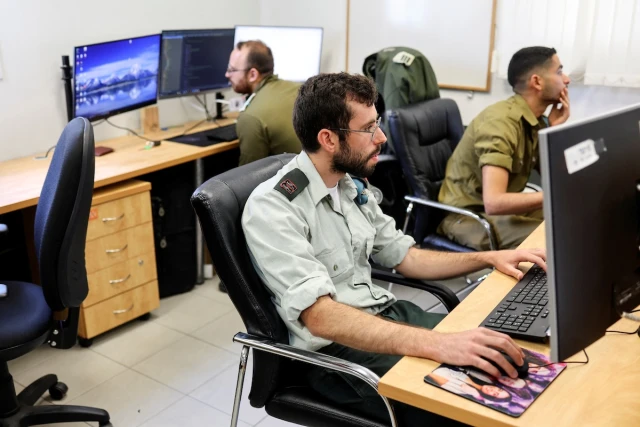
Artificial Intelligence played a leading role in boosting the Israeli Air Force’s capabilities during the Iran war, according to IDF Col. Rotem Beshi, head of Matzpen, the military unit responsible for integrating and relaying AI across the armed forces.
In an interview with The Jerusalem Post, Beshi said his unit was responsible for the new LOCHEM system, which manages the complex planning process for strikes on Iranian targets. He said the system was used to help “decide priorities and helped integrate the planning of whole waves of attacks.”
He added that it dramatically reduced the time required to gather data for operational decisions from several days to hours, and in some cases, minutes, enabling high-precision strikes within very short time frames.
Beshi described the operational sequence during the war: “The intelligence process finds a target, then you move to operational processes and then to concrete planning, approval, and the actual attack."
“Next, there is the BDA [battle damage assessment] process. We are partners to connect the intelligence and the operations, sending data into and out from field operations closest to the front,” he explained.
While acknowledging that new technologies can sometimes complicate field use, Beshi said the goal is to provide user-friendly systems that help military branches better execute tactical and strategic objectives.
The Israeli military spokesman praised Beshi’s unit for being “integral to all of the military’s major successes” in the Iran war, known in Israel as Operation Roaring Lion.
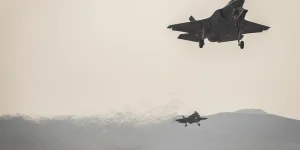
During the initial strike on Feb. 28, the IAF, in cooperation with the U.S. military, eliminated Iran’s supreme leader, Ali Khamenei, and 40 top Iranian commanders within minutes. AI-driven data processes also supported missions targeting Iranian missile threats and strikes on Islamic Revolutionary Guards Corps (IRGC) and Basij forces across Iran.
Due to security reasons, Beshi did not elaborate on the system’s operational mechanics, but said AI-processed data affected “the trajectory of an aircraft so as to focus on certain targets more than others. This keeps the attacks streaming much more fluidly for specific targets.”
The Matzpen unit also played a role in intelligence sharing between Israeli and U.S. forces. “To fully exploit the data, there was a joint picture with the US,” Beshi noted.
The unit also enhanced Israel’s Home Front defenses, improving missile and drone interception systems and refining civilian warning systems. He said this allowed for more precise alerts, reducing disruption to daily life, from missile warnings to specific residential areas. “It is a very advanced integration of different kinds of digital media with AI.”
The AI intelligence unit also reportedly supported real-time threat warnings for Israeli troops in Lebanon facing Hezbollah. Beshi said the system “used highly complex algorithms to increase its ability to give targeted warnings only to the clearly targeted IDF forces.”
He placed the development in a broader technological context saying, “We were not starting from zero, but the IDF understood, like any large business or entity, what the value is of its data. The value of AI and big data, if the data is closed off and inaccessible to groups of people who might need it, compared to different kinds of data storage clouds, which might make it more accessible, can change and directly impact the real-world military front lines.”
You might also like to read this: