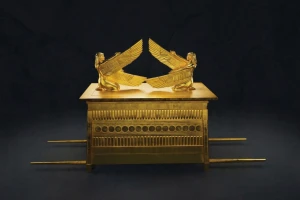
Buried beneath time: Could new technology reveal the Ark of the Covenant?



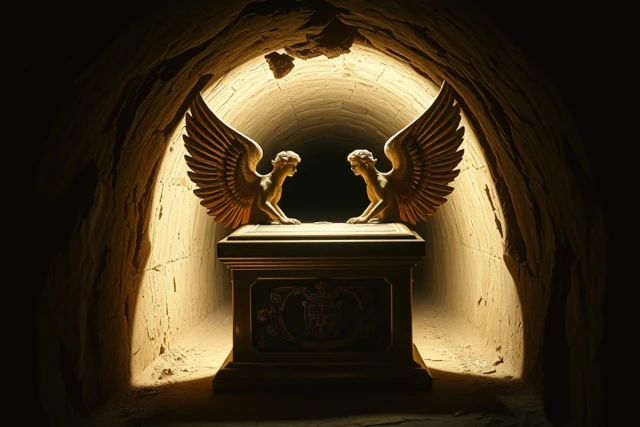
Dozens of books have been written about the search for the Ark of the Covenant. These include works of fiction as well as serious research studies. Many films have also been produced, ranging from well-known adventure movies to detailed documentaries.
What makes the Ark so compelling? At first glance, it may seem like just another ancient religious artifact – important in its time but no longer relevant. Yet, this object is not just any religious artifact. For millions of Jews and Christians, the Ark represents the enduring presence of God.
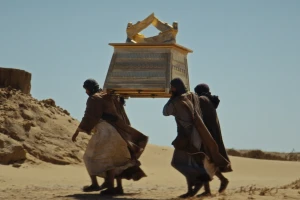
According to the Bible, the Ark was associated with numerous supernatural events: The Jordan River parted when priests carrying the ark crossed the water into the land of Canaan; the Philistines suffered plagues after capturing it against God’s will; individuals who touched the Ark without divine permission died instantly; and when King Solomon brought the Ark into the Temple, the Temple was filled with the presence of God in the form of a divine cloud. Clearly, this is no ordinary object – it is one that God used miraculously time and again.
The disappearance and early traditions
Then, suddenly, the Ark vanished. After the Babylonians destroyed the Temple in 586 B.C., it was never mentioned again in the Bible. How could the most sacred object in the Temple disappear without any mention? Could something symbolizing God’s presence simply vanish – and what would that mean for Israel’s relationship with God?
The search for the Ark and the legends surrounding its location are not limited to recent centuries. Stories about its fate began circulating as early as the late Second Temple period. Some claimed the Ark was hidden by Jeremiah in the desert. Others suggested it was taken to Egypt or Ethiopia, or concealed beneath the Temple Mount.
It is difficult to determine the truth behind these accounts. All were written from the end of the Second Temple period onward – centuries after the Ark’s disappearance.
Searches and archaeological barriers
Since the 19th century, interest in locating the Ark has grown, producing a literary genre focusing on the search for the Ark, along with research attempting to trace its location. Many documentaries have also been created. Some closely follow scholarly research, while others take a more speculative approach. Yet there is still no trace of the Ark or any reliable clue to its whereabouts.
One of the most prominent proposed locations for the Ark is the Temple Mount in Jerusalem. Legends dating back to the Middle Ages even claimed that the Knights Templar discovered the Ark, explaining their supposed wealth and power.
However, excavation in Jerusalem is extremely difficult. The city is the site of a persistent struggle between two forces. On one side are archaeologists eager to dig and uncover the truth; on the other are religious authorities determined to restrict or prevent excavation. This tension is especially evident on the Temple Mount.
The Mount lay neglected throughout the Roman-Byzantine period, from the destruction of the Second Temple in the first century A.D. until the seventh century. If archaeologists had existed during the first millennium, no one would likely have prevented them from digging there. During the Byzantine period, the focus of holiness shifted westward to the Church of the Holy Sepulchre, and the Temple Mount remained largely desolate.
In the seventh century, however, a dramatic shift occurred. A new religion emerged from the south and conquered the Middle East and North Africa. The new Muslim rulers took control of the Temple Mount and quickly built the Al-Aqsa Mosque and the Dome of the Rock. From that point on, the site was declared holy in Islam. Holy, not because of Solomon’s Temple, but because, according to Islamic belief, Muhammad ascended to heaven from this place and returned with the command of prayer.
Thus, when archaeology began to develop in the nineteenth century, the Temple Mount was already a restricted area for non-Muslims. Ironically, when it was possible to dig, there was no one to do so; and by the time archaeology developed, the area had become off-limits. Is this merely a coincidence and unfortunate timing?
At the end of the nineteenth century, the Ottoman rulers of Jerusalem showed little interest in the distant and relatively quiet city, far from their capital in Constantinople (modern-day Istanbul). Several adventurous researchers arrived and managed to penetrate beneath the Temple Mount. Among the most notable were Charles Wilson, Charles Warren, and Montagu Parker. They discovered tunnels running north to south and ancient gates west of the Mount. However, the Ottomans soon noticed the explorers' excessive enthusiasm and barred further access. Since then, no authorized archaeological excavations have taken place on the Temple Mount.
The place everyone dreams of excavating is precisely the place where excavation is strictly forbidden. Muslim authorities also have clear interests. While they are aware that two Jewish Temples once stood there, they deny the truth and therefore resist any excavation that might reveal evidence. As noted, religious authorities often act to conceal rather than expose.
Worse still, officials of the Muslim Waqf have deliberately damaged archaeological remains to create additional underground mosques. In November 1999, they dug a 12-meter-deep pit within a day and a half. The excavated soil was transported to the Kidron Valley in four hundred trucks. By the time Israeli authorities discovered this, it was already too late.
New technology brings future possibilities
Recently, however, a new technology has emerged that could change everything and offer renewed hope to those searching for the Ark of the Covenant.
If it were possible to perform a kind of X-ray scan of the ground – similar to scans used on the human body – to detect differences between hard and soft layers and identify metals, it might be possible to locate the Ark beneath the Temple Mount without digging. The challenge in Jerusalem is not only religious opposition; excavation can also damage infrastructure and cause buildings to collapse.
Such technology now appears to exist. Israeli researchers have developed a method using muon detectors to scan the ground. Muons are subatomic particles similar to electrons but slightly heavier. They originate from cosmic radiation outside the atmosphere and can penetrate deep into the earth. Although muons have a very short lifespan, they possess extremely high energy, allowing them to be detected with specialized instruments. Tracking them enables imaging of density variations within a target material.
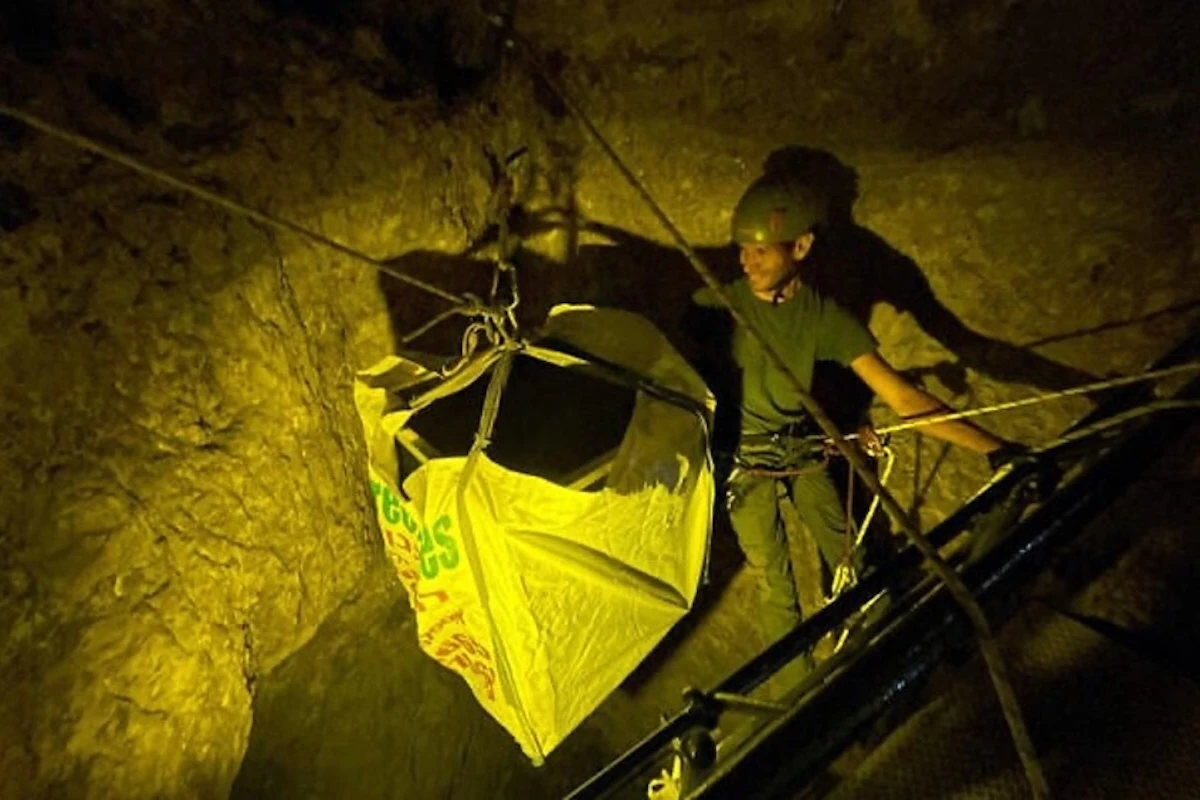
Using this technology, researchers have begun mapping underground spaces in the City of David, just south of the Temple Mount. If, in the future, they can map the underground tunnels of the Temple Mount itself, they may be able to detect the Ark – if it is indeed there – since it is plated with gold inside and out.
An unanswered question
The research is still in early stages, and significant obstacles – particularly from religious authorities – are likely to arise. The method will also be featured in a new docudrama premiering soon, in which an archaeology professor investigating possible Ark locations engages on-site with the Israeli scientist behind the technology, who demonstrates the device and explains its potential applications on the Temple Mount.
The central question endures: if the Ark of the Covenant still exists somewhere, concealed for more than 2,500 years, has the time finally come for it to be revealed?
This article was produced in partnership with Gesher Media.
You might also like to read this: