Finding the Ark of the Covenant: a geotheological ‘atomic bomb’





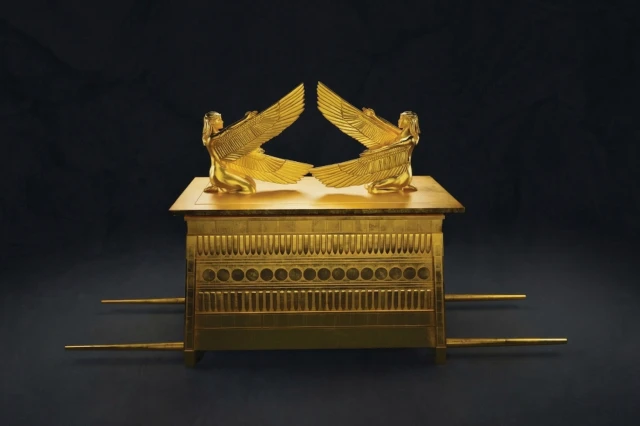
The disappearance of the Ark of the Covenant around the 6th century B.C. is not merely an unsolved archaeological mystery; its absence acts as a black hole at the center of the theology, self-image, and eschatology of the three great Abrahamic world religions – Judaism, Christianity, and Islam.
Today, as global geopolitical conflicts, escalating tensions in the Middle East, and social polarization increasingly bring apocalyptic narratives to life, the mere possibility of finding the Ark of the Covenant stirs the religious and cultural imagination in unprecedented ways. While awaiting the end of the world, a messianic era of peace, or perhaps a final Armageddon clash, various religious groups are making radical physical and spiritual preparations to welcome a new era.
Rabbinic tradition holds that the Ark was not lost but deliberately hidden before the First Temple’s destruction. Drawing on textual clues, the sages conclude it was concealed beneath the Temple. Its absence in the Second Temple is seen as intentional: that era was not the time for the Ark to return. Its reappearance is reserved for a future age of redemption.
In this tense anticipation, the question of the possible emergence of the Ark of the Covenant has once again been raised.
The latest scientific direction in the search for the Ark of the Covenant is presented in Legends of the Lost Ark, which recently hit American cinemas. One of the novelties of the research is a new Israeli-developed technology, which theoretically allows for the examination of the unexplored tunnel system beneath the Temple Mount – inaccessible for religious reasons – without excavation. If the Ark of the Covenant is indeed hidden there, the muon tomography detector could map its location. This possibility alone gives new momentum to the growing messianic expectations in the region.
The shadow of the Third Temple: Messianic expectations in Judaism
For Judaism, the discovery of the Ark of the Covenant would not merely be an archaeological sensation, but the culmination of a growing eschatological expectation. The hope for an "era of peace" and the practical preparations associated with it have reached a new level in recent years.
The establishment of Israel in 1948 – which many interpret as the fulfillment of Isaiah 66:7–8 and Ezekiel 28:25 – brought a theological turning point. After the Six-Day War in 1967, with the return of Jerusalem and the Temple Mount, the idea of the Third Temple stepped out of theory and took a practical direction.
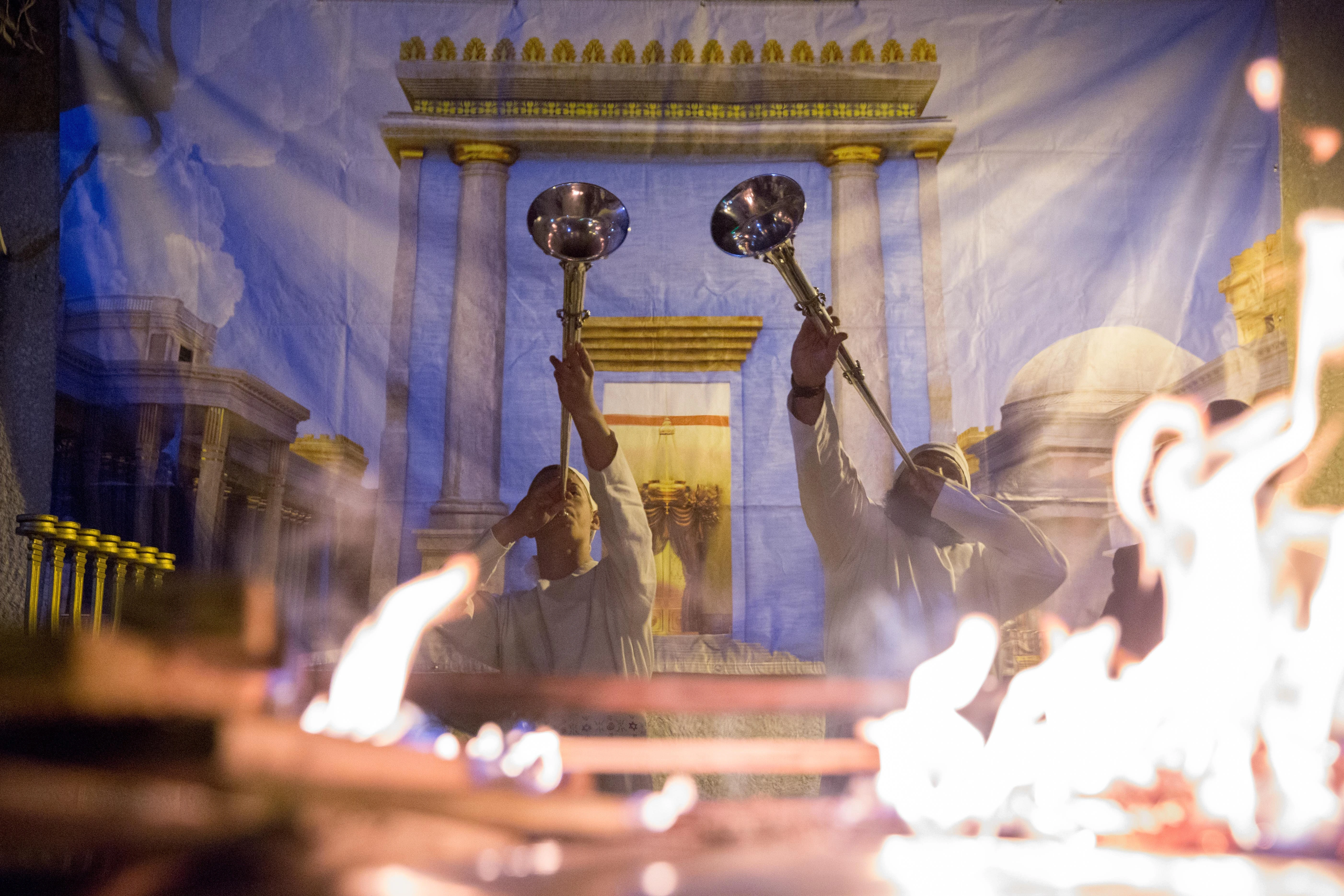
As a sign of this, the Temple Institute in Jerusalem has prepared most of the Temple vessels in recent decades – from the menorah to the priestly garments – and has also begun preparing for the service itself.
All of this, however, faces a fundamental obstacle: the Third Temple can only be consecrated if it is inaugurated by ritually pure priests. According to biblical prescriptions, priestly purity can only be restored through purification with the ashes of a red heifer. Without the ashes of the red heifer, the priests cannot enter the Temple Mount area, making the construction of the sanctuary halakhically impossible.
According to Jewish tradition, only nine such red heifers have been sacrificed throughout history from the time of Moses to the destruction of the Second Temple, and the 10th will be prepared by the Messiah Himself. Such a ritual has not been performed for more than 2,000 years, as an animal meeting the requirements is rarer than any gemstone.
In recent years, however, events have taken a dramatic turn, thanks to an unprecedented collaboration between Israeli religious Zionist groups and American Evangelical Christians, as a result of which five red heifers, deemed ritually perfect, were transported to Israel in September 2022. The animals have since been kept under strict, 24-hour observation in Shiloh, Samaria, the former resting place of the ancient Ark of the Covenant.

Islamic eschatology: The Mahdi and the emergence of the "Tabut as-Sakinah"
While the Western and Jewish worlds tend to interpret the Ark of the Covenant exclusively within the framework of the biblical narrative, Islamic tradition looks upon the Ark and its end-times role with equally deep, specific, and surprisingly concrete expectations. The Ark of the Covenant also appears in the Quran under the name al-Tabut (the Ark). It is described as the bearer of divine tranquility and the legitimization of power, carried by angels, signifying the divine approval of Talut's (Saul's) kingdom and the unification of the divided Israelites, preserving within it the relics of the families of Moses and Aaron – the fragments of the stone tablets and Moses' staff.
In Islamic eschatology, the central figure is the Mahdi, whose coming precedes the return of Isa (Jesus) and Judgment Day. According to prophecy, the Mahdi will cleanse the world of corruption and injustice, fight against the Dajjal (the Islamic antichrist), and bring about a global Islamic era of peace lasting 7 to 9 years, during which the Earth will abound in unparalleled wealth and prosperity. This era of peace will be preceded by the "Great Jihad" over the human ego and greed.
According to several classical Islamic sources, one of the main distinguishing features of the Mahdi is that he will bring the lost Ark to the surface. Traditions mention two main locations: a cave in Syria or Antioch, and Lake Tabarijja (the Sea of Galilee), from where the Ark will emerge.
The Ark found by the Mahdi would be taken to Jerusalem, where the "People of the Book" (Jews and Christians) would recognize the truth in it and join Islam en masse, uniting the Abrahamic religions.
These Islamic teachings highlight the geopolitical paradox that the emergence of the Ark of the Covenant would not only mean vindication of the Messianic age and the restoration of the Sanctuary for Judaism: the masses of the Islamic world, based on their own eschatological narrative, are also awaiting the emergence of the exact same mythical object at the exact same Land.
Christianity's Replacement Theology and the cracking of the dogma
Historical Christianity's relationship with the Jewish people and the Land of Israel is much more complex, fraught with theological twists and turns and often dark, blood-soaked shadows.
The history of Christianity – after the deterioration of the initial, first-century fraternal (and sometimes competitive) Jewish-Christian relationship – has been accompanied by the tragic thread of antisemitism. This hatred was not merely an isolated social phenomenon but was theologically institutionalized. The pagan, Roman early anti-Judaism infiltrated church dogma. The Church Fathers created the "teaching of contempt," which held Jews universally and eternally responsible for the crucifixion of Christ (deicide). This antisemitism did not disappear with the Protestant Reformation either, laying the groundwork for later European pogroms, and ultimately providing spiritual assistance to the horrors of the 20th-century Holocaust.
Yet, based on the texts of the New Testament and the historical context of early Christianity, the Jesus-believing communities were not originally built upon the rejection of Judaism. Biblical texts – especially the argumentation of the Apostle Paul – explicitly emphasize that true followers of Jesus cannot be antisemitic, if only for theological reasons concerning the foundations of faith.
In his theological argumentation with the famous olive tree metaphor (Romans 11:16-24), Paul explains that God has not rejected His people. Israel is the natural olive tree, whose root is the patriarchs and the Abrahamic covenant – God's unconditional promise. Although some natural branches (Jews who rejected Jesus) were "broken off," this happened solely so that the branches of the wild olive tree (Christians from pagan nations) could be grafted into the tree in an unnatural way, and partake in the "root and fatness of the olive tree" (God's grace and the blessings of salvation history). Paul emphasizes that this dynamic is temporary and purposeful, adding, “if their fall is riches for the world… how much more their fullness!” (Romans 11:12), pointing to an even greater future blessing in Israel’s restoration.
Paul's theological imperative to Gentile Christians is clear, strict, and not open to appeal: "Boast not against the branches... thou bearest not the root, but the root thee." According to the essence of the biblical Christian faith, the Gentile believer has only joined the covenant that God made with Old Testament Israel out of grace. There are not two separate trees of salvation; the eternal life of Christianity hangs on a Jewish root.
Consequently, any kind of antisemitism or hatred of Jews within Christianity is nothing less than self-destruction. He who hates the root cuts off his own spiritual foundation of existence.

The 2,000-year-old church practice that nevertheless rejects the 'chosenness' of the Jewish people is rooted in the teaching of Replacement Theology (Supersessionism). According to this teaching, because the Jews rejected Jesus, God rejected Israel, and the Church became the "New Israel." The Old Testament promises – especially those regarding the land and national restoration – were spiritualized and applied to the Church, while the curses were left upon the Jews. Thus, the Jewish people were stripped of their future role and their theological right to the land.
However deeply rooted Replacement Theology was, its foundations were severely shaken in the middle of the 20th century. The establishment of the State of Israel in 1948 was both a geopolitical and theological shock.
After the horror of the Holocaust, a significant part of Western, especially Protestant and Evangelical Christianity, as well as the Catholic Church (with the publication of Nostra Aetate in 1965), began to revise and reject this indefensible theology.
The basic premise – that the Jews are under a divine curse and cannot return to their land as a nation – failed empirically. After more than 1,900 years of diaspora, persecutions, and the Holocaust, the Jewish people not only survived but returned and founded a state.
This raises an unresolvable question: if God definitively rejected Israel, how can the extraordinary survival and return of the Jewish people be explained? How could the prophecies that were previously considered mere allegories be physically fulfilled?
The fatal blow: The theological atomic bomb of the Ark's emergence
Taken together, in this broader context, the question of how the world’s societies and religions would react to the emergence of the Ark is not merely theoretical.
Some believe that the actual, physical discovery of the Ark of the Covenant – especially in the soil of Jerusalem – would mean the final, fatal blow to both Islam and to Christian Replacement Theology.
The argument says that Jeremiah’s prophecy about the Ark—“it shall not come to mind, nor shall they remember it, nor shall they visit it, nor shall it be made anymore” (Jer. 3:16)—was already fulfilled in the Second Temple period; yet they note that the phrase “nor shall they visit it” may imply it still existed somewhere, hidden rather than destroyed. This view is reinforced by 2 Maccabees (preserved in Catholic and Orthodox canons), which records an ancient Jewish tradition of Jeremiah himself hiding the Ark, saying that it will be revealed again in the last days.
Would the find—if it were indeed to come to light—be the harbinger of an era of peace, or, on the contrary, would it be the final, igniting spark of Armageddon tensions?
The answers may no longer be centuries and interpretive debates away, but merely a few meters of solid limestone – and a single successful cosmic muon scan – away from us.
Is All Israel News’ faithful reporting important to you? Be part of it—help us continue by becoming a $5/month supporting partner.
You might also like to read this: