Jerusalem and the clash of sacred narratives



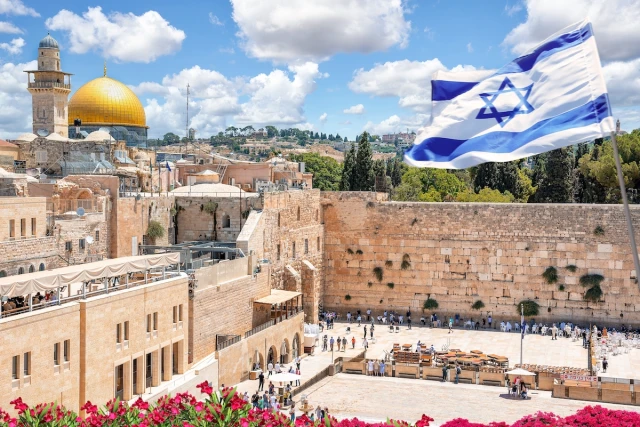
The West has spent two centuries training itself to treat religion as private sentiment or cultural curiosity. Enlightenment rationality, followed by materialist academia and policy shops, taught us that serious people talk about borders, resources, and power, not ancient covenants or final revelations. So when the fighting breaks out over Jerusalem, we reach for the familiar toolkit: two-state solutions, security arrangements, economic incentives. We reduce a metaphysical collision to real estate.
It never works. Because the war over Jerusalem is not about land. It is about which sacred story gets to define history itself.
Zionism did not merely create a modern nation-state. It resurrected a biblical claim that had been dormant in the imagination of the West for centuries. That claim carries theological weight far beyond politics. And it collides head-on with a rival sacred architecture that insists the final chapter has already been written, and that any competing claim must be corrected, subordinated, or erased.
This is a clash of two irreconcilable narratives about God, history, and the destiny of humanity. One cannot be true without rendering the other false. Ignoring that fact has made the conflict more explosive.
The Islamic Continuity Narrative
Islam does not present itself as a new religion. It presents itself as the final, uncorrupted articulation of the one true message God has been sending since Adam. The Qur’an situates Muhammad in direct succession to Abraham, Moses, and Jesus. All of them, it insists, preached the same core truth: submit to the one God. Differences between their messages were never essential; they were contextual adjustments for their specific peoples and times.
Earlier scriptures are affirmed as originally divine but corrupted or incomplete. The Qur’an is not “another book.” It is the preservative, the corrector, and the universalizer. In Surah Maryam, the infant Jesus already speaks from the cradle declaring himself a servant of Allah and a prophet in the same unbroken chain. He does not inaugurate a new covenant. He confirms the one true path of submission.
The logic goes like this: God sends prophets to every nation. Each calls people back to the same essential monotheism. The sequence culminates in Muhammad, the “seal of the prophets.” His message is not for one tribe or one era. It is final and universal. The trajectory of history is therefore not pluralistic coexistence. It is convergence. The world moves, inevitably, toward recognition of this final revelation and the universalization of submission to Allah as defined by Islam.
In this framework, Jewish sovereignty in Jerusalem is a theological contradiction. If the final revelation has already been delivered and the chain of prophecy sealed, then any enduring, independent claim rooted in the earlier narrative cannot stand. It must be reinterpreted as temporary, superseded, or illusory.
The Biblical Covenantal Narrative
The biblical story runs on an entirely different architecture.
It does not describe a single message repeated and finally corrected. It describes a progressive unfolding of covenants, worked out through a specific people for the redemption of the world. Abraham is chosen. Isaac, not Ishmael, is the child of promise. Jacob becomes Israel, the father of a nation that will carry the covenant forward through slavery, exodus, law, kings, exile, and return.
This is not a universal message applied equally everywhere. It is particular. It is anchored in one lineage, one land, one city. The prophets do not point toward a final legal correction. They point toward fulfillment, a future day when the covenant reaches its climax through the Messiah, a descendant of David, whose reign brings justice, restoration, and the reordering of creation itself.
Jerusalem and Zion are not incidental geography in this story. They are its gravitational center. The biblical narrative does not move toward the dissolution of particularity into universal submission. It moves outward from particularity, drawing the nations toward a redeemed Zion that remains the focal point.
The Modern Collision
Islamic eschatology envisions a final sequence of trials, deception, and confrontation. The Dajjal, the false messiah, appears with miraculous power and deception on a civilizational scale. The resolution comes through divine intervention, particularly the return of Isa (Jesus). But this Isa does not bring a new gospel. He breaks the cross, kills the pigs, and rules according to the final revelation. History ends in alignment: the world brought into conformity with Islam.
The biblical eschatological vision also anticipates deception and global crisis, centered on Jerusalem and Israel. The Antichrist figure represents counterfeit authority, an attempt to impose order without God. The resolution, however, does not come through the reaffirmation of a final legal code. It comes through the arrival of the Davidic Messiah who restores Israel and establishes a reign of justice that draws the nations, not by erasing their distinctions but by bringing them into a covenantal order whose center remains Zion.
For centuries these frameworks could remain theoretical. The Jewish people were scattered. Jerusalem was under successive Muslim, then British, then Jordanian control. The biblical narrative could be spiritualized or deferred to the distant future.
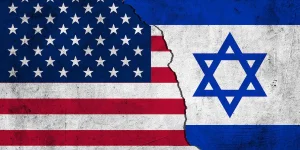
Then came 1948, then 1967, and the return of Jewish sovereignty to the Old City. What had lived in text and longing took physical, political, and military form. The biblical claim was no longer abstract. It was operational.
In Islam, this is a living challenge to the finality of revelation. That is why theological language has roared back into the open since October 7. Hamas leaders explicitly cited the arrival of red heifers in Israel as one trigger for their attack, linking contemporary events to ancient temple expectations. Across Arabic social media and satellite channels, discussions of the Dajjal, the role of Jerusalem, and the return of Isa reach millions. These are mainstream interpretive grids through which the conflict is understood.
On the other side, support for Israel in the West is not geopolitical. For them, the return of the Jewish people to their ancestral land carries covenantal and prophetic weight. They see history bending back toward the biblical script.
This is the feedback loop the materialist West refuses to see: events on the Temple Mount are not read as real estate disputes. They are read as chapters in rival sacred stories. Each side believes its narrative is not only true but actively unfolding. That is why compromise feels like apostasy.
The conflict over Jerusalem cannot be solved by diplomats who pretend religion is background noise. It is a collision between two authoritative, mutually exclusive claims about the direction of history. One narrative sees Jewish sovereignty in Zion as the fulfillment of ancient covenantal promises. The other sees it as an intolerable theological regression, an obstacle to the final, universal submission.
Until the West starts treating these two narratives as the actual operating systems of two civilizations, it will keep proposing solutions that solve nothing. Jerusalem is not a real estate problem with a religious flavor. It is a theological problem with real estate consequences.
This article originally appeared on the Ideological Defense Institute and is reposted with permission.
You might also like to read this: