Mediation efforts fail as US-Iran war enters 6th week; Tehran rejects talks, Strait of Hormuz remains closed





Efforts by Turkey, Egypt and Pakistan to broker a ceasefire between the United States and Iran have failed, The Wall Street Journal reported on Friday, as the conflict enters its sixth week. The timeline is approaching the point initially envisioned by the Donald Trump administration for the campaign’s duration.
Qatar has reportedly resisted pressure to take on a mediating role, citing its close ties to both Washington and Tehran. The situation is further complicated by the fact that Qatar hosts a major U.S. military base and has come under Iranian attack during the conflict.
The Iranian regime has reportedly rejected a proposal to hold talks with U.S. officials in Islamabad in the coming days. Washington’s key demands for ending the war include a complete halt to uranium enrichment, limits on Iran’s ballistic missile program, and an end to its support for regional proxy groups such as Hezbollah in Lebanon and the Houthis in Yemen. Iranian officials have dismissed these demands as “unacceptable.”
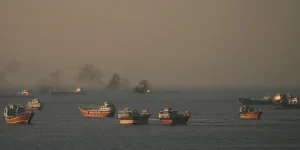
Meanwhile, tensions have intensified around the Strait of Hormuz, a critical global energy corridor. The U.S. administration has pressed Iran to reopen the waterway, which handles roughly 20% of the world’s oil supply. However, U.S. intelligence assesses that Tehran is unlikely to do so in the near future. It remains unclear whether Washington would consider a ground operation to restore access.
“With a little more time, we can easily OPEN THE HORMUZ STRAIT, TAKE THE OIL, & MAKE A FORTUNE,” U.S. President Donald Trump wrote in a post on his Truth Social platform.
Israeli officials believe that the war will likely continue for at least another two weeks.
The situation escalated further after Iran reportedly shot down a U.S. F-15E Strike Eagle fighter jet — the first such incident involving an American aircraft over Iranian territory. The pilot was rescued, while U.S. and Israeli forces continue efforts to locate the missing navigator. Iranian authorities have reportedly offered financial rewards for information leading to the capture of the U.S. crew member.
Trump indicated on Friday that the downing of the U.S. fighter jet would not impact negotiations with Tehran.
“No, not at all. No, it’s war. We’re in war,” Trump told NBC News, adding only that the U.S. hopes the missing crew member will not be harmed.
Analysts have warned that Iran’s control of the Strait of Hormuz provides significant leverage. Ali Vaez, director of the Iran Project at the International Crisis Group, argued that Tehran’s ability to disrupt global shipping represents a powerful strategic tool.
“In the attempt to try to prevent Iran from developing a weapon of mass destruction, the US handed Iran a weapon of mass disruption,” Vaez said, adding that the regime's chokehold on the Strait “is much more potent than even a nuclear weapon.”
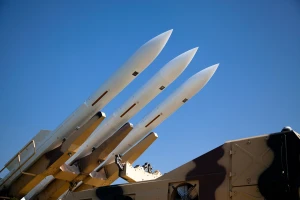
Despite weeks of intensive U.S. and Israeli strikes, Iran continues to launch missiles and drones targeting Israel, U.S. military bases worldwide, and Gulf states. CNN reported on Friday that U.S. intelligence assesses that Iran still retains about 50% of its prewar missile launchers despite weeks of strikes. Israeli intelligence estimates only 20-25% remain operational, with the overall missile stockpile reduced from around 2,500 to 300-400, contributing to a sharp decline in launches.
You might also like to read this: