Devoid of pilgrims, tourists, Jerusalem's Old City marks low-key holidays
Most shops shuttered due to safety restrictions issued by Israel’s Homefront Command




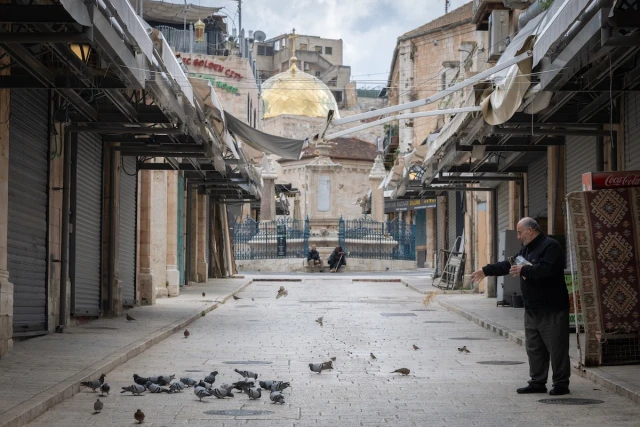
JERUSALEM — Micheal Abu Ali sat on a chair across from his flower shop on the Via Dolorosa, deftly weaving palms that he brought in from Jericho for Palm Sunday.
“Every year our holiday is so beautiful, but now we can just go to the church, pray and then go home,” he told ALL ISRAEL NEWS. “Corona was different; it wasn’t war. This is a war and people are dying – Jews and Arabs. We cannot celebrate at a time like this.”
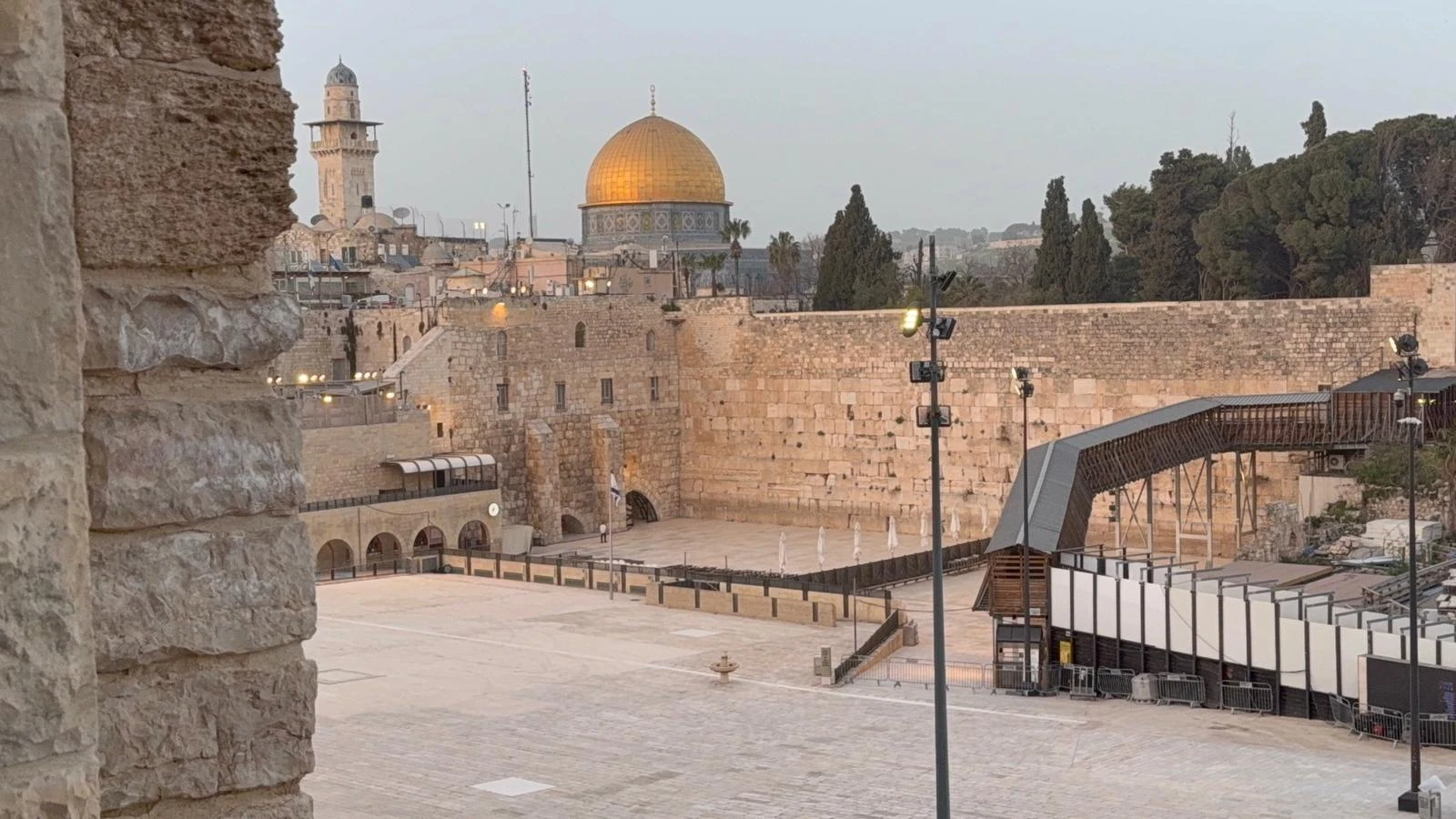
Normally, this week, the Old City would be bustling with pilgrims from overseas, processions and church services. Jews marking Passover, one of the three pilgrimage holidays to Jerusalem, would be thronging to the Western Wall.
Instead, the mood is tinged with despair and fear. Shops are shuttered due to Homefront Command restrictions that prohibit opening in places where there is no shelter.
And very few shelters exist in Jerusalem’s Old City.
For many merchants, the past six years have been fraught with shocking and debilitating closures, while the start-and-stop attempt at recovery is constantly moving out of grasp.
“We were more than two years in COVID, then we had a kind of one-year break,” said Sa’id Mreibe, a tour guide who also owns a cafe and wine store in the Christian Quarter. “Then the war started already two and a half years (ago), and this war and this cycle of violence, again. We're struggling with all of these regulations.”
Mreibe is permitted to open his shop, Enoteca, for takeaway coffee, which he does for the few locals who pass by, and just to get out of the house a bit. However, it is supposed to be a peak season for tourism and special for the locals as well.
“They come from different parts of the world to Jerusalem to the Holy Land in general, and also a very important holiday for the indigenous Christians in the Holy Land,” he told ALL ISRAEL NEWS.
This year, after an agreement was reached between the heads of churches and Israeli police, the Church of the Holy Sepulchre – widely believed to contain the tomb of Jesus – will be open only to a few priests, including the patriarchs of the various denominations, who will conduct private services.
The threat of Iranian missiles, which rendered the Dome of the Rock complex closed during Ramadan, has now extended to other faiths represented in the Old City. Jewish prayers at the Western Wall are limited to 50 people at a time. The annual Priestly Blessing, which usually nhbmnjhdraws tens of thousands, has also been canceled.
The Palm Sunday procession, the largest Christian event in Jerusalem, was canceled. Easter celebrations are usually marked by scouts representing the different churches marching with bagpipes, drums and horns.
For the Christians, who make up just 2% of Israel’s population and 1% of Palestinians, and depend on tourism for their livelihoods, the struggle feels existential.
“We had COVID for two years and then, after a bit, we had October 7th for another two years and now we're here,” said Zak Mishriky, who owns an antiquities shop in the Old City. “It is enough, six years. In your worst nightmare, you would not imagine this could happen. One after the other, one after the other.”
A few times during this conflict, fragments of shrapnel and missiles have landed in the Old City, normally immune to missile and rocket attacks. A metal fragment fell on Mishriky’s store.
“There was a siren and then there was a big boom. And then maybe like four or five minutes later, we heard a big piece of iron falling, crashing on the roof,” he told AIN.
“We understand. Everybody has to do what he has to do. The police has his job. And I have to, after these six years, work hard and feed my family.”
Mishriky moved his shop online, which is helpful, he said.
“You know, God has been good above all of that. We’re not complaining. We're just like sharing. But God is good. We're very thankful and we see his goodness,” he said.
Abu Ali opened his shop only to sell palms and flowers to local Christians and the churches for Easter.
“I’m now 68, how much have I seen in my life – how many wars, how many intifadas?” Abu Ali said. “Netanyahu says he wants peace. So make peace. Why waste these lives, Arabs and Jews, young soldiers? Everyone is affected.”
Frowning while talking about the situation, Abu Ali expressed little hope for the future.
“It's written in our Bible that when Jesus passed from the Via Dolorosa, many people were crying for Him while He was carrying His cross. What did He tell them? ‘Please, don’t cry for me – cry for Jerusalem.’”
“Do you know what that means? That in Jerusalem, there will never be peace,” he said.
You might also like to read this: