How the State of Israel got its name



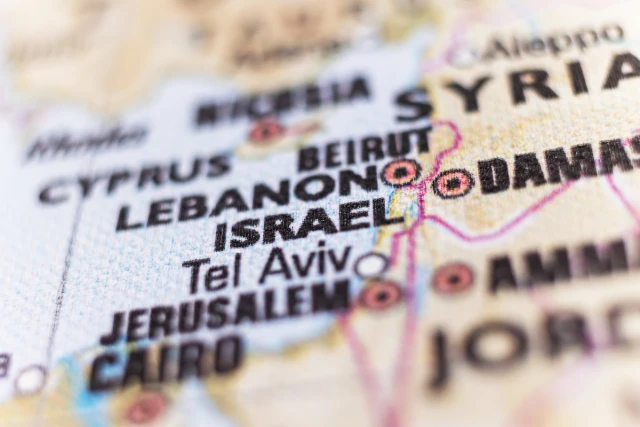
It wasn’t a given that the new Jewish state would take up its old historical name. In fact, there were a number of other hot contenders. So how was the name “Israel” decided upon ultimately?
David Ben-Gurion, Israel’s first prime minister, later admitted that he didn’t remember the exact details of the process. However, the vote was cast, and "Israel" won by seven votes to three. According to historian Martin Kramer, the vote took place in the People’s Administration, the cabinet-in-waiting, on May 12, 1948, just two days before the official declaration of the State of Israel.
Two historical sources provide insight into what happened: one from Cabinet Secretary Zeev Sharef, who recounted the events to journalist Moshe Brilliant on the first anniversary of independence, and the other from Yitzhak Gruenbaum, Israel’s first minister of interior, who had favored the name Judea.
Among the alternatives were Judah, Zion, Tzabar, Eber and Jeshurun. Even though Judah or Judea clearly connects the Jewish people to the land, much of the territory historically known as Judea would have fallen outside the area allocated to the Jewish state. Moreover, if the state were named Judea, its residents would presumably be referred to as Jews – raising a complex question about the identity of the Arabs who remained in the land. Would they also be called Jews? That idea was shelved.
Then there was "Zion," proposed not only for its biblical significance but also because of its association with the Zionist movement, which had played a pivotal role in bringing the Jewish state into existence.
This, too, was rejected because it referred to a limited geographical area of Jerusalem which, again, at the time, was not included in the Jewish state. In addition, not all inhabitants subscribed to the Zionist ideology.
Tzabar (or Sabra) is a common nickname for Israelis, or cactus, which can aptly be described as prickly on the outside but soft and sweet inside. While the term has become synonymous with native-born Israelis, the irony is that the cactus itself is not actually native to Israel.
Another contender for the name of the state was “Eber,” derived from the same root as “Hebrew” (Ivri). According to Genesis 10:21, Eber (or Iver) was an ancestor of Abraham, and his name means "traverse" or "cross over." The Hebrews were so named because they came from beyond the river. However, this idea was ultimately jettisoned as well.
Jeshurun, a biblical term of endearment that God gave to Israel in Deuteronomy and Isaiah, was also considered, according to a letter printed in Haaretz in 1965.
However, one of the dilemmas was thinking through the various ways that the name would be used. For example, one can say, “I’m American” or “I’m German,” but what if the name is Jeshurun? One would say, “I’m Jeshurnuni”? That particular suggestion doesn’t even appear in most records of the names that were seriously considered.
Kramer writes that the “protocol doesn’t give the details of the debate” but simply records Ben-Gurion as saying, “We have decided that the name of the state will be Israel. And if we say state, then the State of Israel... To this can be added every word in the grammatical construct state: army of Israel, community of Israel, people of Israel.”
Throughout their long history, the Jewish people have always called themselves the children of Israel (Bnei Israel) and referred to that part of real estate as the land of Israel (Eretz Israel).
As Ben-Gurion stated in Israel's Declaration of Independence, “The Land of Israel was the birthplace of the Jewish people. Here their spiritual, religious, and national identity was formed. Here they achieved independence and created a culture of national and universal significance. Here they wrote and gave the Bible to the world.”
Some are uncomfortable with the fact that the State of Israel shares its name with the land of the biblical patriarchs and the Twelve Tribes, believing that “it’s not the same thing.” Yet, perhaps it was the hand of God that guided the naming process.
The people of Israel may have been exiled for 2,000 years, but they’re still the people of Israel.
The proclamation came on May 14, 1948: “We hereby declare the establishment of a Jewish state in Eretz-Israel, to be known as the State of Israel.”
You might also like to read this: