Protest limits under fire as Israelis rally against Iran war



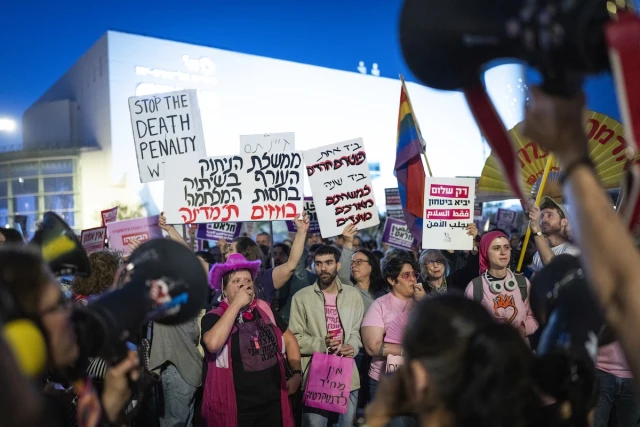
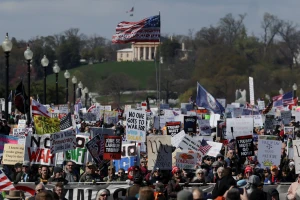
After sundown on Saturday, in defiance of wartime restrictions, crowds gathered in public squares across Israel to protest the war with Iran and its proxies.
A demonstration at Habima Square in Tel Aviv had a permit from the Home Front Command, although witnesses said it appeared that the permit's limit of 150 people had been exceeded. This was just one of several issues that arose in the course of the evening.
The Association for Civil Rights in Israel issued a statement decrying the safety restrictions, which it said harm the right to protest. The Association added that it is demanding legal hearings to make its case for easing the restrictions.
In response, a spokesperson for the Home Front Command said each request to hold a gathering is examined individually and assessed based on operational, professional, and security considerations. A key factor is the availability of protected spaces near the proposed site, ensuring that in the event of a missile alert, participants can reach safety in time. At the Habima Square gathering, nearby shelters could accommodate only around 150 people, meeting the cap specified in the permit.
The spokesperson added that all of this material, and perhaps other more sensitive material, could be presented in any closed sessions at the Knesset or in court. He added that “We are acting professionally and objectively. There is no political consideration here or any other consideration.”
However, protest groups said this is not good enough for them, after requests for permits to protest at Horev Center in Haifa, Paris Square in Jerusalem, and Weizmann Street in Kfar Saba were all rejected. Small gatherings of protesters nevertheless took place in these locations, and lawyers representing the groups said that judicial statements over the years regarding the importance of safeguarding political freedom of expression during wartime were not taken into account by the police and the Home Front Command.
Such remarks by judges are not legally binding; rather, they are generally understood as nonbinding guidance. Additional guidance is provided by legal, political, and academic sources, while the police and Home Front Command also rely on their own internal frameworks.
However, there was a High Court of Justice hearing on Friday at which several sharp statements were made, both in support of and in opposition to the State's position. This included some very strong criticism of the state by Supreme Court President Isaac Amit, who built on earlier statements and said that the police and Home Front Command needed to find a way to allow protests to proceed even under the difficult wartime conditions.
It is also notable that this is the second time in less than a week that the police and Home Front Command have been criticized for enforcing restrictions seen as infringing on basic rights.
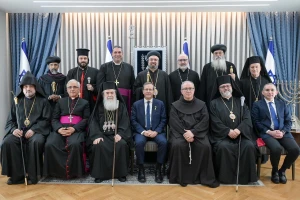
Last Sunday, on Palm Sunday, Catholic Cardinal Pierbattista Pizzaballa, Latin Patriarch of Jerusalem, and Father Francesco Ielpo, Custos of the Holy Land, visited the Church of the Holy Sepulchre to conduct a livestreamed service for Catholics worldwide. They did not arrive with a large entourage, but police barred them from entering the church, prompting diplomatic protests from around the world.
Police said they were enforcing measures intended to keep the public safe, noting that Jewish and Muslim holy sites in the Old City were also closed. Prime Minister Netanyahu and other senior officials ultimately intervened to defuse the situation, and an agreement was quickly reached to allow small services at the Church for Good Friday and Easter. However, the damage to Israel’s image had already been done.
You might also like to read this: