IDF says it’s close to capturing Hezbollah’s stronghold in southern Lebanon as historic peace negotiations are about to begin
Lebanese gov't not unified behind effort to negotiate ceasefire




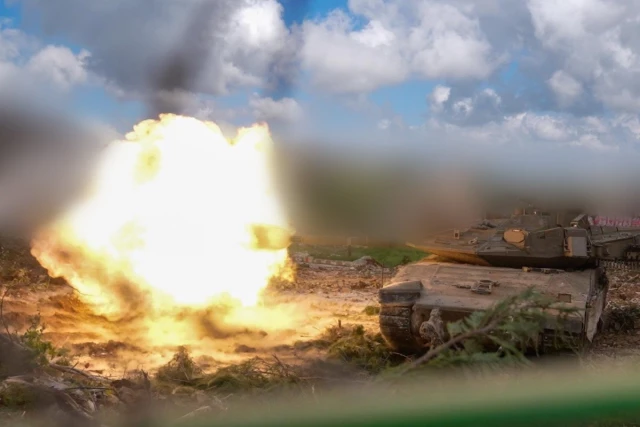
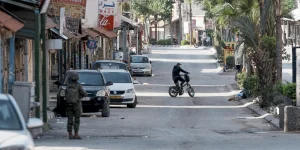
With historic, direct peace talks between Israel and Lebanon about to begin on Tuesday, the Israel Defense Forces announced it is about to complete the capture of the town of Bint Jbeil, a symbolically important stronghold of Hezbollah in southern Lebanon, near the Israeli border.
According to The Jerusalem Post, broad-scale ground operations will be largely completed once the area of Bint Jbeil is secured. However, smaller-scale raids aiming at finding and destroying the remaining Hezbollah infrastructure in southern Lebanon will continue for an as-of-yet indefinite period.
Since the start of the Iran ceasefire almost a week ago, the IDF has notably decreased its airstrikes across Lebanon, and has not struck in Beirut again since killing hundreds of terrorists in Operation Eternal Darkness.
🎯⏰24HR RECAP: ~150 Hezbollah targets were struck in numerous areas across southern Lebanon.
— Israel Defense Forces (@IDF) April 13, 2026
Accomplishments:
- Rocket launchers & UAVs struck
- Military structures, anti-tank missile launch points & terror command centers were targeted
- Terrorist cells that attempted to carry… pic.twitter.com/FYbntP7ml6
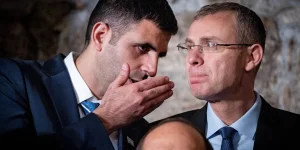
On Tuesday, Israel’s Ambassador to the U.S., Yechiel Leiter, is set to meet the Lebanese ambassador for the first high-level, direct contacts between the governments in decades.
According to Kan News, Leiter requested to receive unusually detailed briefings of the IDF’s operations in Lebanon, with senior IDF officials briefing the ambassador about the military situation, including the deployment of the troops, and the demands of the military, following special approval from Chief of Staff Lt.-Gen. Zamir and Defense Minister Katz.
The officials reportedly asked Leiter to convey the message that the IDF is acting solely against Hezbollah and demands that the Lebanese Armed Forces fulfill the Beirut government’s decision to disarm Hezbollah before a ceasefire can be considered.
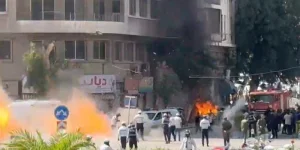
Lebanese officials had strongly criticized Israeli airstrikes last week, claiming that hundreds of civilians had been wounded or killed. The Lebanese Ministry of Health reported that 357 people were killed in the strikes, without differentiating between civilians and terrorists.
🔴ELIMINATED: 250+ Hezbollah terrorists and commanders were eliminated across Beirut, the Beqaa and southern Lebanon, during the largest strike conducted in Lebanon.
— Israel Defense Forces (@IDF) April 13, 2026
Among the terrorists eliminated:
• Hassan Mustafa Nasser - Responsible for smuggling and storing weapons in… pic.twitter.com/TTxq9JI6Qg
Army Radio on Monday cited IDF sources saying that, according to the military’s estimates, at least 250 of those killed were terrorists.
The Israeli military also published footage of the destroyed stadium in Bint Jbeil, the location of the slain Hezbollah leader Hassan Nasrallah’s famous speech, after the Israeli withdrawal in 2000, likening Israel to a “spider web” .
In a message to his troops, 98th Division commander Brig.-Gen. Guy Levy said that 26 years ago, “There was someone here who gave a speech boasting about spider webs. Today, that man is no longer here, the field is gone, and his words are worth nothing. Bint Jbeil 2026: Our forces control the area, destroying terror infrastructure and dozens of militants. Behind us are the residents of the north whom we are defending; ahead of us are the national days that remind us why and for what we are fighting.”
IDF sources told Army Radio that Hezbollah had planned to launch a major raid into Israel from Bint Jbeil, noting that rocket fire from there toward Israeli communities has stopped since Israeli troops surrounded the town, trapping around 150 terrorists, of whom around 50 are thought to be still alive as of Monday.
The military estimates that the 98th Division will establish full control of the town within a few days.
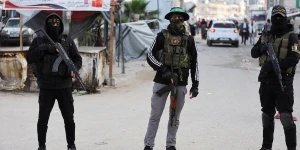
Meanwhile, Hezbollah officials have stressed their opposition to the government’s effort to reach a ceasefire via negotiations with Israel.
A senior member of Hezbollah’s political council, Mahmoud Qamati, criticized the government for rushing into talks with Israel under fire. Addressing President Joseph Aoun and Prime Minister Nawaf Salam, Qamati asked, “Are you not ashamed? Are you not ashamed to go negotiate while Israel warns you not to talk about a ceasefire?”
🎥 WATCH: IDF soldiers dismantled a Hezbollah underground tunnel route in southern Lebanon, used for planning and advancing terror activities against IDF soldiers. pic.twitter.com/P2CGm03HUO
— Israel Defense Forces (@IDF) April 13, 2026
Another senior Hezbollah official, Nawaf al-Moussawi, warned that “If you go into negotiations with Israel, thinking you can recover land—Israel will not move even a grain of soil unless it is forced to withdraw.”
An unnamed Hezbollah official went even further in an interview with the Russian news agency RIA Novosti, claiming that the government’s position against Hezbollah threatens to divide the country and warning that he could not rule out the possibility of the government in Lebanon being replaced under pressure from popular protests.
Speaking during a visit by the Italian foreign minister on Monday, Lebanese President Aoun said Lebanon hopes Tuesday’s meeting would lead to a ceasefire and open the way for direct negotiations between Lebanon and Israel, while calling on Israel to stop its military operations.
However, the government, which includes Hezbollah-affiliated ministers as well as representatives of Amal, which is allied to Hezbollah, doesn’t stand unified behind Aoun.
Culture Minister Ghassan Salameh, an independent, said that Tuesday’s meeting is not meant to conduct negotiations but is only “a session of discussions or talks in which matters of a logistical nature will be discussed.”
Salameh told the Lebanese channel Al-Jadeed that the only issue the Lebanese ambassador is allowed to discuss is a potential ceasefire. Salameh clarified, “If we achieve a ceasefire, that is good, and if we do not achieve it, the ambassador cannot cross this red line.”
You might also like to read this: