US, Israel sought to install former Iranian President Ahmadinejad after Khamenei assassination – report
Despite a hardline stance & anti-Israel statements, Ahmadinejad seen as capable of overseeing regime change




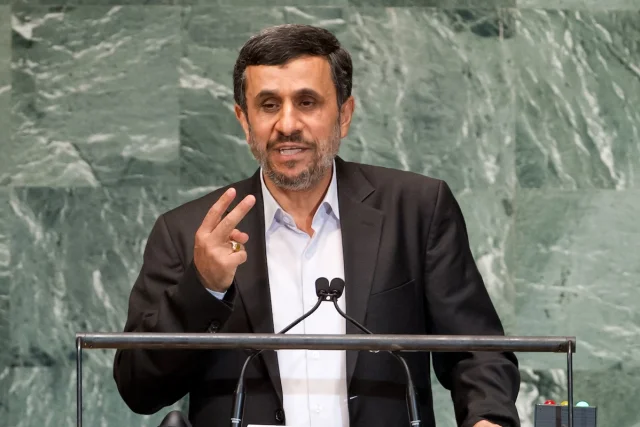
Following the elimination of Iranian Supreme Leader Ayatollah Ali Khamenei on Feb. 28, the United States and Israel floated a plan to install Iran's former hardline president, Mahmoud Ahmadinejad, to lead the country, The New York Times reported.
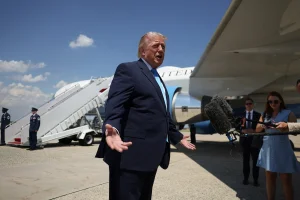
Just days after Khamenei’s assassination, U.S. President Donald Trump said it would be best if “someone from within” Iran took control of the regime. The NYT reported that the U.S. and Israel were already considering Ahmadinejad before the war began.
According to the NYT, the plan to trigger a regime change after the removal of senior Iranian leaders was initially developed by Israel, with U.S. intelligence officials later providing input. The concept had reportedly been discussed with Ahmadinejad himself.
However, the plan fell apart after an Israeli strike on Ahmadinejad’s home, designed to free him from house arrest under the Islamic Revolutionary Guard Corps (IRGC), injured the former president, causing him to become disillusioned, the NYT reported.
The strike intended to free him took place on the first day of the U.S.-Israeli air campaign, which killed Khamenei and several other senior Iranian officials.
Iranian media initially reported that the strike had killed Ahmadinejad’s “bodyguards,” though subsequent reports indicated the casualties were IRGC personnel monitoring his movements. Ahmadinejad was reportedly wounded in the strike and has not been seen publicly since, leaving his current whereabouts unknown.
The NYT cited one of Ahmadinejad's associates saying that President Trump viewed the former Iranian president as a potential transitional figure similar to Delcy Rodríguez, who assumed power in Venezuela after U.S. forces captured Nicolás Maduro.
The choice of Ahmadinejad appears surprising, given his previous calls to “wipe Israel off the map” and denial of the Holocaust. He also supported Iran’s nuclear program, oversaw violent crackdowns on dissidents within the country, all while fiercely criticizing the United States.
However, since leaving office, Ahmadinejad clashed with regime leaders like Khamenei, accusing them of corruption. He attempted to run for the office of the president on three other occasions but was disqualified by the Guardian Council, a group of civilian and Islamic jurists known for their hardline stance.
At the same time, Ahmadinejad himself praised President Trump's first-term foreign policy approach in an NYT interview in 2019, and called for renewed dialogue and the restoration of diplomatic relations between Iran and the United States.
“Mr. Trump is a man of action,” Mr. Ahmadinejad said at the time. “He is a businessman and therefore he is capable of calculating cost-benefits and making a decision. We say to him, 'let’s calculate the long-term cost-benefit of our two nations and not be shortsighted.”
Following Israeli strikes on Iran during last year's Operation Rising Lion conflict with Iran in June 2025, Ahmadinejad’s silence drew attention from local social media accounts.
Alongside Ahmadinejad’s change in tone, several parts of the reported post-strike political plan don’t appear to have gone the way U.S. and Israeli planners expected. The end result is that Washington may now be dealing with the possibility of an even harder-line Iranian leadership emerging – led by Mojtaba Khamenei – one that could be less willing to compromise despite U.S. and Israeli military pressure.
You might also like to read this: