'Trump has only weakened the Iranian people,' says regime opponent in Hebrew message from Tehran
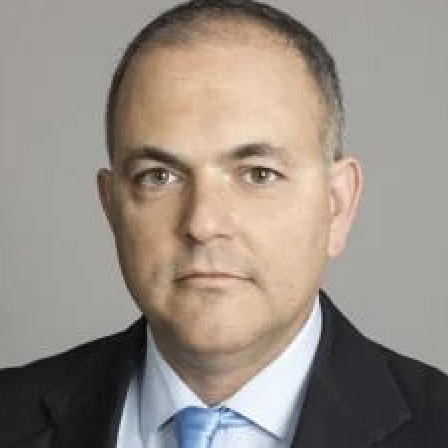



The encrypted connection with him sometimes feels like a spy movie, but for “Raban” (a pseudonym), this is the daily reality of life and death. Raban is an Iranian regime opponent, speaks Hebrew and lives in one of Iran’s major cities. On Wednesday morning's Kan Reshet Bet's program “This Morning,” he broke his silence.
The last time we heard his voice, just before the war, he still held hope. Like millions of Iranians suffocating their anger under the boot of the ayatollah regime, he hoped that a direct military confrontation would finally break the cycle.
Today, as he reconnects with us through illegal internet connections and smuggled communication channels, his tone is completely different. He is no longer just reporting on the situation – he is frustrated, sober, and seeking to deliver a harsh and painful truth to decision-makers in Jerusalem and Washington, and especially to the Israeli public.
“We wake up every morning to news of another person being executed,” he said. “I believe Iranians are living through their darkest days since World War II. There are several main reasons. First, the violent suppression of protests and the mass killings that continue to this day. It hasn’t stopped. Every morning we wake up to news of another person sent to the gallows.”
The physical repression is accompanied by a total economic collapse, which, according to Raban, is destroying families at an unprecedented pace. “Since the beginning of the war, the economy has deteriorated in ways that are hard to imagine. Prices for everything—from basic food to cars, housing, and essential needs—have doubled or tripled. At least two million people have lost their jobs. Many businesses have closed or are collapsing. It feels like money itself has simply disappeared from the market.”
“In short, I can say that part of the nervous system of the Iranian people has been damaged,” Raban said. “There is no more free communication online. No uncensored news, no learning, no updates… it feels like we’ve gone years back in history.”
One of the most painful measures taken by the regime has been the near-total digital shutdown of the country. Iranian citizens, once among the most connected populations in the Middle East, now find themselves behind a harsh government firewall.
“The two million jobs that were lost were mostly in internet and digital commerce sectors,” Raban explained. “But the damage goes far beyond economics. In modern communication theory, post-IT technology is described as an extension of the human nervous system. In our case, that system has been severed.”
From celebration to nightmare: “The regime retook the streets”
One of the dramatic turning points of the past year was the rumor of Supreme Leader Ali Khamenei’s death. In those moments, while the West celebrated Iran’s instability, the streets of Tehran erupted in joy – but it was short-lived.
“People danced in the streets, even though the Revolutionary Guards killed several civilians during those celebrations,” Raban recalled. “But as the war continued without decisive results, frustration deepened. The militarization of cities reached monstrous levels.”
He described a suffocating military presence in civilian areas:
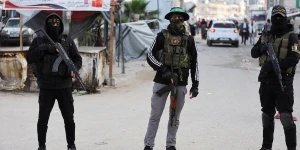
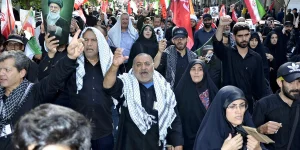
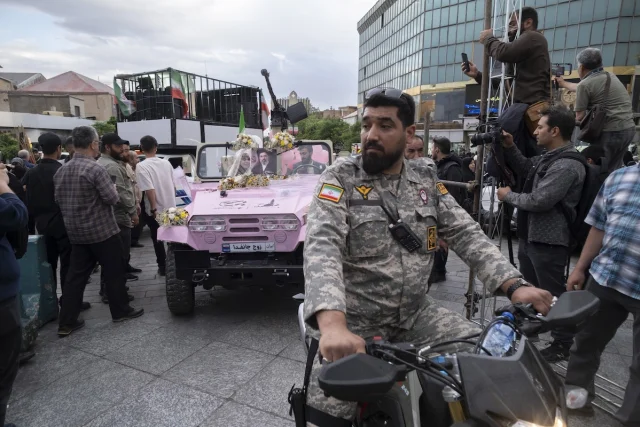
“Checkpoints everywhere. Masked men with AK-47 rifles – sometimes young boys – stopping cars and checking phones to find any trace of dissent. Pickup trucks with heavy machine guns patrol the streets. Every night, regime supporters march with loudspeakers and flags, shouting ‘Death to America, death to Israel’ and issuing threats against the opposition, under heavy security.”
“The regime uses civilian buildings – schools and community centers – as military bases and weapons depots to defend against attacks. And yet many people were willing to endure bombings, noise, and fear for the chance of a future without the Islamic Republic. I personally know someone whose daughter’s home was completely destroyed in strikes, and he still blamed the regime in Tehran – not the Israelis or Americans.”
Disappointment with Trump, expectations from Netanyahu
Raban’s harshest criticism is directed at the West, especially the U.S. administration and President Donald Trump’s strategy.
“People here are very disappointed and frustrated with Trump,” he said. “With his current strategy, he has only weakened the people and strengthened the regime. People wanted him either to go all in and overthrow the regime, or step aside. Instead, what happened is that Khamenei was replaced by an even more extreme Khamenei – his son Mojtaba – while the Revolutionary Guards gained full control over the country’s security and economy.”
“You Israelis live in this region – you know your neighborhood better than the Americans,” he added. “You can’t imagine how scared and confused the regime forces were during the three days when Israeli drones attacked them directly in the streets. But why didn’t that lead to change? Because overthrowing a regime is about weapons and coordination. Without weapons, another street uprising will just end in another massacre.”
According to him, Western strategy ignores the regime’s internal strength:
“The Islamic Republic still has between 5 and 10 million loyal, armed supporters out of a population of 90 million. The regime has already begun recruiting, organizing, and arming them, while also importing brutal proxy forces like Iraq’s Popular Mobilization Forces to suppress our citizens.”
“State television is even broadcasting programs teaching regime supporters how to use weapons and how to kill. They fear a revolution—and they are preparing for it like a war. Regime figures openly say: from our perspective, every protester in the street is Netanyahu.”
Four players, four separate realities
In a sober geopolitical analysis, Raban points to the biggest operational failure: the total lack of coordination between those seeking the regime’s fall – Israel, the U.S., and the Iranian opposition.
“There are four players: the Islamic Republic, the Israelis, the Americans, and the Iranian opposition. It looks like each one is living in a separate reality, acting based on completely disconnected interests.”
“During the fighting, for example, the Israeli army struck internal security centers and encouraged citizens to rise up – while at the same time Trump tweeted that civilians should evacuate major cities. How can you revolt when you’re told to flee? It’s contradictory.”
He described the situation as surreal:
“Even if Kurdish groups wanted to distribute weapons, how could they move tens of thousands of rifles into major cities in a country as large as Iran within a month? It’s logistically impossible. This lack of coordination is a tragedy.”
“Our hearts are close, but our minds are still far apart”
Raban had a personal and almost spiritual message for the Israeli public:
“Our peoples have been fed hostile narratives and propaganda for decades. So even though our hearts are close – our minds are still very far apart.”
“Closing that gap requires serious cultural and communication work. It’s a basic requirement for any real political cooperation in the future.”
A shared question: the day after
Raban concluded with both hope and warning:
“The answer to all these questions could be yes – but only if they become one shared question: Can Americans, Israelis, and Iranians build a deep cultural and historical dialogue that leads to coordinated political and operational structures?”
“I believe it’s possible. We share deep values and common interests. This path would cost your military far less and produce real results. What’s the alternative? Continue the current strategy – spend billions on weapons, strike power stations, and hope for the best – while completely sidelining the Iranian people instead of strengthening them? That simply won’t work.”
You might also like to read this: