She won't back down: Meet the Jewish activist confronting NYC's anti-Israel protests head on



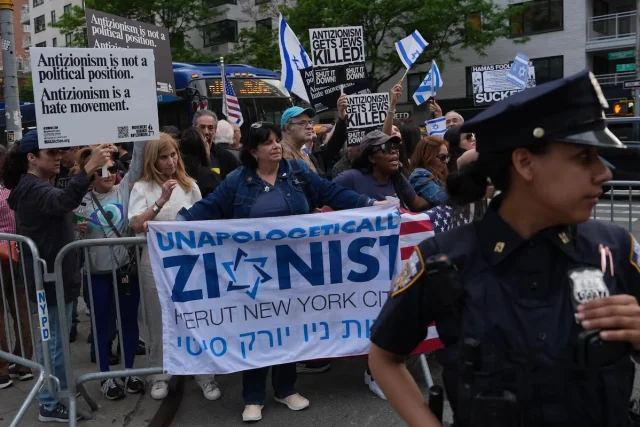
Well, here we go again. Recently in New York City, there has been another intense wave of clashes brought on by the anti-Zionism crowd who are increasingly taking their antisemitic message of hate directly outside synagogues and Jewish institutions.
What began as demonstrations tied to Israel’s war against Hamas has evolved into something much larger. Recent protests connected to Israeli real estate events and organizations with ties to Israel and the West Bank have sparked intense confrontations across the city.
Pro-Palestinian/Hamas activists argue they are protesting Israeli policies and settlement activity. Many Jewish New Yorkers see it very differently. They view these demonstrations as intimidation campaigns that place Jewish houses of worship and community spaces directly in the crosshairs.
The scenes have become increasingly tense: police barricades, shouting matches, arrests, counter-protesters waving Israeli flags, and growing concerns inside the Jewish community that anti-Israel activism is, in many cases, crossing into outright antisemitism.
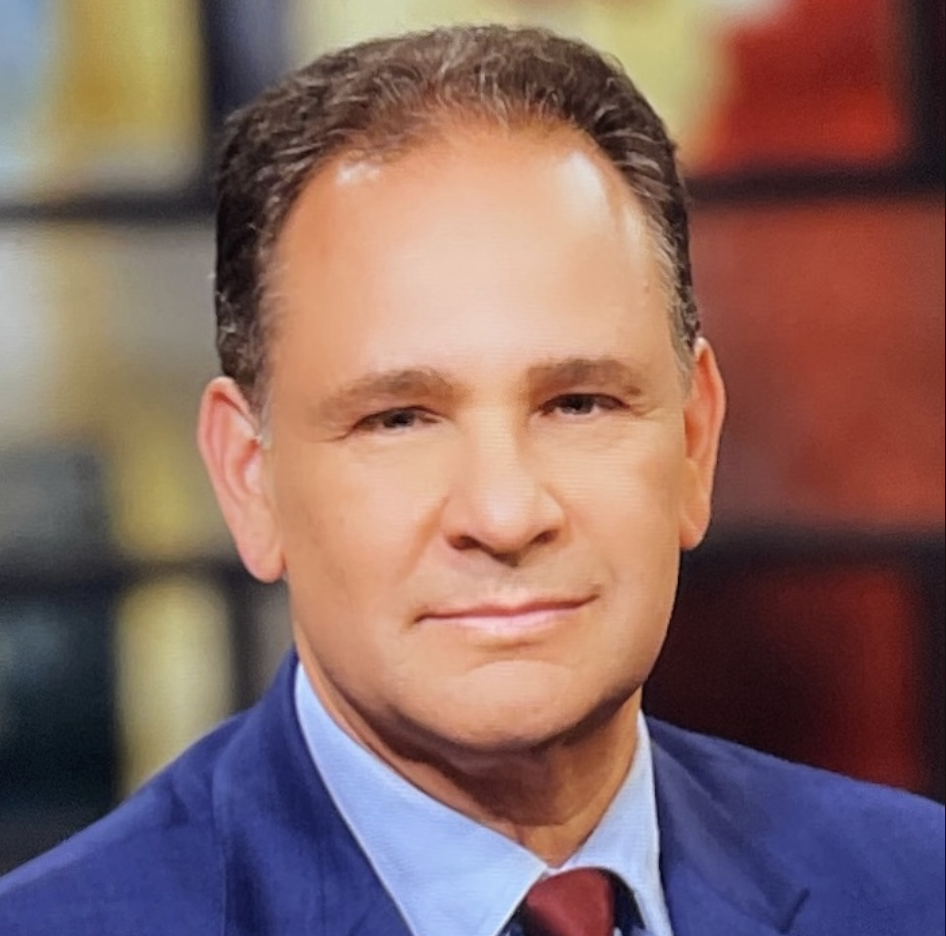
For some Jewish activists, the question is no longer whether to engage. It is whether anyone will show up at all. That is where Karen Lichtbraun enters the story.
She is not a politician. She is not a national figure. She is a New York Zionist activist who decided years ago that standing quietly on the sidelines was not an option. And ever since, she has been showing up where many others won’t.
“I come from the school where if you see something, you do something about it,” Lichtbraun told me during an interview. “I’m a boots on the ground person.” That phrase pretty much explains Karen Lichtbraun.
Lichtbraun serves as a community leader with Herut North America through Herut NYC, and for years she has shown up at anti-Israel demonstrations, counter-protests, hostage rallies and pro-Israel events across the city.
Her story, interestingly enough, did not begin after October 7. It started roughly a decade ago. “About ten years ago, I came back from Israel,” she explained. “I encountered an anti-Israel protest. And then I looked across the street. And where was our representation? There was nobody there. It was extremely frustrating.”
She remembers seeing only one side publicly represented. “The public is seeing just one view,” she said. So she stepped in. Eventually that grassroots activism merged into work connected with Herut.
“I saw a gross wrong being promoted on my streets,” she told me. “I’m a New York City resident. I’m a Jew. I’m a Zionist. If I turn my back, then where am I?” Lichtbraun repeatedly returned to one theme during our conversation: silence.
“I follow that philosophy that you can’t be silent,” she said. “Silence is complicity.” That mindset has put her directly into the middle of increasingly heated demonstrations. And according to her, those demonstrations have changed. “The anti-Zionist protests have become more and more charged, more and more violent,” she said.
Lichtbraun says activists have identified her publicly. “They call me out personally,” she said. “My address has been disclosed. My family has been outed.” She also described physical confrontations. “We as a group have been physically attacked,” she said. “We’ve been pushed. We’ve been shoved.”
The recent demonstrations outside Jewish institutions have ignited fierce debate over where protest ends and intimidation begins. Critics argue that houses of worship should have special protection, while others defend public demonstration rights. The issue has become one of the flashpoints in New York politics.
Lichtbraun has strong views, especially when it comes to the Mayor Zohran Mamdani’s lack of leadership on this, especially when it comes to security concerns at these unruly protests. “It’s not permissible to intimidate anyone from going into a house of worship,” she told me. “Why is this being permitted?…If Jews are people too, then we must be treated just like every other group in this city.”
Recently, Mayor Mamdani moved to veto legislation that would have created protest buffer zones around schools, arguing the measure was too broad and raised First Amendment concerns. Jewish groups strongly opposed the move, saying the proposal was designed to protect students from harassment and intimidation amid rising antisemitic incidents. Several organizations called the decision a “profound failure,” arguing it sent the message that Jewish security concerns were taking a back seat at a particularly tense moment in New York.
But no matter, Lichtbraun carries on as a proud full-fledged Zionist. In today’s society, Zionism has become politically radioactive more than ever. Ask five people and you may get five different answers but Karen’s definition is straightforward. “It’s not political,” she said. “It’s the right for Jews to have a homeland. That one little piece of land. It’s our right to choose to live there.” She pushed back hard against efforts to redefine Zionism strictly as a political ideology. “To me it has nothing to do with left, right or middle,” she said.
For Karen Lichtbraun, this is about presence not politics. It’s about showing up. Getting involved. Not backing down. And she’s doing it on the fragile front lines right in the heart of New York. In the belly of the beast.
You might also like to read this: