The tales Tel Ashkelon can tell






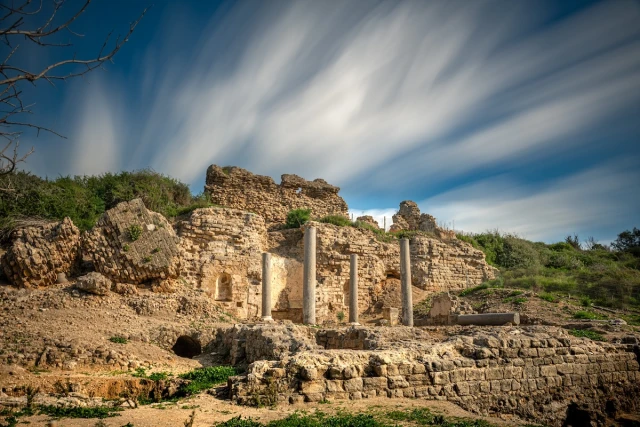
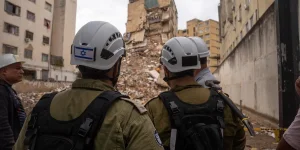
The Israeli port city of Ashkelon, just north of Gaza, has been a place of note going back around 10,000 years, and recently made international news when it became a battleground during the Hamas invasion on Oct. 7, 2023. Ashkelon is also featured in the Bible for ancient events and prophecies yet to come.
Lying along the Via Maris trade route from Egypt, heading north toward Lebanon and Syria, Ashkelon was once a significant Canaanite city. Its ruins testify to its size and fortifications. However, archeological finds also reveal a strong Egyptian influence.
“We know that at least 3,500 years ago there was an Egyptian presence here, since we found little idols specifically for the god of Isis, the fertility god,” tour guide Levi Simon from Discover Israel explained to ALL ISRAEL NEWS correspondent, Oriel Moran.
When the Philistines arrived by sea, they took control of the coastal city, which had access to its natural water sources, and it became a center of commerce.
“This nation was called the Philistines or 'Poleshet,'” Simon told Moran, with the word Poleshet meaning invader. “The people in academia today in Hebrew we call 'Goye haYam' — the people from the seas — they came because of some economic crisis that happened in the 12th century BCE... they came to this fertile crescent and they found themselves a home,” Simon continued.
“Now these Philistines, they established themselves in five major cities as we can see here and [as is] written in the Bible multiple times. These were the arch enemies of the Judeans, the Israelites,” said Simon, listing the cities: “Gaza… Ashkelon, Ashdod, Gat and Ekron. These five cities in these regions were always in conflict of the Judeans,” he added.
It was during the time of the Philistines that the story of Samson took place, some of which took place in Ashkelon. Samson fell in love with a Philistine woman but tragedy ensued in an engagement party debacle and Samson’s beloved was given to another man. After being cheated, Samson lashed out and killed thousands of Philistines at Ashkelon.
Simon also shared grim historical findings about ancient mariners and their penchant for cultic worship and brothels when they came ashore. Heaps of bones belonging to discarded babies were found close to the structure of an ancient temple, testifying to the oldest trade in operation there in the port city.
“We found inside of the gutter next to the structure lots of baby bones and that was a very hard thing for us to find,” Simon told Moran. Prostitution by the gates of a temple was common as part of pagan idol worship, and those, such as sailors and farmers, whose livelihoods depended on the weather would typically seek favor from the deities they perceived to be in charge of their fate.
Another striking archaeological feature at the site is the world's oldest arched gate, believed to be about 3,850 years old.
“To see the magnitude and the size of this gate just shows the great importance of the city and possibly even the population of here,” Simon says of the Middle Bronze Age structure.
“This would have been the entrance to the Canaanite city in Ashkelon, a prominent site here inside of the Holy Land, which means the Judeans, like King David, possibly would have seen this,” he explained. “Samson definitely would have seen this. Even though he came about 800 years after this gate was built, we could see how it was constructed and reconstructed.”
Ashkelon has been conquered and reconquered by different peoples in different eras, continuing as a place of significance during the Hellenistic and Roman periods, evidenced by a pillared Roman basilica with a marble floor, which would have been the focus of the city during the Byzantine era. It was during this time that many of the 67 wells were built in the city.
Later in the Middle Ages, it was used as a Crusader border fortress, the ruins of which can still be seen today. The Fatamid Muslims of the 12th century built huge walls to defend against the Crusaders with four gates facing four directions: Jerusalem Gate, Gaza Gate, Jaffa Gate, and Sea Gate.
The city is just 9 km north of the Gaza border (a little over 5 miles), and it says in the Book of Judges, chapter 16, that the Philistines were able to overcome Samson and drag him into Gaza after Delilah found out the secret of his strength and passed it on to his enemies.
“The Philistines seized him and gouged out his eyes and brought him down to Gaza and bound him with bronze shackles. And he ground at the mill in the prison” (Judges 16:21).
Once Samson’s hair grew back in captivity in Gaza, he asked God to give him back his strength. Samson took revenge on the Philistines and killed 3,000 men, women, and children by destroying the pagan temple in which he was held, and in doing so also destroyed himself.
Samson’s story has echoes of recent events, and there’s a prophecy in Zechariah 9:4-8 that also speaks of Ashkelon and Gaza, some of which may be yet to come:
“But behold, the Lord will strip her of her possessions
and strike down her power on the sea,
and she shall be devoured by fire.
Ashkelon shall see it, and be afraid;
Gaza too, and shall writhe in anguish;
Ekron also, because its hopes are confounded.
The king shall perish from Gaza;
Ashkelon shall be uninhabited;
a mixed people shall dwell in Ashdod,
and I will cut off the pride of Philistia.
I will take away its blood from its mouth,
and its abominations from between its teeth;
it too shall be a remnant for our God;
it shall be like a clan in Judah,
and Ekron shall be like the Jebusites.
Then I will encamp at my house as a guard,
so that none shall march to and fro;
no oppressor shall again march over them,
for now I see with my own eyes.”
You might also like to read this: