Open heart surgery: How an Israeli non-profit changed the heart of Muslim influencer, Mustapha Ezzarghani



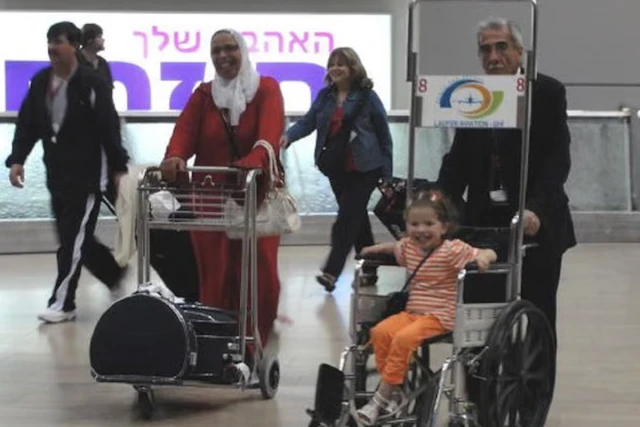
A Christian nonprofit that brings children from countries considered adversaries to Israeli hospitals for life-saving heart surgery has not only helped heal physical hearts, but also, in some cases, fostered lasting personal transformations, including that of a Muslim man from Morocco who has become a prominent advocate for Israel and the Jewish people.
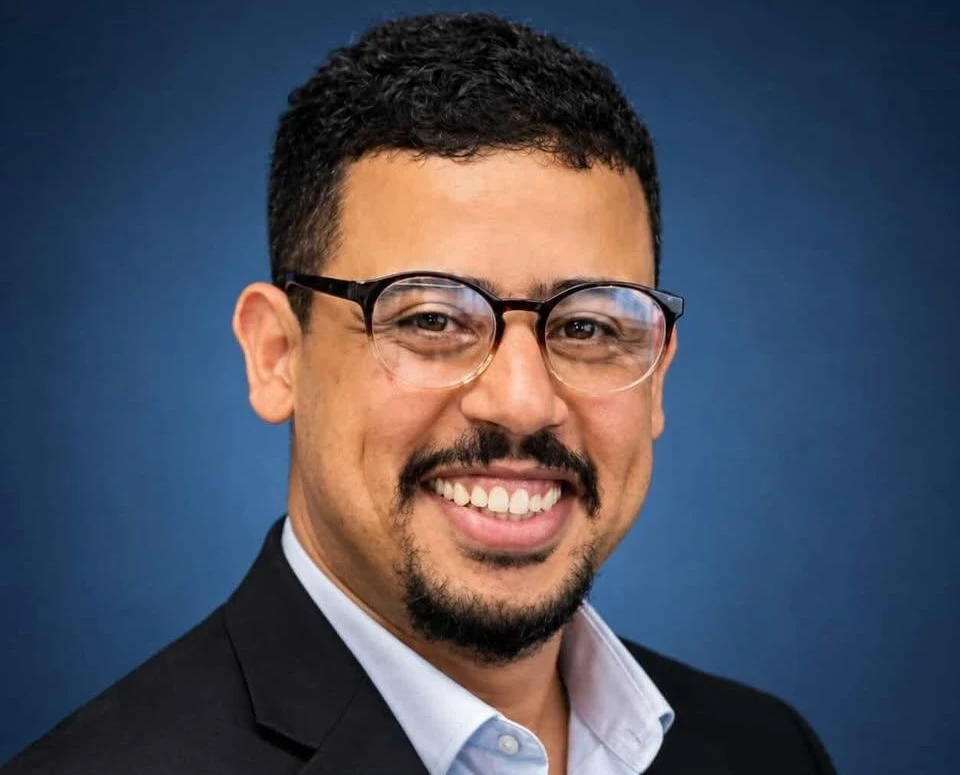
Writer and photographer Mustapha Ezzarghani told ALL ISRAEL NEWS how his encounter with a young girl named Hiba, who received medical treatment in Israel, changed his life.
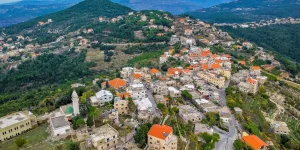
“In 2010, I had a friend from a small village called Amizmiz, tucked into the mountains not far from Marrakesh,” Ezzarghani explained. “One day, he invited me to visit, to share a meal with a local family. There was nothing unusual about it. In Morocco, being invited into someone’s home, especially in a village, is one of the most natural things in the world.”
“We sat together, shared food, spoke about ordinary things, life, family, the rhythm of the village. And then, at some point, my attention was drawn to their daughter, Hiba.”
Ezzarghani continued, “There was something about her that made you pause. A certain fragility in her presence, something that told you she had been through more than a child should. Her mother began to speak about her, not in a dramatic way, but with the quiet honesty of a mother who has carried fear and relief in the same breath. She told me that Hiba had suffered from a serious heart condition, that her life had once been hanging by a thread.”
“And then came the sentence that, in that moment, felt almost impossible to process. She told me that Hiba had undergone heart surgery… in Israel.”
The non-profit behind this narrative-breaking moment is Shevet Achim, named after the first verse in Psalm 133: “How good and pleasant it is when brothers dwell together [shevet achim] in unity.” The Psalm promises blessing wherever there is this brotherhood, which is something the staff hangs onto as they extend love and brotherhood to Israel’s “enemies” through medical care.
Shevet Achim began bringing children from the Gaza Strip in 1994, but over time expanded its operations to include countries across the Middle East, including Ezzarghani’s home country of Morocco. The Israeli government covers part of the costs, while Shevet Achim raises the remainder through donations.
“I remember the stillness that followed inside me,” Ezzarghani recalled. “Not the kind of silence that brings peace, but the kind that comes when something you believed to be solid begins to crack. Because everything I had been taught, everything I had absorbed about Israel and about Jews, had prepared me to expect something entirely different.”
“But this woman, this Amazigh mother from a remote village, had no reason to shape her story for me. She had no political agenda, no ideology to defend. She was simply telling me what had happened to her child. And what she described was not hostility, not rejection, but care.”
“She spoke about doctors who treated her daughter with dedication, about a system that received them, about moments where she felt respected, even as a Muslim woman wearing her hijab in a place I had always imagined would reject her,” he continued.
“There was no bitterness in her voice. Only gratitude. A kind of quiet, grounded gratitude that comes from having seen your child survive. And that is when something shifted inside me,” Ezzarghani said.
Sixteen years later, Ezzarghani made a video describing how this encounter resulted in a paradigm shift that would change his life. Without mentioning Hiba’s name, he described the events surrounding her surgery and how it impacted him deeply, saying it was “one human moment” that undid “a lifetime of assumptions.”
Although he had grown up hearing negative narratives about Israel and the Jewish people, Ezzarghani also recalled family stories of a time when his relatives lived in close-knit communities alongside Jewish neighbors.
“My parents and grandparents would speak about a time when Moroccan Jews were not 'others,' but simply neighbors, friends, part of the same rhythm of life. My grandmother, in particular, had a way of remembering that felt almost sacred. She would speak of Jewish families who lived side by side with Muslims, doors open, food shared, joys and sorrows carried together,” he said, adding, “Without realizing it, I carried both legacies inside me.”
Reflecting on the seminal incident in 2010, Ezzarghani explains that it was the beginning of his journey rather than a tidy conclusion. “It was not a loud transformation. It was not immediately clear. It was something more unsettling, the beginning of doubt. Because when a lived experience stands in direct contradiction to everything you think you know, you are left with a choice. You can dismiss it, or you can follow it.”
“That day in Amizmiz, sitting in that humble home, listening to a mother speak about the people who saved her daughter’s life, I realized that the story I had inherited was incomplete. And once you see that, even for a moment, you cannot fully return to what you believed before. That was how it began. Not with an argument, not with a book, but with a human story. And sometimes, that is all it takes to change the direction of a life,” he said.
Shevet Achim was greatly encouraged when they saw Ezzarghani’s video and joined the dots. Jonathan Miles, one of the founding members of the organization, wrote in their newsletter:
“Since October 7, the conventional wisdom in wartime Israel is that it is foolish to save Gaza children, since they’ll just grow up to become terrorists. Evidence that hearts truly can be changed could help protect the Jewish people from this hardening of their own hearts,” he contended. “We want our visiting families to know that we’re motivated by God’s free and unconditional love, which he first of all poured out on us through Messiah. There are no strings attached to our help, and these precious children are not pawns in a public relations battle,” he added.
Both Miles and Ezzarghani emphasize that this story is not a clear-cut or binary one.
“The truth is often more complex than the narratives we inherit, and that identity is not something we simply receive; it is something we must examine, question, and sometimes rebuild,” Ezzarghani emphasized.
“That afternoon in the mountains did not suddenly replace one belief with another; it planted a question that refused to leave me. And questions, when they are honest, are not gentle. They disturb. They linger. They ask you to look again at things you once accepted without hesitation.”
Ezzarghani spent years reading and researching, first on Jewish history in Morocco and later more broadly. He describes a gradual process of moving away from antagonism toward a more nuanced understanding and appreciation of the Jewish state, with all its complexities, which he now draws on when speaking to those still influenced by anti-Israel narratives.
“At first, I tried to hold on to what I had always believed. It is easier that way. There is a kind of comfort in certainty, even when that certainty is built on incomplete truths. But the story of Hiba’s family kept returning to me. Not as an argument, but as a presence. A simple, undeniable contradiction. And slowly, I realized that if I was serious about understanding the world, I could not ignore it.”
Ezzarghani is now president of the Moroccan-Israeli Friendship Association, with a social media presence reaching tens of thousands of people. He has visited Israel twice; the first time as part of the Muslim Leaders Initiative, and later on a trip organized by the Israeli Consulate in Atlanta, part of the "Southeast Influential Visit."
“This experience added another layer, not just intellectual, but relational,” he said. “It allowed me to see how Israel engages with the world beyond its borders, and how dialogue can exist even in the presence of deep disagreement. Israel, for me, stopped being an idea. It became a place filled with people – diverse, passionate, flawed, resilient.”
“There were moments that stayed with me, not because they were dramatic, but because they were disarming. Conversations where I expected distance, but found familiarity. Encounters where I expected tension, but found curiosity,” Ezzarghani said. “It was not that I suddenly agreed with everything I saw or heard, but something more important happened: I could no longer deny their humanity. And once that door opens, it never fully closes again.”
Speaking on behalf of Shevet Achim, Miles told ALL ISRAEL NEWS, “Let's all be encouraged that seeds we plant may bear fruit only after long periods, and in unexpected ways.”
[EDITOR'S NOTE: ALL ISRAEL NEWS has been informed that Hiba is doing well. She is 19 years old and studies nursing. Her younger sibling wants to be a doctor.]
You might also like to read this: