Moroccan bridge-builder says ties with Israel remain strong despite Gaza war
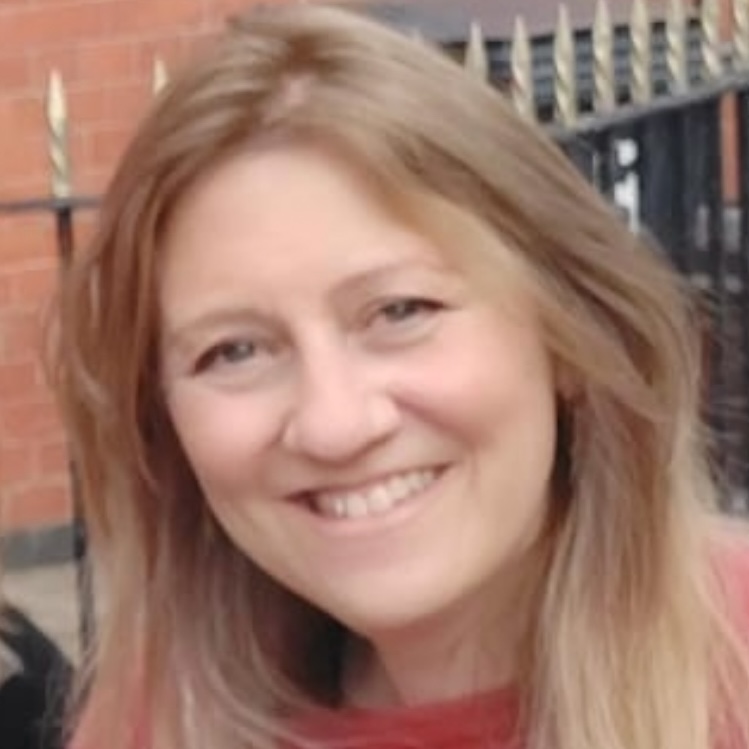


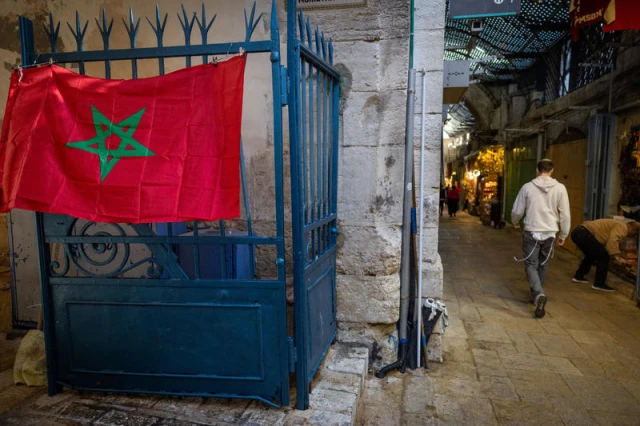
Moroccan official Khalid El Fataoui is a lawyer, an entrepreneur, and a peace activist. He recently spoke to YNet News about the endurance of the connection between Morocco and Israel despite the Gaza war.
Morocco was one of the first countries to join the Abraham Accords in December 2020, normalizing relations with Israel. Though many in the North African nation are passionately pro-Palestinian, the peace agreement with Israel has endured, and according to El Fataoui, even strengthened.
“This agreement was not the beginning of relations between Israel and Morocco,” El Fataoui explained to the Israeli news outlet. “It was the continuation of relations that existed before, but were not official.”
He told YNet, “Today Morocco is the heart of Africa. Together, Morocco and Israel can do many good things for Africa and for the world.”
For decades there has been cooperation between the two countries, especially in matters of security, despite the support of much of the populace for the Palestinian cause. During the Gaza war, Morocco officially took a diplomatic line, publicly calling for a ceasefire, adherence to international law, and a Palestinian state, without abandoning the beneficial and reciprocal relations with Israel established in the Abraham Accords.
According to Sarah Zaaimi, resident senior fellow for North Africa at the Atlantic Council’s Middle East Programs, part of the reason behind the strong links between the two countries is the common threat of Iranian expansionism. While Iran has been working through proxies in Lebanon, Gaza, Iraq, and Yemen, the area of Western Sahara is also vulnerable – a risk addressed by the U.S. recognition of Moroccan sovereignty over the region, which came as part of the package in the Abraham Accords.
“Morocco has no intention of closing its liaison office in Tel Aviv like it did in 2000 during the Second Intifada, no matter how loud the popular opposition in Rabat becomes,” wrote Zaaimi, adding that an unnamed high-level Moroccan official told her that the closure 25 years ago had been “a regrettable decision that the kingdom is not prepared to repeat in light of a regional threat that may cost us half of our territories and the security of our children.” The official added, “We share with the Israelis a common destiny and a vision for a peaceful and prosperous future.”
El Fataoui is clearly on the same page as that official, if not the same person. He pointed to Morocco’s economic growth since the signing of the Accords, seen in tourism, handicrafts, renewable energy and technology, according to YNet, adding that there has been particular momentum in solar energy and innovation projects.
Instead of seeing relations with Israel as weakened by the war, El Fataoui asserted that they remained steady, and that rather than being buffeted Morocco was a stabilizing force in the region. “Morocco is stable and developing all the time,” he said.
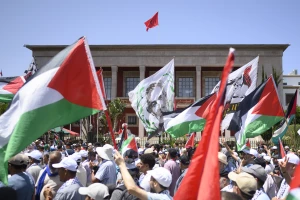
Despite warm words from Morocco’s leading circles, there have been huge demonstrations in Rabat numbering tens of thousands of people protesting against normalization with Israel. El Fataoui acknowledged the protests but suggested that they were “limited” and that their opinions did not reflect the entire population. He pointed out that Morocco is a country of 40 million people. “If 10,000 demonstrate, that is not Morocco,” he said.
Although there once were around 250,000 Jewish people living in Morocco, today there are less than 3,000, but El Fataoui insisted that the Jewish community formed an essential part of their society. “It is not just a community,” he said. “They are Moroccans. We studied together, we lived together, and we are proud of them.”
El Fataoui was asked about whether Jewish Moroccans are considering making aliyah (moving to Israel) in the wake of the war, but he emphasized the deep connections and respect for the Jewish community in Morocco. Jewish heritage sites, synagogues and cemeteries are protected and restored by the Moroccan state, according to the official, along with efforts to preserve Jewish history, including plans to establish museums in areas with a long Jewish presence.
“When we go to Israel, we do not immigrate. We go home,” he said. “Just as Jews consider Morocco their home, we consider Israel our home.”
According to Atlantic Council, one in ten Israelis today have Moroccan ancestry, including Speaker of the Knesset Amir Ohana, Aryeh Deri, and Yaakov Margi. As a bridge-builder himself, El Fataoui said Israeli citizens of Moroccan origin act as a “living bridge” between the two nations, strengthening bilateral ties.
But El Fataoui is looking beyond a simple two-way street. Morocco is in a position to be a hub for trade between Europe, Africa, and Asia. He expressed hopes that Israel and Morocco could play a key role in developing the whole region of North Africa and the Middle East, particularly the Sahel region which includes Mali and Burkina Faso, seeing the relationship between Israel and Morocco as a model of coexistence and tolerance that could be extended to other areas.
“Israel is a leader in innovation and startups,” he said, speaking about opportunities for Israeli companies in infrastructure, ports and road projects, and cooperation in technology and job creation. “Together we can create stability, peace and progress for Africa.”
He assured Israelis they would be welcomed in Morocco and said he hoped direct flights to and from Israel would return soon.
You might also like to read this: