Media credibility under fire: CAMERA UK’s Hadar Sela on bias in war reporting



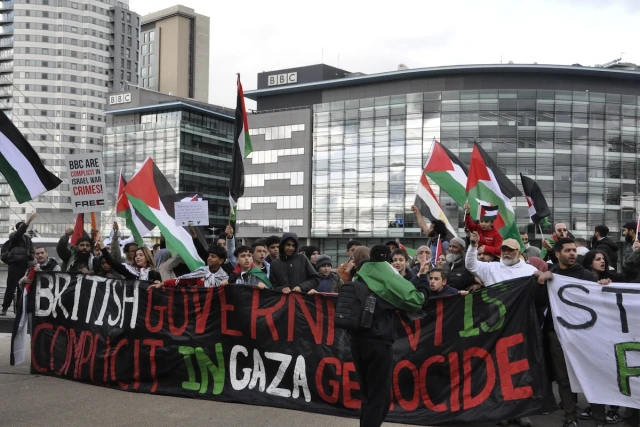
Questions surrounding media credibility, war reporting, and journalistic accountability took center stage in Paul Calvert's recent interview with Hadar Sela of the Committee for Accuracy in Middle East Reporting and Analysis (CAMERA UK). Speaking candidly about news coverage of Israel, Gaza, Lebanon, and Iran, Sela described what she sees as a growing problem inside modern journalism: the prioritization of narrative over verified facts.
Reflecting on coverage since Hamas' attack on southern Israel on Oct. 7, 2023, Sela began by giving some specific examples of the coverage about how the war, arguing that audiences are often given incomplete information when journalists connected to terror groups are killed in conflict zones. She noted several examples involving individual reporters known to be linked to Hezbollah- or Hamas-affiliated media outlets whose deaths were reported without giving critical details needed for context.
Sela explained that this kind of reporting shapes how international audiences understand the conflict, and can erase vital context about Israeli civilians living under constant threat.
“I think it's part of a bigger picture that we're seeing, where the narrative is more important than the facts and than impartiality,” she told Calvert.
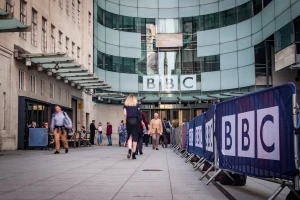
The interview specifically focused on the BBC’s handling of corrections. Sela gave further examples of this phenomenon, noting that the broadcaster devotes considerable time and resources to Middle East coverage. She described cases in which later evidence identified individuals initially presented as civilians or first responders as Hamas operatives involved in terrorism, yet earlier reports frequently remain largely unchanged online even after new information has emerged.
Discussing this pattern, she insisted, “That's not a commitment to accuracy. That's not a commitment to proper journalism. It's creating a narrative.” Sela also addressed what she called selective storytelling in coverage from northern Israel.
Referring to missile attacks on northern Israeli communities, including Metula and Haifa, she argued that reporting often highlights military developments while overlooking the suffering of Israeli families whose homes, schools, and livelihoods have been devastated, calling this “ the invisible Israeli phenomenon.”
The conversation also explored BBC reporting in multiple languages, including in Arabic and Persian, where Sela believes different audiences will receive different levels of context and political framing.
Perhaps the most sobering moment came as Sela reflected on the broader consequences of declining trust in journalism. “To be honest, we can't trust the media anymore.” She added that what she described as a dysfunctional media ecosystem – including anti-Israel bias, antisemitism, and ignorance of historical context among journalists and editors tasked with reporting the news – has contributed to widespread confusion about the Oct. 7 attack and the ensuing war.
Despite her concerns, Sela emphasized that the mission of CAMERA UK is to “give people the facts so that they can judge a story for themselves.”
CAMERA-UK is a media monitoring and research organization dedicated to promoting fair, accurate and balanced coverage of Israel in the British media – challenging inaccurate, skewed and often inflammatory characterizations of Israel that mislead news consumers and policy makers – and often fuels anti-Jewish sentiments. The organization proactively engages with journalists and editors to challenge false or misleading claims about Israel, garnering dozens of substantive corrections in British media each year.
Click below for the full interview.
You might also like to read this: