US intel: Mojtaba Khamenei remains central figure in Iran's leadership



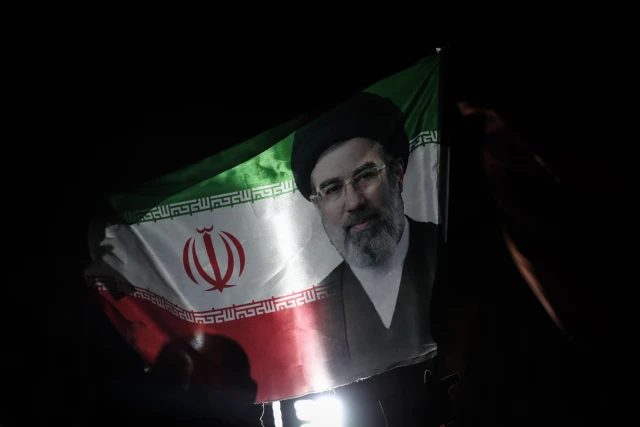
U.S. intelligence reports that Mojtaba Khamenei, the son of Iran's former Supreme Leader, remains a central figure within the Iranian regime, CNN reported. Speaking on condition of anonymity, sources told CNN that the younger Khamenei is “playing a crucial role” in shaping the regime’s wartime decisions and strategy.
At the same time, the assessment reportedly describes Iran’s leadership as “fragmented,” with uncertainty over who is ultimately driving decision-making in Tehran amid ongoing efforts to negotiate a potential end to hostilities with the United States and Israel.
The Iranian regime officially elected Mojtaba Khamenei as the country’s new 'Supreme Leader' after Israel eliminated Ali Khamenei and an additional 40 top Iranian officials in an unprecedented aerial strike on Feb. 28.
Mojtaba Khamenei has not been seen in public since the start of the Iran war. The British newspaper The Times reported last month that he was in “severe condition” and receiving medical treatment in the holy city of Qom, south of Tehran.
According to the report, he was seriously injured in an Israeli strike that killed his father and several other family members who were present at the compound at the time. He is said to be suffering from severe burns on one side of his body and face, affecting at least one arm and one leg.
If accurate, the U.S. assessment suggests that Khamenei continues to play a central role in decision-making in Tehran. Officials believe he communicates only through couriers and in-person meetings with senior regime figures. His current whereabouts remain unclear, with uncertainty over whether he is still in Qom or has been moved elsewhere. According to CNN, U.S. intelligence officials also said they have not been able to obtain any visual confirmation of his location.
The report suggests growing internal tensions within the Iranian leadership, particularly between civilian officials such as President Masoud Pezeshkian and Foreign Minister Abbas Araghchi, and the more hardline Islamic Revolutionary Guard Corps (IRGC), now led by Maj.-Gen. Ahmad Vahidi. There were also reports last month of internal power struggles, including speculation that Vahidi had effectively consolidated control within parts of the security establishment.
Former Al Qaeda member-turned analyst Aimen Dean has claimed Vahidi had backing from Russia, China, and several regional actors, describing him as effectively leading a coup, though these assertions have not been independently verified.
There were also reports that the IRGC blocked senior civilian officials from meeting Khamenei, though President Pezeshkian said in an interview with Iranian state media that he held a two-and-a-half-hour meeting with Khamenei. That claim has not been independently confirmed.
While assessing that Khamenei remains a key figure, one official told CNN, “There is no indication that he is actively issuing orders on a routine basis, but there is also nothing proving that he is not.”
You might also like to read this: