Iran's leader Mojtaba Khamenei incapacitated, in ‘severe condition,’ and receiving treatment in city of Qom - report
Reports indicate that younger Khamenei has no leadership role, regime being run by IRGC



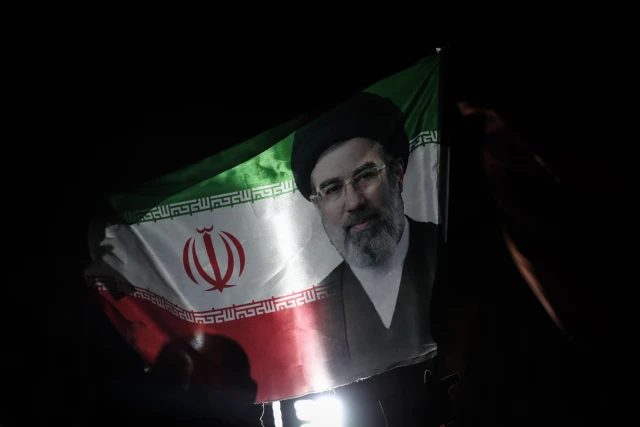
Mojtaba Khamenei, the son of the late Supreme Leader Ayatollah Ali Khamenei, and who was declared the new Supreme Leader following his father’s assassination, is incapacitated and receiving medical treatment in the city of Qom, according to The Times.
Since his elevation to supreme leader, speculation has grown about Mojtaba's condition, as he has not made public appearances or been shown in official photos or videos, leaving his health and whereabouts unclear.
The Times report is based on a “diplomatic memo” that was reportedly shared with Gulf states and claims that the younger Khamenei is unconscious and being treated for “severe” medical conditions.
“Mojtaba Khamenei is being treated in Qom in a severe condition, unable to be involved in any decision-making by the regime,” the memo purportedly stated.
The Times report corroborates a previous report by The Media Line, which stated that Mojtaba “remains in a medical intensive care unit at an underground location.” That report cited “a hospital source” who claimed that Mojtaba had sustained severe injuries, including damage to one arm and at least one leg, extensive head and facial trauma, spinal cord lesions, a dislocated jaw, and likely brain injuries.
The city of Qom, where Mojtaba Khamenei is reportedly receiving treatment, is a holy site for Shia Islam and a frequent destination for pilgrimage. The Times report also indicated that the body of Ali Khamenei is being prepared for burial there, underscoring the city’s significance in the sect’s clerical hierarchy.
The memo noted that elements within the regime are “laying the groundworks needed to build a large mausoleum in Qom” for Khamenei, with “more than one grave,” which appears to corroborate reports that multiple members of the Khamenei family were killed in the initial strike along with the late Supreme Leader.
Regime-affiliated news agencies had previously reported that Ali Khamenei would be buried in his home city of Mashhad, in northeast Iran, which is also a site of Shia pilgrimage. The government has said a public ceremony to mourn him would take place in Tehran, while also saying the ceremony would be postponed due to “anticipation of unprecedented turnout.”
No date for a ceremony has been announced, and with the traditional 40‑day mourning period ending on Wednesday, the absence of a scheduled service or burial has prompted questions inside Iran, where Shia Islamic custom typically calls for the dead to be buried as soon as possible.
The Times suggested that references to multiple graves might include one for Mojtaba Khamenei, as reports indicate his condition is critical and his prognosis is reportedly poor.
The Iranian regime has released almost no information about Mojtaba, apart from acknowledging that he was wounded in the same attack that killed his father. In addition, statements attributed to Mojtaba in Iranian media have been accompanied by older photos from before the war.
The Fars News Agency, which is affiliated with the Iranian army, had previously reported Mojtaba’s condition as a janbaz (a disabled veteran), which signifies permanent disability of some kind.
In an apparent attempt to allay fears about his poor condition, Iranian media ran an AI-generated video of Mojtaba entering a war room in which a map of the Israeli nuclear power plant near Dimona can be seen.
🎥فيديو لأول ظهور للقائد العام آية الله السيد مجتبى خامنئي في غرفة الحرب... pic.twitter.com/QaSVlZbViU
— السيد علي الموسوي 14M 🕋 (@mosavimajd313) April 5, 2026
Opposition-aligned Iran International has reported that Iranian President Masoud Pezeshkian has been repeatedly denied permission to meet with the younger Khamenei, despite being required to consult with him for governmental purposes, according to the Iranian constitution. It claims that the leadership of the Islamic Revolutionary Guard Corps (IRGC) is ruling the country, while issuing statements in Khamenei’s name.
If true, this would mark the first time that the Islamic regime is no longer operating under the system of Velayat-e Faqih, “guardianship of the Islamic jurist,” which was used to justify placing the state under the control of an Islamic cleric.
Anti-regime accounts on social media have mocked the condition of the new Supreme Leader, posting images and videos of Mojtaba as a cardboard cutout.
Iran's newly appointed Supreme Leader, Mojtaba Khamenei, is reportedly in a coma and critically injured after a stiff breeze knocked over his cardboard cutout pic.twitter.com/BwXHPks5m3
— Jayroo (@jayroo69) March 12, 2026
You might also like to read this: