Young reformer or radical ‘living martyr’: Who is Mojtaba Khamenei, Iran’s potential new Supreme Leader?
'His career is soaked in blood and he's been marinating in Khomeinist thinking,' warns Iran expert



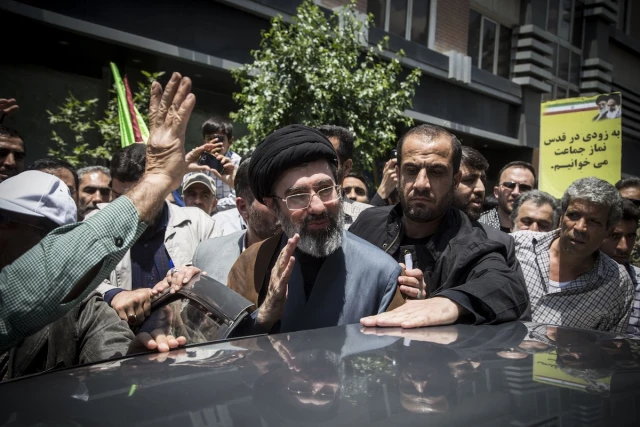
On Tuesday, March 3, 2026, various media reports stated that Mojtaba Khamenei, the second son of slain Supreme Leader Ayatollah Ali Khamenei, was chosen to succeed his father as the next leader of the Islamic Republic of Iran.
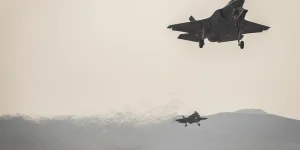
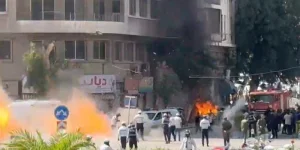
The 56-year-old mid-ranking cleric has reportedly been a power broker behind the scenes for years, and could now step onto the stage at a critical juncture, with the survival of the regime being highly questionable amid intense airstrikes from the U.S. and Israeli Air Forces.
Khamenei has been mentioned as a potential successor for years at this point, with discussions intensifying after the death of President Raisi in 2024, who was seen as the strongest candidate at the time.
Over the years, his relative youth and statements from within the Iranian elite have caused some observers to describe him as a potential moderate, a reformist figure in the mold of Saudi Arabia’s Mohammed Bin Salman (MBS) and other young-ish reformers in the region.
A politician close to him told The New York Times recently that “he is extremely progressive and will move to sideline the hard-liners,” predicting his appointment would be “a shedding of skin.”
However, Iran experts have warned that Khamenei isn't just not going to be a reformer, but he is a true radical, an ideologically motivated hardliner who could turn out even worse than his father.
The immediate circumstances of his elevation support this prediction. Mojtaba Khamenei reportedly survived the airstrike that killed his father, his mother, his wife, and one of his sons.
Like his father, who survived an assassination attempt in 1981, he could now be considered a “living martyr” - powerful munition for the myth-making symbolism that heavily suffuses the regime.
“If Mojtaba does become supreme leader, you will see him being packaged in this manner,” predicts Jason Brodsky, Policy Director at the United Against Nuclear Iran (UANI) think tank.
“If he is indeed elected leader, Mojtaba will not be the MBS of Iran's regime. He will likely continue to carry the mantle of his father's hardline legacy as he's been marinating in it for years and was propelled by it,” he explained on 𝕏, “his career is soaked in blood and he's been marinating in Khomeinist thinking his entire life.”
After growing up as the son of Ali Khamenei, one of the revolution’s leading figures, and, since 1981, the president of Iran, Mojtaba joined the IRGC when he was only 17 years old, fighting several years in the bloody Iran-Iraq War.
According to UANI’s Saeid Golkar and Kasra Aarabi, Mojtaba fought in the 27th Mohammad Rasulullah Division under the leadership of “the IRGC’s Ahmad Motevaselian, a profoundly anti-Semitic individual and one of the founders of Lebanese Hezbollah,” and as part of the Habib Battalion, “made up of the most radical right Islamists, most of whom would later form the core of the regime’s security and intelligence bodies.”
This was a formative experience, and he made several close friends who would later be dubbed the “Habib circle” and form a powerful circle of senior officials in the IRGC and across the regime, exerting Khamenei’s influence behind the scenes.
Several years after the war, Mojtaba began his traditional clerical studies in the holy city of Qom, under the supervision of several close confidantes of his father, most of them particularly extremist clerics.
However, several reports suggest that, like his father, Khamenei was not a particularly brilliant scholar, and leaked diplomatic cables suggested he was “not expected to achieve by his own scholarship the status of ‘mujtahid,’” which is necessary to attain the rank of Ayatollah.
Per the constitution, only ayatollahs can become the Supreme Leader and exercise Velayat-e Faqih or guardianship by Islamic jurists – the ruling ideology instituted by the regime’s founding father, Ruhollah Khomeini.
Despite this, UANI has compiled evidence that some parts of the regime have been seeking to burnish Khamenei’s religious credentials as a step toward his later elevation.
After his studies, Mojtaba returned to the capital, taking up a central role in the Office of the Supreme Leader, which Golkar and Aarabi described as the “hidden nerve center” of the regime in a recent report.
“It is the mechanism through which the supreme leader’s control extends across the military, the security establishment, and Iran's cultural and economic landscape,“ they wrote.
Ensconced there, Mojtaba became a key power broker. In 2005, he reportedly spearheaded efforts to manipulate the presidential elections to elevate hardline Basij member Mahmoud Ahmadinejad. When the Green Movement protests broke out, he had a central role in suppressing them.
Hinting at Mojtaba’s own ideological conviction, his inner circle “includes the most ideologically extremist clerics among the next generation of regime elites,” according to Golkar and Aarabi.
“They are also leading advocates of the militaristic doctrine of Mahdism, the most radical Islamist doctrine. Those who subscribe to this apocalyptic ideology believe the eradication of Israel will facilitate the return of the Twelfth divinely ordained Shia Imam, Mohammad al-Mahdi, whom Shia Muslims believe went into occultation in 874 AD.”
“If Mojtaba attains the mantle after his father’s death, this so-called ‘ideologically pure’ clique will be rewarded with senior elite positions of power and will have the ear of the new Supreme Leader,” they warned.
In addition to his political influence, Mojtaba has reportedly also built a shadowy economic empire. A bank account worth some $1.6 billion that was frozen by the UK in 2009 was rumored to belong to him.
A recent Bloomberg report based on “people familiar with the matter and the assessment of a leading Western intelligence agency” noted Mojtaba “oversees a sprawling investment empire,” that stretches from “Persian Gulf shipping to Swiss bank accounts and British luxury property worth in excess of £100 million ($US138 million).”
His alleged holdings, none of which are registered in his name, include real estate “in several of London’s most exclusive neighborhoods, a villa in an area dubbed the ‘Beverly Hills of Dubai’ and upscale European hotels from Frankfurt to Mallorca.”
In recent years, he has slowly emerged from the shadows after reportedly again leading regime efforts to suppress the Mahsa Amini protests. These efforts led to him being featured in several popular anti-regime slogans, such as “Mojtaba, we hope you die, so you never see the supreme leadership.”
After Israel eliminated Hezbollah leader Hassan Nasrallah in 2024, Mojtaba Khamenei took a more public role and was shown acting on behalf of his father by regime media, meeting a high-ranking Hezbollah official and visiting terrorists in Tehran who had been wounded by the pager operation.
Now, he has reportedly been chosen to become the next Supreme Leader. According to the opposition-linked outlet Iran International, the election came after the IRGC, probably including Mojtaba’s close confidantes, pressured the Assembly of Experts to elect him.
The outlet’s executive editor, Mehdi Parpanchi, explained that this was a “wartime decision shaped by the security state.”
He also referred to Mojtaba’s status as “living martyr,” which, he explained, makes him the one person “entitled to decide what comes next. If the leadership chooses to fight on, he can frame it as continuity, duty, and retaliation. If it chooses to pause revenge and prioritize survival, he can frame it as a decision made by the heir and the family, not as a humiliation forced from the outside.”
The IRGC’s main considerations for choosing Khamenei are “control and legitimacy,” Parpanchi noted, adding that his election’s legitimacy was not to be interpreted “in a broad national sense.”
“It means legitimacy inside the regime’s core base: hard-line politicians, the security institutions, and the loyal networks that still see the Islamic Republic as ‘their’ state. In that narrow world, Mojtaba has something others do not. He can claim direct continuity with Khamenei, and the core base can accept him without feeling the system has broken.”
You might also like to read this: