Iran & prophecy: What the collapse of the regime could mean for Ezekiel 38–39




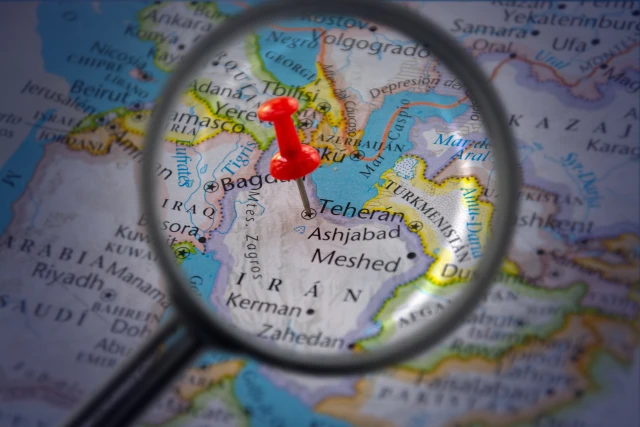
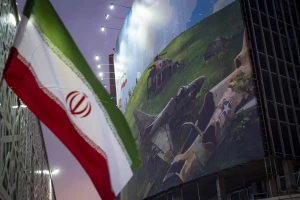
Even though the full unfolding of Ezekiel’s prophecy has not taken place, the pattern of the war described in Ezekiel 38–39 has undeniably been activated. We have witnessed 500 ballistic missiles fired from Iran toward the Holy Land, and heard the Turkish leadership openly call for Jihad to “take back Jerusalem.” The contours of the coalition and its motivations are coming into view.
But this raises a profound question: If the Islamic Republic collapses, how could the Ezekiel prophecy still proceed?
For decades, the Ayatollahs appeared to be the ideal nemesis described in the prophetic text. Yet at this very moment, their days seem numbered.
A Regime Collapsing Under Its Own Weight
Today’s clerical establishment is crippled by corruption, internal power struggles, and an eschatological obsession with the Mahdi that has driven the economy to ruin. The regime is at odds with nearly 85% of the population. It is dysfunctional, deeply unpopular among the youth, and may not survive long enough to carry out the role many assumed it would play in prophetic history.
Unless the United States or Israel delivers an unexpected external blow, the Iranian nation appears to have moved beyond the regime—its resolve sealed in the blood of the children lost in the protests.
The Generational Shift: Iran After Islam
When you zoom out, the story becomes clearer:
The grandchildren of the 1979 revolutionaries now make up the majority of the population.
This generation overwhelmingly rejects theocracy.
They seek a secular system, not an Islamic state.
Demographics is destiny.
Contemporary Iran is living through a generational transition—a departure from Islam itself.
What form will the next government take? That remains unclear. It may become a constitutional monarchy or a democratic republic. What is clear, however, is that anti-Zionism in Iran has always been primarily an Islamic project, not a national one.
A post-Islamic Iran will likely place the Israel issue on the back burner.
What a Post-Islamic Iran Could Mean for Israel
In a freer system:
Christians, pro-Israel Iranians, and secular admirers of Israel would gain influence.
Travel, commerce, and water-technology cooperation could reshape bilateral relations.
A healthier cultural exchange will emerge.
But the story is not entirely positive. A “secular Iran” will not be free of anti-Zionism. As seen in Turkey, Islamist remnants often put on suits and rebrand. And Iran’s smaller opposition groups—almost all aligned with the global left—are already positioning themselves as anti-Zionist through a progressive lens.
The return of secular universities and Western-style academic ideology will also open a door to the same anti-Israel indoctrination visible in Western campuses.
In other words:
The Left will replace Islam as the leading voice of anti-Zionism in Iran.
Countries like Canada, the UK, and Australia already demonstrate how a vibrant pro-Israel minority can coexist with a left-leaning government willing to recognize a Palestinian state.
A free parliament in Iran will similarly decide its foreign policy direction—and the majority may not be pro-Israel.
Prophetic Alignment After the Regime
The ancient Medo-Persian Empire was part of the imperial system described in the visions of King Nebuchadnezzar, and modern Iran is what remains of that heritage. The current clerical regime—revolutionary, isolated, and ideologically idiosyncratic—does not fit neatly into the world order.
A post-revolution Iran, however, very well might.
1. Integration into the Final Empire
As the 1979 revolution recedes into history, a new Iranian state would be more capable of aligning with the global imperium—the composite “final empire” described by the prophets.
2. Sunni–Shia Barriers Will Remain, But the Left Bridges Them
The sectarian divide makes a unified Islamic military coalition unlikely. Yet the global left serves as a bridge ideology, enabling cooperation between Iran and Sunni Islamist governments—especially those influenced by the Muslim Brotherhood.
3. From Militias to National Armies
The current war has shown that proxy militias, powerful as they are, cannot defeat Israel. The next stage for Israel’s enemies is the activation of national armies.
If sanctions lift, Iran could quickly:
exploit its vast natural resources,
acquire advanced jets,
accelerate AI and quantum computing-based military technologies.
This would help equalize its military capabilities with Israel and enable Iran to participate fully in the Ezekiel coalition.
Fulfilling the Prophetic Word—Even After Regime Change
In the end, the fall of the Islamic Republic does not derail biblical prophecy. If anything, it sets the stage.
The covenantal blessing owed to Persia—the gentile empire that blessed Israel in antiquity—may bring a temporary reprieve, a sabbath in history for the Middle East, and for the people in Iran, a nation Hostage to a Hamas-like government.
It will allow:
light to expand,
evil to be judged,
and mercy to reach those living in the heart of the storm.
But as the birth pangs intensify and the contractions grow closer together, Iran—reborn, restructured, and reconnected to the world—can ultimately take its foretold place in the War of Gog and Magog.
You might also like to read this: