Israel nabs senior Muslim Brotherhood terror leader in overnight IDF commando raid in Lebanese territory
Lebanese PM decries Israeli strikes against Hezbollah as 'assault on our sovereignty, on civilian lives'




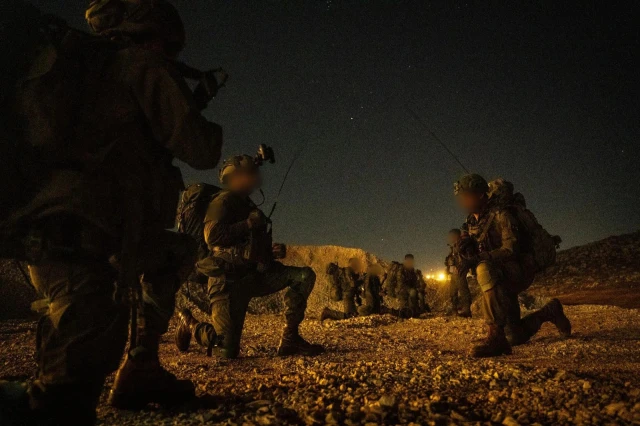
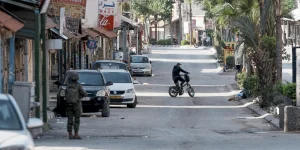
Israeli troops captured a senior terror leader and transferred him to Israel in an overnight raid within Lebanese territory, the Israel Defense Forces announced Monday morning.
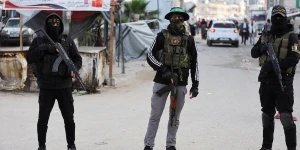
The IDF said that the terrorist was a senior leader with Jamaa Islamiya, an Islamist organization that serves as the Lebanese branch of the Muslim Brotherhood and has close ties to Hamas, with whom Israeli troops have clashed repeatedly in recent years.
“The terrorist was apprehended and then transferred for further questioning in Israeli territory. Additionally, weapons were located in the same structure in which the terrorist was apprehended,” the military stated.
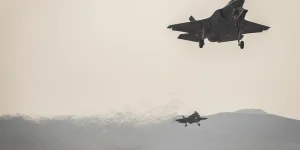
The unusual commando raid in the Mount Dov region, several kilometers within enemy territory, comes as the IDF continues to conduct airstrikes against Hezbollah in Lebanon on an almost-daily basis, despite claims by the Lebanese government that its military forces have removed the group’s presence south of the Litani River.
On February 8, Attoui Mohammad Attoui was detained by Israel in the Sunni village of Habbariyeh. Attoui served as the head of the Hasbaiyya and Marjaayoun area within the al-Jamaa al-Islamiya organization.
— Israel-Alma (@Israel_Alma_org) February 9, 2026
Al-Jamaa al-Islamiya is the Lebanese Muslim Brotherhood organization,… pic.twitter.com/pekmaOSSzE
The IDF stressed that “the Jamaa Islamiya terrorist organization advanced terror attacks against the State of Israel and its civilians in the north” throughout the war. Its military arm, the Fajr Forces, assisted Hezbollah in the fighting.
According to the Hezbollah-affiliated Al-Akhbar newspaper, Israeli special forces infiltrated the village, broke into the suspect's home, arrested him and detained his wife, and confiscated documents from his home before bringing him back to Israel.
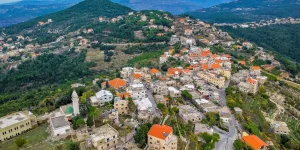
Mount Dov is an area Israel controls but is disputed between Israel, Lebanon and Syria; called Sheba’a Farms (. مزارع شبعا) also; it’s near the village of Ghajar which sits on the border; an interesting area near the Hermon mountain and the springs and streams below;
— Seth Frantzman (@sfrantzman) February 9, 2026
In 2024… https://t.co/9yqsA2bF1P pic.twitter.com/SJBCb1tI59
Israel’s Army Radio reported that the military operation lasted from Sunday evening until the early morning hours of Monday.
The IDF abducted the terror leader for interrogation in order to improve intelligence on the group, which has operated against Israel from Lebanon as well as from Syria.
Last November, six Israeli soldiers were wounded during a raid to arrest two Jamaa Islamiya terrorists in the southern Syrian village of Beit Jinn. The IDF believes the group is planning more terror attacks against Israel.
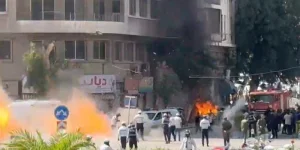
Several hours after the raid, the IDF struck a Hezbollah terrorist driving in a car in the Yanouh-Jatt area in southern Lebanon, “in response to Hezbollah’s repeated violations of the ceasefire understandings.”
The IDF said he served as Hezbollah’s local artillery commander, had "carried out numerous terror attacks" and was in the process of restoring its artillery capabilities intended for attacks on Israel "from within the civilian population in Lebanon."
The military noted it was "aware of the claim that uninvolved civilians were killed," after Lebanese media reported that a small child was in the vehicle. "Prior to the strike, steps were taken to mitigate harm to civilians, including the use of precise munitions and aerial surveillance. The IDF regrets any harm to uninvolved civilians and operates to minimize harm as much as possible. The incident is under review."
On Monday morning, Bassam Hammoud, deputy head of the Jamaa Islamiya's political bureau, told Al-Araby TV that the captured leader is the “senior member” Atwi Atwi.
The group also accused Israel of conducting the operation in response to Lebanese Prime Minister Nawaf Salam’s visit to villages in southern Lebanon on Sunday, claiming that Israel intended to demonstrate control over the area.
Hammoud called the raid a “Zionist pirate act” and said Israel had entered a “phase” of kidnapping Lebanese civilians.
Salam had also accused Israel of “continuous attacks” during his first tour of the border villages, many of which had been used by Hezbollah as bases and were devastated by Israeli airstrikes during the war. Most have still not been reconstructed.
The Lebanese prime minister said Israel’s continued strikes against Hezbollah “constitute an assault on our sovereignty, on civilian lives, and on the people's right to live in peace. However, the state’s presence here today is a message in the face of this reality; its message is that the extension of state authority is not completed solely by the deployment of the army and its control over the ground ... but rather that state sovereignty is also a responsibility toward the people and their problems.”
Over the weekend, Lebanese media reported that the commander of the Lebanese Armed Forces (LAF), General Rodolphe Haykal, traveled to Saudi Arabia after visiting the United States last week.
The LAF has repeatedly cited a lack of funding and remains reliant on donor nations, primarily the United States. Haykal reportedly met with several White House advisors, officials from the U.S. Departments of Defense and State, members of the Senate and House of Representatives, the National Security Council, and military and security officials.
However, U.S. Senator Lindsey Graham said he walked out of a meeting with Haykal after he (Haykal) refused to call Hezbollah a “terror group.”
Writing on 𝕏, Graham said he asked “point blank if he believes Hezbollah is a terrorist organization. He said, ‘No, not in the context of Lebanon.’ With that, I ended the meeting,” he said, adding, “As long as this attitude exists from the Lebanese Armed Forces, I don’t think we have a reliable partner in them.”
Lebanese media reported that Haykal’s visit to Saudi Arabia was intended to brief Saudi leadership on his trip to the United States and to prepare for the Paris Conference scheduled for March, which aims to raise additional funds for the LAF. The Saudi leadership has signaled support for the new Lebanese government and its military.
You might also like to read this: