Zionist: A word branded as toxic—But should it be?


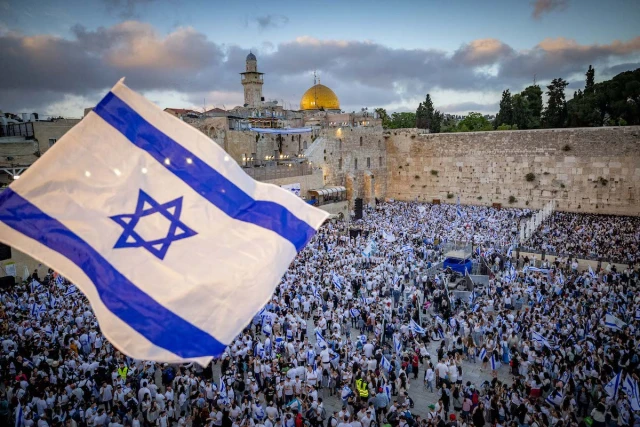
The word Zion (Hebrew Tzion, pronounced tzee-YOHN) appears more than one hundred and fifty times in the Bible. It is used for fortress, monument, the City of David, the City of God, and Jerusalem itself. Across the centuries, Zion has carried deep spiritual meaning, representing God’s promises and His enduring covenant with the Jewish people.
Zionism is simply the belief that the Jewish people have the right to self-determination in their historic homeland, the right of Israel to exist. Yet those who reject that truth have spent decades trying to distort the term, turning “Zionist” into a word of scorn. The irony is that the Jewish people’s four-thousand-year journey, culminating in their modern rebirth in 1948, is one of history’s greatest miracles. Still, Israel must remain vigilant to preserve its security, survival, and identity amid a rising tide of anti-God, anti-Bible, and anti-Jewish hatred.
A hopeful and living example of Zionism can be found at Ariel University, located in Israel’s biblical heartland. The institution embodies the true meaning of Zionism: faith, innovation, and opportunity rooted in ancient history. It stands as proof that Zionism uplifts not only the Jewish people but also humanity.
Recently, I spoke with Maya Berretta, Ariel University’s resource development manager, about this remarkable campus. What began as a small college in 1982 has grown into a thriving university with more than 17,000 students and nearly 500 faculty members. “Ariel is a proudly Zionist university,” she said. “But it is not exclusive. Ten percent of our students are Arab or Druze. We are really a kaleidoscope of Israeli society—religious and secular Jews, new immigrants, and native-born Israelis—studying and working together in an apolitical atmosphere.”
Ariel University also welcomes students from around the world who value academic excellence and mutual respect while appreciating Israel’s identity as the world’s only Jewish state. Every classroom displays the Israeli flag, and at each event Israel’s national anthem, Hatikvah (“The Hope”), is played. Written by Naftali Herz Imber in 1877 and set to music a year later by Shmuel Cohen, Hatikvah expresses the heartbeat of the Jewish people, their hope to return to their homeland, fulfilled on May 14, 1948.
Walking through Ariel’s campus reveals students of every background studying side by side. Women in hijabs, women in traditional headscarves, and others in baseball caps gather to study and share meals together. The atmosphere of harmony illustrates that Zionism at its best unites rather than divides.
The university’s impact reaches far beyond education. It operates the nation’s most comprehensive program for high-functioning students on the autism spectrum. Following recent conflicts, it opened a rehabilitation center for injured soldiers and civilians. A new medical center—the only one in Samaria—is nearing completion and will address Israel’s critical shortage of doctors while offering emergency services and training for future physicians.
Maya explained that “Israel needs more civil engineers because our population is growing and much of our infrastructure is aging.” Ariel now has the largest civil engineering school in Israel. The university’s twenty research centers explore everything from brain science and archaeology to cybersecurity and defense technology. One research team has even identified more than one hundred new grape varietals unique to Israel, making it possible to recreate wines that might have been enjoyed in the days of King David.
Ariel’s engineering programs also collaborate with defense companies to develop technologies that help protect Israel from its enemies. The university recently launched an online master’s program in English focused on communications, advocacy, and combating antisemitism, drawing students from around the world.
Despite relentless hostility toward Zionism, Judea and Samaria remain the beating heart of the Jewish homeland. The region holds more than 150 communities and is home to over half a million Jews. It is the soul of Israel and the setting for countless biblical events. Cities such as Shiloh, Ariel, Hebron, and Jerusalem still stand where prophets, kings, and figures like Samuel, David, Solomon, Isaiah, and Jesus once walked.
Zionism is not an ideology of exclusion but of connection. Its spirit has fostered international partnerships, including those between American mayors and Israeli cities. Hundreds of mayors have joined initiatives such as Mayors United Against Antisemitism or have signed sister city agreements with Israeli municipalities. Among them is Rusty Paul, mayor of Sandy Springs, Georgia, whose city is paired with a cluster of eleven communities in Samaria.
“We felt that connecting with Israel’s periphery communities would be most fruitful,” Mayor Paul explained. “Our city has a significant Jewish population, and this partnership honors our shared values.” He described visiting Israel several times and said, “I am always impressed by how Israel advances its economy while preserving its connections to the three monotheistic faiths. Israel has not only survived but thrived in one of the world’s most hostile environments. For millennia, the Jewish people have faced persecution yet maintained their identity, traditions, and values. What is not to admire?”
The Jewish people have cultivated life in deserts and built innovation from hardship. Their motivation to improve, heal, and bless others reflects their covenant with God. Zionism, at its core, is not about politics. It is about restoration, faith, and divine promise.
That promise was beautifully reflected at the grand opening of the Pilgrim Road in the City of David on September 20, 2025, where vocalist Hila Ben David sang Hatikvah: [watch here]. The road she stood upon was once walked by pilgrims ascending to the Second Temple—perhaps even by Jesus and His disciples. The song and the setting together proclaim that God keeps His covenant promises and that hope never dies.
Lyrics of Hatikvah (The Hope):
As long as in the heart within,
The Jewish soul yearns,
And toward the eastern edges, onward,
An eye gazes toward Zion.
Our hope is not yet lost,
The hope that is two-thousand years old,
To be a free nation in our land,
The Land of Zion, Jerusalem.
This article originally appeared here and is reposted with permission.
You might also like to read this: