600-year-old prayer book sells for $6.4M, offers insight into Jewish-Christian collaboration in divisive times





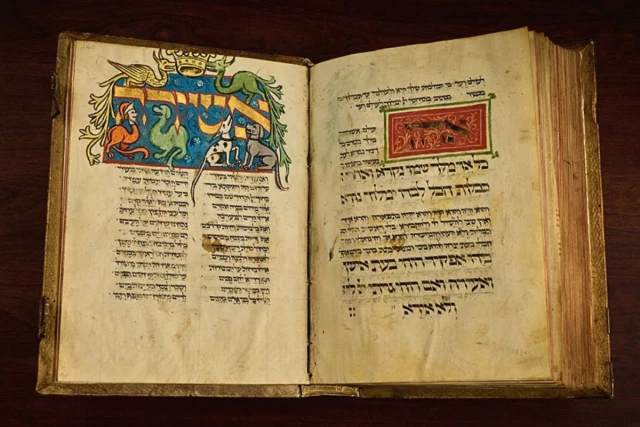
The Rothschild Vienna Mahzor, a 15th-century Jewish prayer book, sold for $US6.4 million at a Sotheby’s auction on Thursday. Beyond the price tag, it captures centuries of Jewish devotion and an unexpected story of collaboration across religious lines in divided times.
“Mahzor literally means ‘cycle’ in Hebrew, and the prayer book contains the cycle of prayers for the High Holidays,” Sharon Liberman Mintz, international senior specialist in Judaica at Sotheby’s, explained in an introductory video. Completed in 1415, the Rothschild Vienna Mahzor is one of only three such manuscripts to remain in private hands.
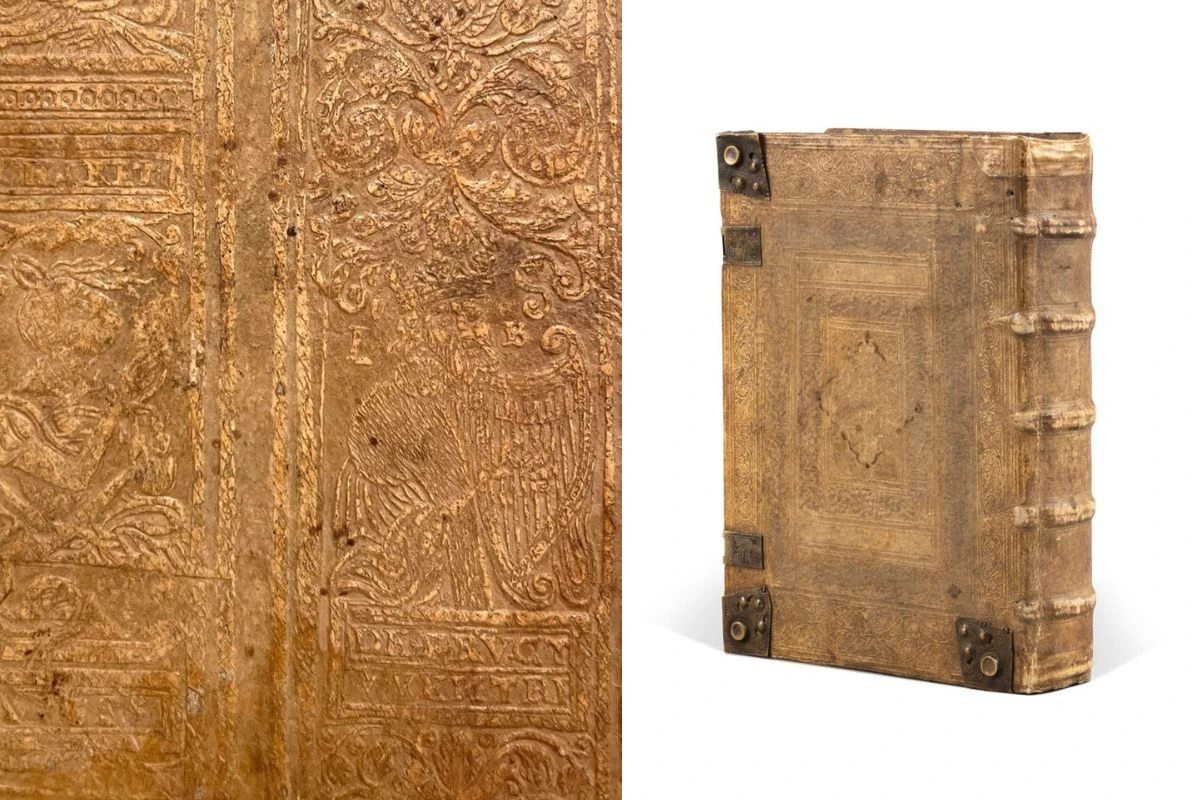
Experts estimate that the scribe, Moses son of Menachem, took nearly a year to complete it. The intricate manuscript contains 202 folios – about 400 pages – and 28 richly ornamented initial word panels. Astonishingly, it is bound in “distinctly Christian iconography,” a rare example of interfaith craftsmanship preserving a Jewish prayer book.
The mahzor shows signs of use, including wax droplets from candles, annotations, and a system of vocalization and cantillation marks for prayer leaders. Medieval prayer books, costly and privately owned, were brought to synagogues for holiday services and used communally, with the prayer leader reading aloud from them in the center of the synagogue.
About a century after it was produced, a Christian workshop was commissioned to rebind the mahzor. The quality craftsmanship, Sotheby’s said, reflects “the high esteem in which the manuscript text was held,” indicating “cooperation of Jews and Christian craftsmen in Germany in the sixteenth century.”
The binding, lavishly decorated in calfskin over wooden boards, features blind-tooled roll stamps typical of contemporary Christian books. Its clasps remain functional, and oxidation patterns indicate that a metal ornament was once attached. It depicts figures like Saint Paul and John the Baptist, and mainly King David, with the Latin biblical quotation of Psalm 132:11: De fructu ventri (“Of the fruit of thy body [will I set upon thy throne]”).
The mahzor’s binder – most likely Cologne craftsman Iohannes Bohnenberg, identified by the initials “IB” – took unusual care to preserve the Jewish manuscript. “A close examination of the binding reveals the hand of a skilled craftsman whose work was accomplished with the greatest sympathy for the text,” the description notes. Its pages, which would have typically been trimmed for uniformity, were left intact, preserving marginal annotations in Hebrew and Yiddish that document variations in local customs.
The history of the Rothschild Vienna Mahzor reflects the resilience of the community that once read from it – whose prayers can still be recited from it today. Sotheby’s noted that within a decade of its completion, Vienna’s Jewish community was engulfed by persecution and destroyed.
The prayer book resurfaced 400 years later when Salomon Mayer Rothschild purchased it in 1842 and inscribed it for his son Anselm. It remained in the Rothschild family until it was confiscated by the Nazis in 1938, later entering the Austrian National Library before it was recognized as looted property.
In June 2023, the mahzor was returned to the Rothschild heirs under Austria’s Art Restitution Law.
You might also like to read this: