Israeli professor leads int'l team behind implantable device that could eliminate need for insulin shots





Assistant Professor Shady Farah from the Technion – Israel Institute of Technology’s Faculty of Chemical Engineering – has led an international research team that pioneered the development of an implantable, self-regulating device that produces insulin for patients with diabetes. The research is considered groundbreaking and could potentially eliminate the need for daily insulin shots.
The multinational study was conducted in cooperation with scientists from leading U.S. institutions, including the Massachusetts Institute of Technology (MIT), Harvard University, Johns Hopkins University and the University of Massachusetts.
The study, published last month in Science Translational Medicine, describes the implant as a self-regulating “artificial pancreas” that monitors blood glucose levels and produces insulin internally, eliminating the need for external insulin shots. The researchers describe the technology as a “crystalline shield” and report that it can operate in the body for years.
In preclinical tests on mice, the cells inside the implant were found to be fully operational and effective. However, further clinical research in humans is required. If approved by medical authorities, this treatment could dramatically transform the management of chronic illnesses through implanted, self-regulating devices. Beyond diabetes, the technology could potentially address hemophilia and other genetic or metabolic disorders.
Professor Farah co-authored the study with Matthew Bochenek (MIT) and Joshua Doloff (JHU). Other team members included Dr. Merna Shaheen-Mualim and former master’s students Neta Kutner and Edwar Odeh from the Technion in Israel. The findings were considered so significant that Science Translational Medicine featured the ground-breaking study on its prestigious front-page cover.
In December, scientists at the Technion discovered that cancer tumors could surprisingly enhance heart function.
“The failing heart can beat much better in the presence of cancer cells or a tumor,” Professor Ami Aronheim, dean of the Technion’s Ruth and Bruce Rappaport Faculty said after the surprising research discovery.
Itzhak Kehat, head of the Department of Physiology, Biophysics and Systems Biology at the Technion’s Faculty of Medicine, placed the role of tumors in an unconventional wider medical context.
“Tumors can release signals that affect the whole body’s repair and immune response,” Kehat assessed. “And some of these signals can be harnessed to improve heart disease."
The Technion, located in the northern city of Haifa, is one of Israel’s leading academic institutions and is often described as the country’s equivalent of MIT. Internationally, it is renowned for its pioneering work in a wide range of advanced technologies.
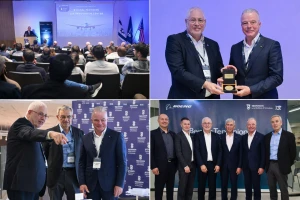
American aerospace giant Boeing recently announced it will cooperate with the Technion on the development of low-carbon jet fuel known as sustainable aviation fuel (SAF). Dr. Brendan Nelson, president of Boeing Global, hailed the Technion as a leading global technology leader.
“If there is one country in the world capable of solving civil aviation’s emissions challenge, it is Israel, led by the Technion – the Israeli MIT,” Nelson said during a visit to the Israeli academic institution. “We are pleased to partner with Technion and other stakeholders in the SAF Innovation Center to support Israel’s aerospace industry."
You might also like to read this: